
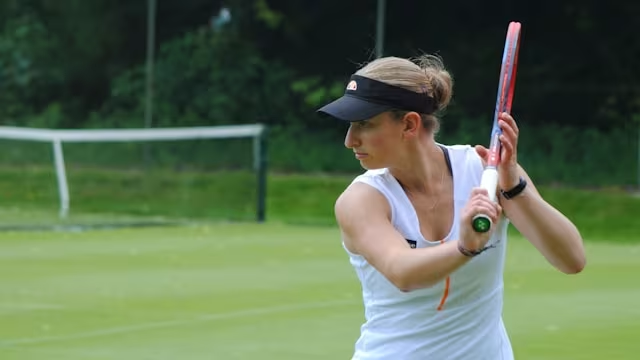
Understanding Tennis Elbow
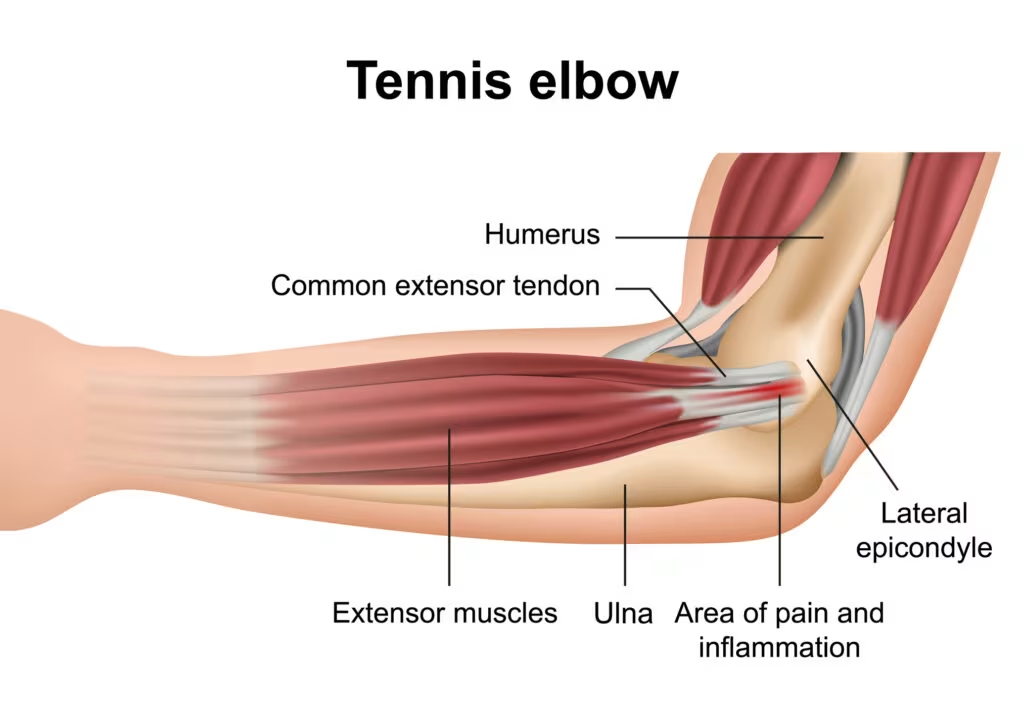
Tennis elbow, medically termed lateral epicondylitis, is a condition characterized by pain and inflammation on the outer part of the elbow where the tendons of the forearm muscles attach to the bony bump on the lateral epicondyle.
Despite its name suggesting a connection to tennis, this condition affects many individuals beyond athletes, including those whose occupations or daily activities involve repetitive arm movements.
Explore everyday essentials and compare current offers on Shopee.
Browse ShopeeThis condition develops when small tears occur in the tendon tissue that connects the forearm muscles to the elbow joint.
Over time, these microtears lead to damage in the tendon known as angiofibroblastic hyperplasia.
The injury is primarily due to forceful and repetitive forearm usage, placing excessive strain on the tendons.
Tennis elbow is most common in adults between 40 and 50 years of age. While 10% to 50% of regular tennis players experience it during their playing careers, it can occur in anyone who engages in activities requiring repetitive wrist and forearm motions.
This might help: Which Orthopedic Doctor in Singapore Should You Consider?
Causes and Risk Factors
Primary Causes
Tennis elbow occurs due to small tears in the tendon(s) on the outside of the elbow that attach the forearm muscles to the elbow joint.
These microtears develop from repetitive stress and overuse of the forearm muscles, particularly during activities that involve gripping and twisting motions.
It’s important to understand that tennis elbow is not an inflammatory condition but rather a degenerative one.
As it develops through repetitive actions, the symptoms may worsen due to improper healing and cell degeneration in the tendon muscles, particularly the Extensor Carpi Radialis Brevis (ECRB).
This might help: Best Orthopedic Doctor in JB for Singaporeans
Risk Factors
Several factors can increase your likelihood of developing tennis elbow. Age is a significant factor, with individuals over 40 years of age at higher risk.
Occupation plays a major role, particularly for people whose jobs involve repetitive arm movements, such as carpenters, plumbers, painters, butchers, chefs, and computer users with extensive mouse usage.
Regular participation in certain sports activities that stress the forearm can increase risk, including tennis (especially with poor technique), squash, badminton, and golf.
Equipment factors also contribute significantly – using tennis racquets with inappropriate grip size, playing on hard court surfaces, or employing improper techniques like hitting with a flexed elbow can all lead to increased strain on the tendons.
Related article: Shoulder Pain in Singapore: Causes, Treatments, Recovery
Symptoms and Signs
The primary symptoms of tennis elbow include pain and tenderness over the lateral epicondyle (outer elbow joint), often radiating down the forearm.
This pain typically worsens with activities involving gripping, lifting, or twisting motions, and becomes particularly intense when extending the wrist against resistance, especially with the elbow fully extended.
Patients commonly report weak grip strength, making it difficult to hold objects firmly, along with morning stiffness in the elbow area.
Many experience pain when performing simple daily tasks such as shaking hands or opening doors. In the initial stages, pain may only be activity-related, but in chronic cases, it can become constant and more debilitating.
If you experience these symptoms persistently, especially if they interfere with daily activities, it’s advisable to seek medical consultation for proper diagnosis and treatment.
You might like: Scoliosis Treatment in Singapore: Causes and Symptoms
Diagnosis
Diagnosing tennis elbow involves several steps:
Clinical Examination
The diagnosis is primarily made based on the patient’s medical history and a physical examination. During the examination, the doctor will:
- Check for tenderness over the lateral epicondyle
- Assess pain when the wrist is bent backward against resistance
- Test grip strength and forearm muscle function
- Evaluate range of motion in the affected arm
Imaging Tests
While not always necessary, imaging tests may be ordered to rule out other conditions or evaluate the severity:
- X-rays: To exclude other causes of elbow pain such as arthritis or fractures
- Ultrasound: A bedside ultrasound examination can confirm the diagnosis by identifying hypoechogenic areas in the common extensor tendon, indicating tendon degeneration
- MRI scan: In complex cases, to assess the extent of tendon damage and rule out other elbow pathologies
You might want: Knee Pain in Singapore: Causes, Treatment & Prevention
Treatment Options
Treatment for tennis elbow in Singapore ranges from conservative management to surgical interventions, depending on the severity and duration of symptoms.
Non-Surgical Treatment
Most cases of tennis elbow respond well to conservative treatments, which form the first line of management. These typically include:
1. Rest and Activity Modification
Effective management of tennis elbow begins with adequate rest and modifying activities that exacerbate symptoms.
This includes avoiding movements that aggravate the condition, limiting continuous duration of play or activity, improving ergonomics in work-related scenarios, and using correct techniques during sports or repetitive tasks.
These simple modifications allow the tendons time to heal and prevent further damage.
Read more: Sports Doctors in Singapore: Guide to Finding a Suitable Specialist
2. Physical Therapy and Exercises
Physiotherapy is crucial in the treatment and prevention of tennis elbow. A physiotherapist can design a tailored exercise program that includes:
- Eccentric strengthening exercises for the forearm muscles
- Stretching exercises to improve flexibility
- Manual therapy techniques like soft tissue and joint mobilization
- Graduated loading program to rebuild tendon strength
3. Bracing and Support
- Counterforce bracing: A strap applied around the forearm just below the elbow to provide external compression and offload stress from the elbow’s joint
- Wrist splints: To reduce strain on the affected tendons during daily activities
Read more: Slipped Disc Treatment in Singapore: Causes, Risks, Cost
4. Medications
- Non-steroidal anti-inflammatory drugs (NSAIDs) to reduce pain and swelling
- Topical analgesic creams
- Pain relievers such as paracetamol for symptomatic relief
5. Injection Therapies
When other conservative measures fail to provide adequate relief, injection therapies may be considered:
- Corticosteroid Injections: Provide short-term pain relief by reducing inflammation. However, these are usually limited to 2 treatments as they may potentially weaken the tendon over long-term use.
- Platelet-Rich Plasma (PRP) Injections: Use the patient’s own blood components to stimulate healing. PRP augments the recovery process by promoting tendon healing.
6. Extracorporeal Shockwave Therapy (ESWT)
This non-invasive treatment uses shockwaves to stimulate healing and provide pain relief:
- Relieves pain and promotes natural healing
- Can provide short-term reduction in pain by overstimulating pain-transmitting nerve endings
- Over a 3-6 month period, facilitates healing of the injured tendon through the local release of growth factors
Surgical Treatment
If conservative management fails after at least 6 months, surgical intervention may be considered. The options available in Singapore include:
1. Traditional Open Surgery
- Involves a larger incision (5-6 cm) over the lateral epicondyle
- The surgeon releases the ECRB tendon from its attachment to the lateral epicondyle
- The damaged tissue is removed, and the area is debrided
- Recovery time is usually several weeks to months
2. Arthroscopic Surgery (Minimally Invasive)
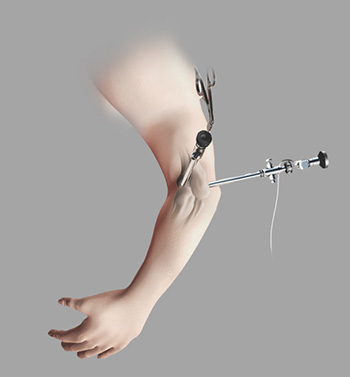
- Performed through small puncture holes (about 3mm)
- A camera (arthroscope) is inserted to visualize the joint and affected tendon
- The damaged ECRB tendon is carefully removed with a shaver
- Advantages include faster recovery, with many patients returning to work within days rather than weeks
- The procedure takes approximately 25-30 minutes under general anesthesia
3. Percutaneous Tenotomy
- Involves using a needle to make small holes in the tendon
- Stimulates healing without requiring a large incision
- Less invasive than traditional open surgery
Post-Surgery Recovery and Rehabilitation
After surgical intervention, the recovery process typically involves:
- Initial rest period to allow healing
- Gradual return to activities under physiotherapist guidance
- Strengthening and flexibility exercises
- Modification of techniques or equipment that contributed to the condition
- Most patients can return to activities involving the affected elbow within 4-6 months
Preventive Measures
Preventing tennis elbow involves strategies to reduce undue stress on the forearm muscles and tendons.
Proper technique and ergonomics are essential – learn and practice proper form for sports activities, set up an ergonomic workspace to reduce strain during computer use, and use proper techniques when performing repetitive tasks.
Equipment modifications can make a significant difference. Use appropriate grip sizes for racquets and tools, consider lighter, ergonomically designed tools for work activities, and use electric or power tools instead of manual ones when possible.
Regular strengthening and flexibility exercises help prevent tennis elbow by conditioning the forearm muscles.
Incorporate wrist curls and extensions with light weights, forearm rotations, and regular stretching of forearm muscles into your routine.
Rest and recovery are crucial preventive components. Take regular breaks during repetitive activities, alternate between different tasks to avoid prolonged repetition, and allow adequate rest between intense activities.
Always warm up and stretch before engaging in sports or strenuous activities, gradually increasing intensity rather than beginning at full exertion.
Sleep and Lifestyle Adaptations
Sleeping With Tennis Elbow
For those suffering from tennis elbow, proper sleeping positions can help manage discomfort:
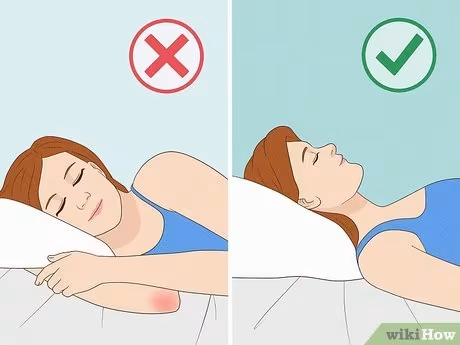
- Sleep on your back with arms extended and relaxed beside your body
- Consider placing arms on pillows to avoid straining the elbow
- Use a supportive mattress to maintain proper alignment
- Avoid folding the affected arm under your pillow
Exercise Modifications
When recovering from tennis elbow, certain exercises should be avoided:
- Repetitive lifting exercises
- Activities that involve gripping or twisting movements
- High-impact sports that stress the elbow joint
- Push-ups, pull-ups, and dumbbell curls
Treatment Timeline and Expectations
Understanding the typical timeline for tennis elbow recovery can help manage expectations:
| Treatment Stage | Duration | Activities |
|---|---|---|
| Initial Rest | 2-3 weeks | Activity modification, pain management |
| Conservative Treatment | 6-12 months | Physiotherapy, bracing, medications |
| Post-Surgery | 4-6 months | Graduated rehabilitation program |
Most patients with tennis elbow recover completely with conservative treatment.
Surgical intervention is typically only necessary in about 10% of cases where symptoms persist despite adequate non-surgical management.
When to See a Doctor
Seek medical advice when pain and tenderness become frequent and recur despite adequate rest and over-the-counter pain relief.
It’s important to consult a healthcare professional if symptoms persist for more than a few weeks, the pain interferes with sleep or daily activities, or you experience significant weakness in your grip.
Additionally, noticeable swelling or deformity around the elbow, or if the joint appears locked or unable to bend properly, warrants immediate medical attention.
Comprehensive FAQs About Tennis Elbow
What is the difference between tennis elbow and golfer’s elbow?
Tennis elbow (lateral epicondylitis) affects the outer part of the elbow, while golfer’s elbow (medial epicondylitis) affects the inner part.
Both conditions involve similar mechanisms of injury through repetitive motions, but they affect different muscle groups.
Tennis elbow impacts the extensor muscles used for wrist and finger extension, whereas golfer’s elbow affects the flexor muscles used for gripping.
How effective are cortisone injections for tennis elbow?
Cortisone injections can provide short-term pain relief for tennis elbow by reducing inflammation.
However, research suggests that while they may offer immediate relief, their long-term effectiveness is limited and may potentially weaken the tendon structure over time.
Most medical professionals in Singapore limit cortisone injections to 2 treatments and recommend them only when other conservative measures have failed.
Can I still work with tennis elbow?
Many people continue working with tennis elbow, but modifications may be necessary.
Depending on your occupation, you might need to adjust techniques, use ergonomic tools, wear a counterforce brace, or take more frequent breaks.
For jobs requiring heavy lifting or repetitive arm movements, temporary assignment to different duties might be recommended until symptoms improve.
How long does recovery from tennis elbow typically take?
Recovery time varies significantly depending on severity and individual factors.
With conservative treatment, many patients see improvement within 6-12 weeks, though complete resolution may take 6-12 months.
Following surgery, most patients can resume normal activities within 4-6 months, though full recovery of strength may take longer.
Can I still lift weights with tennis elbow?
Lifting weights with tennis elbow should be approached cautiously.
During the acute phase, it’s advisable to avoid activities that exacerbate symptoms. As pain subsides, gradually reintroducing light weights with proper form may be possible, preferably under the guidance of a physiotherapist.
Focus on exercises that don’t strain the affected tendons and consider using lighter weights with more repetitions.
Is surgery always necessary for tennis elbow?
No, surgery is rarely necessary for tennis elbow. Approximately 80-95% of patients recover with conservative treatments such as rest, physiotherapy, bracing, and medication.
Surgical intervention is typically only considered when symptoms persist despite a comprehensive non-surgical approach for at least 6 months.
How should I sleep if I have tennis elbow?
To minimize discomfort while sleeping with tennis elbow, try sleeping on your back with your arms extended and relaxed beside your body.
You can place your arms on pillows to avoid straining the elbow. Using a supportive mattress helps maintain proper spine alignment, which can indirectly reduce strain on the elbows.
Avoid sleeping positions that put pressure on the affected arm or cause it to bend sharply.
What exercises should I avoid if I have tennis elbow?
With tennis elbow, avoid exercises that involve repetitive lifting or require gripping and twisting motions.
Specifically, activities like racket sports, basketball, volleyball, chin-ups, push-ups, or dumbbell curls should be avoided as they add stress to your elbow and forearm, potentially aggravating your condition.
Consult with a physiotherapist for safe alternative exercises that maintain fitness without worsening symptoms.
Can tennis elbow heal on its own without treatment?
While mild cases of tennis elbow may resolve with rest and activity modification, many cases require some form of intervention for proper healing.
Without appropriate treatment, the condition may become chronic, leading to persistent pain and decreased function.
Even with self-management, proper techniques such as appropriate rest, ice application, and gentle stretching are important components of recovery.
Are there any dietary changes that can help with tennis elbow?
While there’s no specific diet for tennis elbow, an anti-inflammatory diet rich in omega-3 fatty acids, antioxidants, and whole foods may support healing.
Foods like fatty fish, olive oil, nuts, fruits, and vegetables may help reduce overall inflammation in the body. Staying well-hydrated is also important for tendon health.
Some people find supplements like turmeric, collagen, or vitamin C helpful, though scientific evidence specifically for tennis elbow is limited.
Can acupuncture help with tennis elbow pain?
Some patients in Singapore report relief from tennis elbow symptoms through acupuncture.
While scientific evidence is mixed, acupuncture may help reduce pain and improve function in some individuals. It’s generally considered a safe complementary treatment that can be used alongside conventional approaches.
If considering acupuncture, seek a qualified and registered practitioner experienced in treating musculoskeletal conditions.
Is tennis elbow considered a disability?
Tennis elbow is generally not classified as a permanent disability, but in severe cases, it may temporarily limit work capacity, especially in occupations requiring manual labor or repetitive arm movements.
In Singapore, depending on the impact on job performance, some patients may qualify for temporary medical leave or workplace accommodations during recovery.
Documentation from a medical professional would be necessary for any disability claims related to tennis elbow.
Explore everyday essentials and compare current offers on Shopee.
Browse Shopee