

Understanding Chin Fillers
Facial harmony and balance are essential components of an aesthetically pleasing appearance. Among the various features that contribute to facial proportions, the chin plays a crucial role in creating balance and definition.
In recent years, chin fillers have emerged as a popular non-surgical solution for individuals looking to enhance their facial profile without undergoing invasive procedures.
Chin fillers in Singapore have gained significant popularity, particularly among Asians seeking to address common concerns like recessed chins, facial imbalance, and achieving the coveted V-shaped face.
This comprehensive guide will walk you through everything you need to know about chin fillers in Singapore, from the procedure itself to aftercare and expected results.
What Are Chin Fillers and What Can They Do?
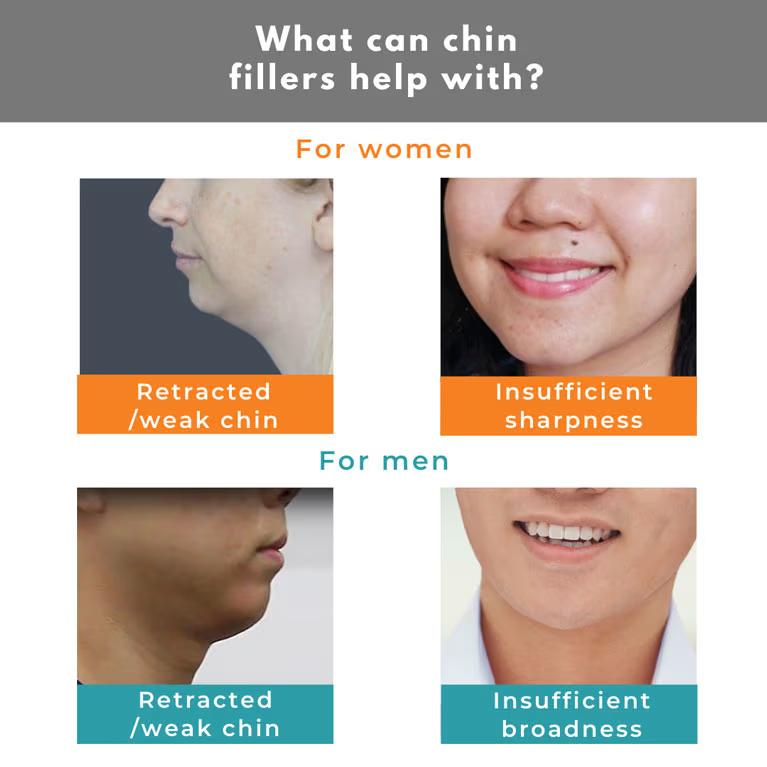
Chin fillers are injectable dermal fillers used in a non-surgical, clinic-based procedure performed by certified doctors.
The treatment involves injecting specially formulated substances into the chin area to enhance its projection, definition, and shape. Often performed alongside jawline fillers, chin fillers offer a minimally invasive alternative to chin implant surgery.
The primary benefits of chin fillers include:
- Creating a slimmer, more defined V-shaped face
- Adding projection to a retracted or weak chin
- Improving overall facial proportions and symmetry
- Enhancing the profile view of the face
- Reducing the appearance of a double chin by improving chin projection
- Creating gender-specific chin shapes (broader for men, V-shaped for women)
- Defining the lower face profile without surgery
The ideal facial appearance, though subjective, typically follows the concept of the “Golden Ratio” – a harmonious balance between the forehead, cheekbones, nose, lips, and chin when viewed from both front and side profiles.
Chin fillers help achieve this balance by providing a way to augment the chin without the risks, recovery time, and permanence associated with surgical options.
You might be interested in: Comprehensive Guide to Cheek Fillers in Singapore
Types of Chin Fillers Available in Singapore
There are primarily two categories of fillers used for chin augmentation in Singapore:
1. Hyaluronic Acid-Based (HA) Fillers
These are temporary, dissolvable fillers that contain hyaluronic acid, a substance naturally found in the human body. Popular HA fillers for chin augmentation in Singapore include:
- Juvéderm VOLUX: Specifically designed for chin and jawline sculpting with high “G prime” (firmness) and cohesiveness, lasting up to 24 months
- Restylane Lyft: Provides structural support with good lifting capacity
- Belotero Volume: Offers natural-looking volume and contour
- Teosyal Ultra Deep: Provides significant volume for deep tissue support
2. Non-Hyaluronic Acid-Based Fillers
These semi-permanent fillers tend to last longer than HA fillers and include:
- Ellansé: A bioresorbable filler that stimulates collagen production
- Radiesse: Calcium hydroxylapatite-based filler that provides immediate volume and stimulates collagen
- Sculptra: Poly-L-lactic acid filler that gradually stimulates collagen production for subtle, progressive results
You might want to read: Dermal Fillers in Singapore: The Comprehensive Guide
What Makes an Ideal Chin Filler?
Not all fillers are created equal, especially when it comes to chin augmentation. The ideal chin filler should possess three key characteristics:
- High “G Prime”: This refers to the gel’s hardness and its ability to withstand pressure and maintain shape. For the chin area, a firmer filler is preferred to provide structural support.
- High Cohesiveness: This property determines how well the gel maintains its integrity without spreading to surrounding tissues. A cohesive filler will stay in place at the injection site, maintaining the desired chin shape.
- High Cross-Linking: This refers to the chemical bonds between hyaluronic acid molecules, which largely determines the filler’s longevity. Higher cross-linking typically means longer-lasting results.
Juvéderm VOLUX is often preferred by practitioners in Singapore due to its high “G prime,” excellent cohesiveness, and patented VYCROSS® technology that provides extensive cross-linking between hyaluronic acid molecules, allowing results to last up to 24 months.
How Much Filler Is Needed for Chin Augmentation?
The amount of filler required for chin augmentation varies based on individual needs, existing anatomy, and desired outcomes. However, there are some general guidelines:
For Women
Women typically require upwards of 2ml of filler to achieve a slimmer, V-shaped face with adequate chin projection and definition.
The focus is usually on adding height and forward projection to create a more feminine profile.
For Men
Men generally need upwards of 2.5ml to 3ml of filler, as creating a masculine chin requires additional volume to achieve the desired broadness and stronger definition.
The goal is typically to create a more squared-off, U-shaped chin with substantial projection.
Asians, in particular, often require more filler for chin augmentation compared to other facial areas due to naturally less projected chins. Your doctor will assess your specific needs during consultation to determine the precise amount required for optimal results.
Related article: Nose Fillers and Nose Threadlifts in Singapore
The Chin Filler Procedure: What to Expect
Consultation
Before the procedure, you’ll have a thorough consultation with your doctor to discuss your aesthetic goals, assess your facial structure, and determine the most suitable approach for your chin enhancement.
The Procedure
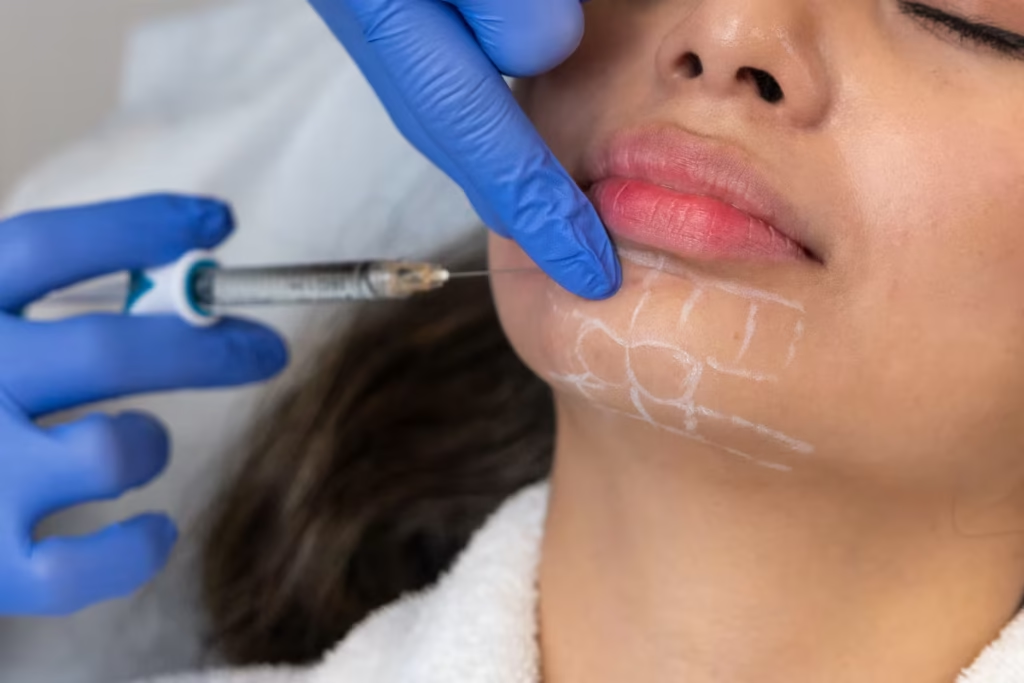
The chin filler procedure is relatively quick and comfortable, typically lasting about 10-15 minutes. Here’s what you can expect:
- Preparation: The treatment area is cleansed, and markings may be made to guide the injection process.
- Anesthesia: Unlike some other facial areas, the chin has fewer nerve endings, making the procedure relatively comfortable. While topical anesthetic is often not required, some clinics may apply numbing cream or ice to enhance comfort. Most fillers also contain lidocaine, a local anesthetic that further reduces discomfort during injection.
- Injection: The doctor will inject the filler through 1-3 strategic entry points on the chin. They may use either a needle or a cannula (blunt-tipped tube) depending on the specific technique preferred.
- Molding: After injection, the doctor will carefully mold and shape the filler to ensure a natural-looking result and even distribution.
- Final assessment: The doctor will evaluate the results and make any necessary adjustments to achieve the desired outcome.
Often, chin fillers are performed alongside jawline fillers to ensure a smooth, continuous transition and defined lower facial contour, preventing an unnatural appearance.
You might want to read: Complete Guide to Ellansé Dermal Fillers
Immediate Results
One of the major advantages of chin fillers is that results are visible immediately after the procedure.
While there may be some initial swelling, you’ll be able to see the enhanced projection and improved definition right away.
You might like: Face Slimming Treatments in Singapore: Achieve a V-Shaped Face Without Surgery
Recovery and Aftercare
Chin fillers require minimal downtime, allowing most patients to return to their daily activities immediately after the procedure. However, there are some aftercare recommendations to ensure optimal results:
- You may experience minor swelling, redness, or tenderness at the injection sites, which typically resolves within 1-3 days
- Small prick marks at the injection sites may be visible initially but will fade within 1-2 days and can be concealed with makeup if needed
- Avoid alcohol for at least 24 hours after treatment
- Refrain from strenuous exercise for approximately 7 days
- Avoid massaging or excessively touching the treated area for at least 2 days
- Sleep with your head slightly elevated on the first night to minimize swelling
- Avoid saunas, hot showers, or facial treatments for at least 48 hours
How Long Do Chin Fillers Last?
The longevity of chin fillers depends primarily on the type of filler used and individual factors such as metabolism, lifestyle, and activity level.
- Hyaluronic Acid Fillers: Premium HA fillers like Juvéderm VOLUX can last up to 18-24 months in the chin area
- Non-HA Fillers: Semi-permanent options like Radiesse or Ellansé typically last 12-18 months, while Sculptra may provide results for up to 2 years
The chin area tends to retain fillers longer than more mobile facial areas like the lips or cheeks due to less muscle movement. For optimal results, touch-up treatments are recommended when you begin to notice the effects diminishing, typically once a year.
Potential Side Effects and Risks
Chin fillers are generally considered very safe, especially when performed by qualified medical professionals. The chin area is particularly safe for filler injections as it contains no major facial arteries, reducing the risk of vascular complications.
Common Side Effects
Most side effects are mild and temporary, including:
- Swelling and redness
- Tenderness or mild discomfort
- Occasional bruising
- Temporary sensation of something foreign in the chin
Rare Complications
Less common risks include:
- Allergic reaction to the filler (extremely rare with HA fillers)
- Lumpiness or uneven texture (typically correctable by massage or dissolving)
- Filler migration (minimized with proper technique and aftercare)
- Infection (very rare with proper medical protocols)
The most common adverse outcome is overfilling, which can result in an unnatural appearance. Fortunately, hyaluronic acid fillers can be dissolved using an enzyme called hyaluronidase if necessary, making the procedure fully reversible.
Chin Fillers for Different Genders: Tailored Approaches
For Women
Female chin enhancement typically focuses on creating a slimmer, V-shaped face with a tapered chin that harmonizes with feminine facial features. The goal is often to:
- Add projection to a recessed chin
- Create a more refined, feminine chin point
- Enhance the tapering of the lower face toward a V-shape
- Improve insufficient sharpness along the jawline
For Men
Male chin enhancement aims to create a stronger, more defined chin with appropriate broadness to reflect masculine features. Common goals include:
- Adding projection to a weak or recessed chin
- Creating a more squared-off, U-shaped chin
- Increasing chin width for a stronger appearance
- Establishing a more defined transition between the chin and jawline
These gender-specific approaches ensure that results complement natural facial characteristics and enhance rather than contradict the individual’s overall appearance.
You might want to read: Dermal Fillers vs Thread Lifts in Singapore: Cost and Comparison
Cost of Chin Fillers in Singapore
The cost of chin fillers in Singapore varies depending on the type of filler used, the amount required, and the clinic you choose. As a general guideline:
- Juvéderm VOLUX typically starts from $800 per 1ml syringe
- For women, the total cost typically ranges from $1,600 upward (for 2ml)
- For men, the total cost generally starts from $2,400 (for 3ml)
- Premium fillers with longer-lasting results may cost more
Many clinics offer package deals for combined treatments, such as chin and jawline fillers together. Always discuss pricing transparently during your consultation to understand the full cost implications.
Combining Chin Fillers with Other Treatments
For comprehensive facial enhancement, chin fillers can be effectively combined with other non-surgical treatments:
Complementary Treatments
- Jawline Fillers: Create a continuous, defined lower facial contour from chin to jaw
- Botox Jaw Slimming: Reduces masseter muscle size to further enhance the V-shaped face appearance
- Cheek Fillers: Balance the midface with the newly enhanced chin for overall facial harmony
- HIFU (High-Intensity Focused Ultrasound): Tightens the skin along the lower face and neck for additional contour
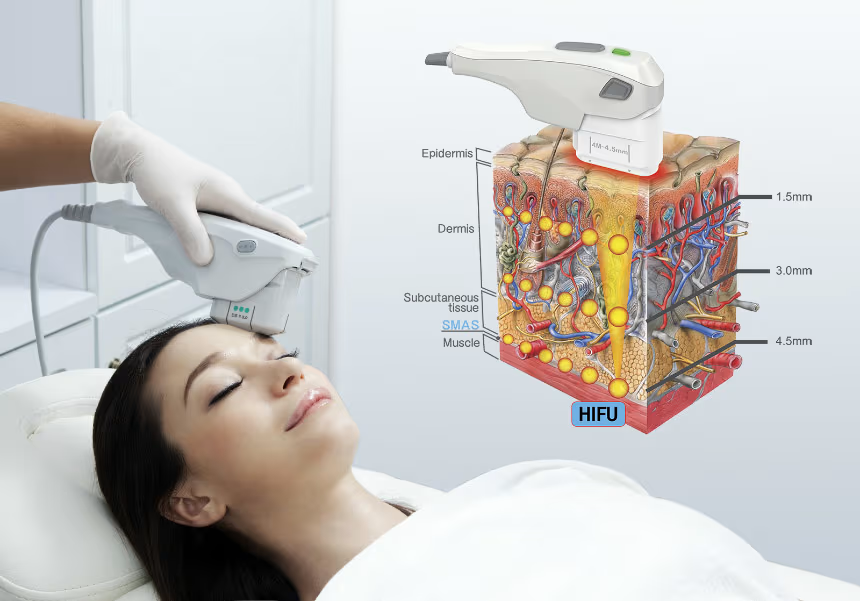
These combinations can provide more comprehensive results for individuals seeking overall facial rejuvenation or contouring. Your doctor can develop a personalized treatment plan addressing multiple concerns simultaneously.
You might be interested in: The Complete Guide to Facelift in Singapore
Who Is Suitable for Chin Fillers?
Chin fillers are suitable for a wide range of individuals, including:
- Those with recessed or underdeveloped chins
- Individuals seeking to improve facial balance and proportion
- People with mild double chin appearance due to a weak chin structure
- Those looking for a non-surgical alternative to chin implants
- Patients wanting to “test” a more projected chin before considering permanent surgical options
- Individuals with uneven chin contours or chin clefts
- Those seeking gender-specific chin enhancements (V-shape for women, broader for men)
Who Should Avoid Chin Fillers?
While chin fillers are suitable for most people, certain individuals may not be ideal candidates:
- Those with unrealistic expectations about the outcomes
- Individuals seeking drastic improvements that would require surgical intervention
- People with known allergies to filler components, including lidocaine
- Those with bleeding disorders or who take blood thinners
- Individuals with active infections or inflammation in the treatment area
- Pregnant or breastfeeding women
Common Myths and Misconceptions About Chin Fillers
Myth 1: Fillers Make You Look Fake or Unnatural
Reality: When performed by skilled practitioners using appropriate amounts, chin fillers can provide subtle, natural-looking enhancement that harmonizes with your facial features. Problems only arise with overfilling or poor technique.
Myth 2: You’ll Look Worse If You Stop Getting Fillers
Reality: When fillers naturally dissolve, your chin simply returns to its pre-treatment state. There’s no “rebounding” effect or worsening appearance. You won’t become dependent on fillers to maintain your normal appearance.
Myth 3: Fillers Are Harmful to Your Health Long-Term
Reality: Hyaluronic acid fillers consist of substances naturally found in the human body and are biodegradable. There’s no evidence of long-term health risks when properly administered by qualified medical professionals.
Myth 4: Chin Fillers Are Extremely Painful
Reality: The chin area has relatively few nerve endings compared to other facial areas, making it one of the more comfortable locations for filler injections. With numbing cream and fillers containing lidocaine, most patients report only mild discomfort.
Myth 5: You Can Become Addicted to Fillers
Reality: While patients often appreciate their improved appearance and choose to maintain it with periodic treatments, there’s no physical addiction to fillers. You can discontinue treatments at any time without withdrawal effects.
Choosing the Right Clinic for Chin Fillers in Singapore
Selecting the right clinic and practitioner is arguably the most important factor in ensuring safe, effective, and natural-looking results. Here are key considerations when choosing a clinic:
Qualifications and Expertise
- Ensure the doctor is MOH-approved and has specific training in facial aesthetics
- Look for practitioners with experience in facial contouring and chin augmentation
- Review before-and-after photos of previous chin filler patients
Clinic Standards
- The clinic should maintain high standards of cleanliness and sterilization
- They should use genuine, FDA-approved or CE-marked fillers from reputable manufacturers
- The clinic should have protocols for managing potential complications
Consultation Process
- A thorough consultation should include facial analysis and discussion of your goals
- The doctor should explain the procedure, potential risks, and realistic outcomes
- The clinic should provide clear information about costs and follow-up care
Patient Reviews
- Research patient testimonials and reviews to gauge satisfaction levels
- Look for consistency in positive experiences and results
Remember that the lowest price doesn’t always represent the best value when it comes to aesthetic treatments. Prioritize safety, expertise, and quality products over cost savings.
Comprehensive FAQ About Chin Fillers in Singapore
General Questions
Q: What exactly are chin fillers made of? A: Most chin fillers in Singapore are made of hyaluronic acid, a naturally occurring substance in the human body that helps maintain skin hydration and volume.
Non-HA options include calcium hydroxylapatite (Radiesse), poly-L-lactic acid (Sculptra), and polycaprolactone (Ellansé).
Q: How do I know if I need chin fillers? A: You might benefit from chin fillers if you have a recessed chin, lack definition in your lower face, have an unbalanced profile, notice a double chin despite not being overweight, or want to achieve better facial proportions.
A consultation with an aesthetic doctor can help determine if chin fillers are right for you.
Q: Can chin fillers help with a double chin? A: Chin fillers can help reduce the appearance of a double chin by improving chin projection, which creates better definition between the chin and neck. However, if your double chin is primarily due to excess fat, other treatments like Kybella or CoolSculpting might be more appropriate, possibly in combination with chin fillers.
Q: At what age should I consider getting chin fillers? A: There’s no specific age requirement for chin fillers. They’re suitable for adults of any age who have concerns about chin projection or facial balance.
Some people in their mid-20s begin treatments as volume loss starts to occur, while others may seek treatment later in life to address age-related changes or long-standing concerns about facial proportions.
Procedure and Results
Q: How noticeable will the results be? A: Results are typically noticeable immediately after treatment but look more natural once any initial swelling subsides (usually within 1-3 days).
The enhancement should be visible but natural-looking, improving your profile and facial balance without appearing obviously “done.”
Q: Will people know I’ve had chin fillers? A: When performed correctly, chin fillers should enhance your natural features rather than creating an obvious artificial look.
Most patients report that friends and family notice they look better or more refreshed but can’t pinpoint exactly what has changed.
Q: How long before I see final results? A: While initial results are visible immediately, the final results are best assessed after any swelling has subsided, typically within 1-2 weeks after the procedure.
Q: Can chin fillers change the shape of my face? A: Yes, chin fillers can significantly impact your overall facial shape by improving projection, enhancing definition, and creating better balance between facial features.
This can make a round face appear more oval or V-shaped, or make a short face appear more proportional.
Pain and Comfort
Q: How painful is the chin filler procedure? A: Most patients find chin filler treatments relatively comfortable. The chin area has fewer nerve endings than areas like the lips or eyes.
Additionally, most fillers contain lidocaine (a local anesthetic), and clinics often use numbing cream or ice to further minimize discomfort. Patients typically describe feeling pressure or a slight pinching sensation rather than sharp pain.
Q: What does the chin area feel like after fillers? A: After treatment, your chin may feel slightly firm or “foreign” for a few days. This sensation is normal and diminishes as the filler integrates with your tissues.
Some patients also experience mild tenderness when touching the area, which typically resolves within a week.
Safety and Risks
Q: Are chin fillers safe? A: Yes, chin fillers are generally very safe when administered by qualified medical professionals. The chin area is particularly safe for filler injections as it contains no major arteries, reducing risks compared to other facial areas.
HA fillers are also reversible if necessary.
Q: What if I don’t like the results? A: If you’re unhappy with HA filler results, they can be reversed using an enzyme called hyaluronidase, which dissolves the filler within 24-48 hours. This reversibility is one of the key advantages of hyaluronic acid fillers.
For non-HA fillers, you would typically need to wait for the filler to naturally degrade.
Q: Can chin fillers migrate or move? A: With proper technique and appropriate filler selection, migration is rare in the chin area. The firmer fillers used for chin augmentation tend to stay in place better than softer fillers used in other areas.
Following aftercare guidelines, particularly avoiding massage of the area for the first 48 hours, further reduces this risk.
Maintenance and Longevity
Q: How often will I need touch-ups? A: Most patients benefit from touch-up treatments every 12-24 months, depending on the type of filler used and how quickly your body metabolizes it. Some individuals metabolize fillers faster due to high activity levels, metabolism, or other factors.
Q: Does getting chin fillers repeatedly have any long-term benefits? A: Some studies suggest that repeated treatments with hyaluronic acid fillers may stimulate collagen production over time, potentially slowing the aging process in treated areas. However, the primary benefit remains the temporary volumizing and contouring effect.
Q: Will my chin look worse than before if I stop getting fillers? A: No, when fillers naturally dissolve, your chin will simply return to its pre-treatment state. There’s no “rebound effect” or acceleration of aging from discontinuing treatments.
Practical Considerations
Q: How soon after chin fillers can I return to work? A: Most patients return to work or normal activities immediately after chin filler treatment. Any visible signs of treatment are typically minimal and easily concealed if necessary.
Q: Can I wear makeup after chin fillers? A: It’s generally recommended to avoid applying makeup directly to the injection sites for 24 hours after treatment to reduce the risk of infection. After that period, you can resume your normal makeup routine.
Q: Can I combine chin fillers with other cosmetic treatments? A: Yes, chin fillers are commonly combined with other treatments like jawline fillers, Botox for jaw slimming, cheek fillers, or skin tightening procedures for comprehensive facial enhancement.
Your doctor can create a personalized treatment plan addressing multiple concerns simultaneously.
Conclusion: Are Chin Fillers Right for You?
Chin fillers offer a safe, effective, and minimally invasive solution for enhancing facial balance and proportion without the risks and downtime associated with surgical procedures.
In Singapore, this treatment has become increasingly popular among both women and men seeking to improve their facial profile and achieve more harmonious features.
When performed by qualified medical professionals using premium products, chin fillers can provide natural-looking results that enhance your appearance while maintaining your unique facial character.
The temporary nature of these treatments also allows for adjustments over time as your face naturally changes or your aesthetic preferences evolve.
If you’re considering chin fillers, schedule a consultation with a reputable aesthetic clinic in Singapore to discuss your goals, assess your facial structure, and determine the most suitable approach for your individual needs.
With proper research and realistic expectations, chin fillers can be a valuable tool in your aesthetic journey toward facial harmony and enhanced confidence.
Explore everyday essentials and compare current offers on Shopee.
Browse ShopeeAffiliate link: Urban Living may earn a commission from qualifying purchases, at no extra cost to you.