

Introduction to Facial Fat Grafting
Facial fat grafting, also known as fat transfer, is an advanced cosmetic procedure that has gained significant popularity in Singapore’s aesthetic medicine landscape.
This procedure involves harvesting fat from one area of your body and transplanting it to specific regions of your face to enhance volume, contour, and overall facial structure.
General shopping ideas, independent of this article’s advice.
Swipe to compare products → X Xingyao Black Frame Glasses Slimmer Look Small Face Nourishing GlassesS$1.09mixshop 3PLY disposable Medical mask & face mask for Adults and Kids, 99% BFEFrom S$2.48d'Alba Tea tree Liposome Cica Calming MaskFrom S$6.00
Prices may vary by option. Check the final price and delivery on Shopee.
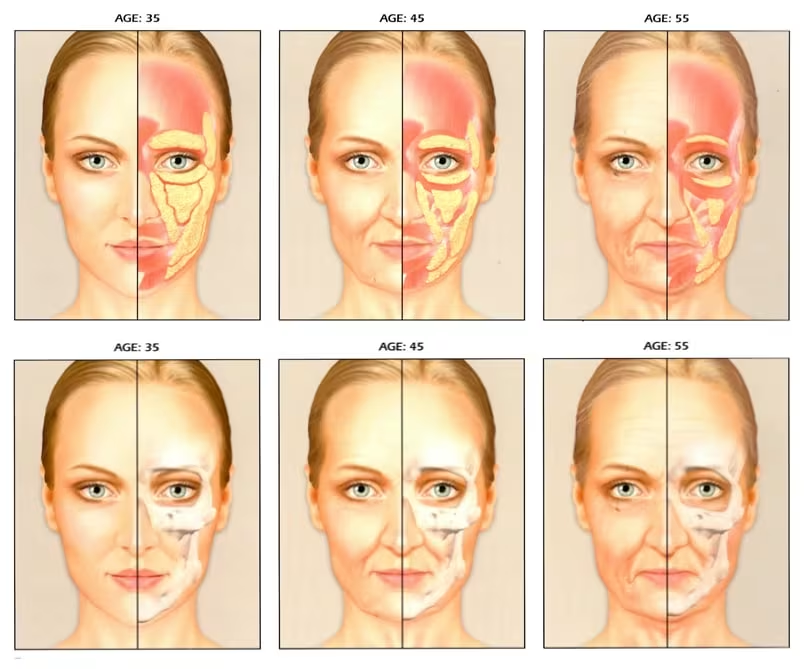
As we age, our faces naturally lose volume due to the gradual depletion of facial fat, collagen, and elastin.
This loss leads to the formation of wrinkles, hollows, and sagging skin that contribute to an aged appearance. Facial fat grafting addresses these concerns by replenishing lost volume using your body’s own tissue, offering a natural approach to facial rejuvenation.
Understanding Facial Fat Grafting
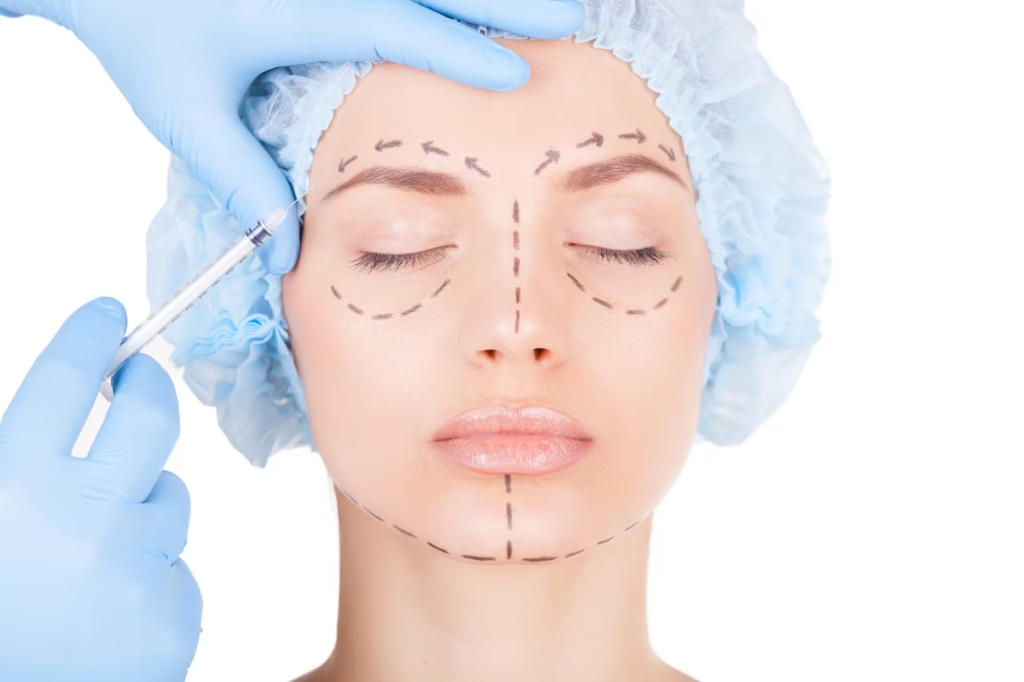
What Is Facial Fat Grafting?
Facial fat grafting is a specialized aesthetic procedure that utilizes autologous fat (your own body fat) to restore volume and enhance facial contours.
Unlike synthetic fillers, fat grafting uses tissues harvested from your own body—typically from the abdomen, thighs, or flanks—through a mini-liposuction technique.
The harvested fat is then processed, purified, and carefully injected into specific facial areas requiring volumization.
You might be interested: The Complete Guide to Facelift in Singapore
Types of Facial Fat Used
There are primarily two types of processed fat used in facial grafting procedures:
- Microfat: Larger fat particles suitable for volume restoration in areas like the cheeks, temples, and chin.
- Nanofat: Ultra-refined fat where mature fat cells are filtered out, leaving stem cells and growth factors that improve skin quality rather than add volume. Nanofat is ideal for delicate areas like around the eyes and for improving skin texture and pigmentation.
Related article: Types of Non-Surgical Facelifts in Singapore
Benefits of Facial Fat Grafting
Natural, Long-Lasting Results
One of the most significant advantages of fat grafting over synthetic fillers is its natural origin. Since the procedure uses your own tissue, there’s no risk of allergic reactions or rejection.
Furthermore, successfully transplanted fat cells establish a blood supply and integrate with surrounding tissues, potentially lasting for years or even permanently—far longer than the temporary effects of most dermal fillers.
Regenerative Properties
Beyond simple volume replacement, facial fat grafting offers remarkable regenerative benefits.
The adipose tissue contains mesenchymal stem cells and growth factors that stimulate collagen production, improve blood circulation, and enhance overall skin quality.
These regenerative properties contribute to improved skin texture, elasticity, and even pigmentation over time.
Comprehensive Facial Enhancement
Fat grafting allows for precise, three-dimensional facial sculpting with the ability to address multiple concerns simultaneously:
- Restoring volume to hollow temples, cheeks, and under-eyes
- Smoothing nasolabial folds and marionette lines
- Enhancing lip fullness and definition
- Improving chin projection and jawline contours
- Softening forehead lines and wrinkles
- Correcting facial asymmetries and irregularities
Related article: Dermal Fillers in Singapore: The Comprehensive Guide
Complementary Benefit: Body Contouring
As fat is harvested from donor sites like the abdomen or thighs, patients often enjoy the added benefit of subtle body contouring in these areas.
This “two-in-one” approach—slimming one area while enhancing another—is particularly appealing to many patients seeking comprehensive aesthetic improvement.
Read more: Non-Invasive Body Contouring Treatments in Singapore
Ideal Candidates for Facial Fat Grafting
Good candidates for facial fat grafting in Singapore typically include:
- Individuals with age-related volume loss in the face
- Those seeking natural alternatives to synthetic fillers
- Patients with facial asymmetry or contour irregularities
- Individuals with adequate fat deposits for harvesting
- Those in good overall health without contraindications to surgery
- Patients with realistic expectations about results
It’s worth noting that extremely lean individuals with BMI below 19 may have insufficient fat for harvesting, potentially limiting the extent of treatment possible.
Target Areas for Facial Fat Grafting
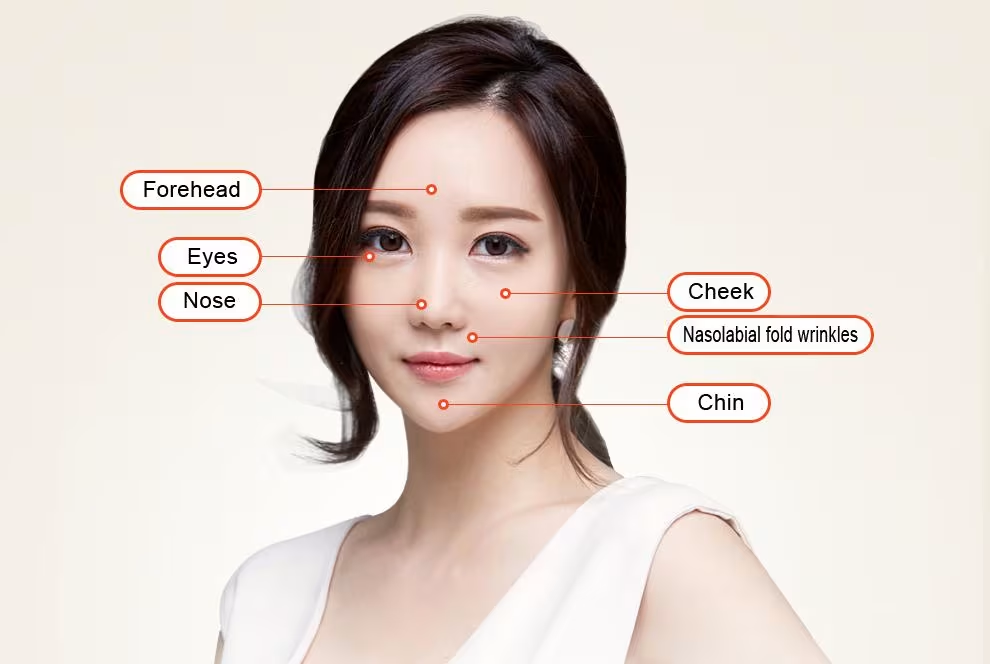
Forehead and Temples
The forehead and temples often develop hollowness with age, creating a gaunt appearance.
Fat grafting in these areas restores natural convexity and fullness, providing a more youthful upper facial frame.
Periorbital Region (Around the Eyes)
The area around the eyes is particularly susceptible to volume loss, resulting in hollow tear troughs, dark circles, and a tired appearance.
Careful micro or nanofat grafting can dramatically improve this delicate region, brightening the eyes and creating a more rested look.
Midface and Cheeks
Cheek volume loss is a hallmark of facial aging. Fat grafting can restore the natural fullness of the cheeks, enhancing their projection and creating a lifted appearance throughout the midface.
Nasolabial Folds and Marionette Lines
These prominent facial creases running from the nose to mouth corners and from mouth corners to chin can be softened significantly with strategic fat placement, creating a smoother, less aged appearance.
Lips
Lip augmentation using fat offers a natural alternative to filler injections, providing subtle enhancement of both lip volume and definition with potentially longer-lasting results.
Jawline and Chin
Strategic fat placement along the jawline and chin can improve definition, create a more balanced profile, and enhance overall facial proportions.
You might be interested: Fat Transfer: Risks, Benefits, Costs
The Facial Fat Grafting Procedure
Pre-Procedure Consultation
Before undergoing facial fat grafting, you’ll have a comprehensive consultation with your plastic surgeon in Singapore. This session typically includes:
- Assessment of your facial structure and volume deficiencies
- Discussion of your aesthetic goals and expectations
- Identification of suitable donor sites for fat harvesting
- Explanation of the procedure, recovery, and potential outcomes
- Review of your medical history and suitability for the procedure
Preparation for Surgery
To prepare for facial fat grafting, you may be advised to:
- Stop taking blood-thinning medications, anti-inflammatory drugs, and certain supplements for 2 weeks before surgery
- Stay well-hydrated in the week prior to ensure optimal fat harvesting
- Discontinue smoking at least 6 weeks before surgery to improve fat graft survival
- Arrange for transportation home after the procedure
- Wear comfortable clothing on the day of surgery
The Procedure Step-by-Step
Facial fat grafting is typically performed as an outpatient procedure in Singapore under local anesthesia, with sedation or general anesthesia options depending on the extent of treatment and patient preference.
The procedure generally follows these steps:
- Anesthesia Administration: Local anesthesia is applied to both the donor and recipient sites. If sedation or general anesthesia is used, this is administered first.
- Fat Harvesting: Small, discreet incisions (2-3mm) are made at the donor site. Using a specialized thin cannula connected to a gentle suction device, the surgeon carefully extracts fat cells. Common donor sites include the abdomen, inner thighs, and flanks.
- Fat Processing: The harvested fat is processed to remove impurities, excess fluids, and damaged cells. This may involve centrifugation, filtration, or other purification methods. For nanofat preparation, additional processing is performed to remove mature fat cells.
- Fat Injection: Using small cannulas or needles, the purified fat is carefully injected into the predetermined facial areas in small amounts and multiple layers to ensure optimal integration and survival.
- Closure and Dressing: The tiny incisions at both donor and recipient sites are closed with small sutures or surgical tape, and minimal dressings are applied.
The entire procedure typically takes between 45 minutes to 2 hours, depending on the extent of treatment areas.
You might like: List of Aesthetic Treatments and Costs in Singapore
Recovery and Results
Immediate Post-Procedure Period
Following facial fat grafting, patients can expect:
- Mild to moderate swelling and bruising at both donor and recipient sites
- Some discomfort that can be managed with prescribed pain medication
- Initial overcorrection of treated areas (your surgeon may intentionally inject more fat than needed to compensate for expected resorption)
- Instructions to avoid putting pressure on grafted areas
Recovery Timeline
- Days 1-3: Peak swelling and bruising
- Days 4-7: Significant reduction in swelling; most patients can return to non-strenuous activities
- Weeks 1-2: Majority of visible bruising resolves; social activities can usually be resumed
- Weeks 2-4: Continued improvement in swelling; light exercise can be resumed
- Months 1-3: Final results begin to emerge as swelling fully subsides and transplanted fat establishes blood supply
Long-Term Results and Fat Survival
Fat graft survival varies among individuals. Typically, about 50-70% of transferred fat cells survive long-term, while the remainder is naturally resorbed by the body. Factors affecting survival include:
- Surgeon’s harvesting and injection technique
- Processing methods used
- Individual patient factors like blood supply and metabolism
- Post-procedure care and adherence to recovery guidelines
The final results of facial fat grafting stabilize around 3-6 months post-procedure when all swelling has resolved and surviving fat cells have established permanent residence.
These results can last for many years, with some components potentially being permanent.
Nanofat: Advanced Fat Grafting Technology
Nanofat represents the cutting edge of fat grafting technology in Singapore. Unlike traditional fat grafting that primarily adds volume, nanofat is processed to remove mature fat cells while preserving stem cells, growth factors, and other regenerative components.
Benefits of Nanofat
- Skin Quality Improvement: Nanofat can significantly enhance skin texture, elasticity, and tone
- Scar Treatment: Effective for improving the appearance of acne scars and surgical scars
- Fine Line Reduction: Can diminish fine lines, especially in delicate areas like around the eyes and lips
- Pigmentation Improvement: May help reduce uneven pigmentation and dark spots
Nanofat is often combined with traditional fat grafting in Singapore practices, with volumizing microfat used for structure and nanofat used for skin quality enhancement.
Facial Fat Grafting vs. Dermal Fillers
Many patients in Singapore contemplate whether to choose facial fat grafting or dermal fillers for facial volumization. Here’s a comparison to help understand the differences:
| Aspect | Facial Fat Grafting | Dermal Fillers |
|---|---|---|
| Origin | Autologous (your own tissue) | Synthetic materials (hyaluronic acid, calcium hydroxylapatite, etc.) |
| Duration | Potentially years to permanent | Typically 6-18 months |
| Procedure Complexity | Surgical procedure requiring fat harvesting | Quick, non-surgical injection |
| Downtime | 1-2 weeks | Minimal to none |
| Cost | Higher initial investment, potentially more economical long-term | Lower initial cost, requires regular maintenance |
| Versatility | Can address volume and improve skin quality | Primarily addresses volume |
| Risk of Rejection | None | Minimal but possible allergic reactions |
| Results Visibility | Gradual, final results in 3-6 months | Immediate |
You might be interested: Nose Fillers and Nose Threadlifts in Singapore
Potential Risks and Complications
While facial fat grafting is generally safe, especially in the hands of experienced Singapore plastic surgeons, potential risks include:
- Unpredictable Fat Resorption: Variation in the percentage of fat that survives long-term
- Asymmetry: Uneven fat survival between sides of the face
- Overfilling or Underfilling: Requiring adjustment procedures
- Bruising and Swelling: Temporary but can be significant
- Infection: Rare but possible at either donor or recipient sites
- Vascular Complications: Extremely rare but serious risk of fat embolism if fat is inadvertently injected into blood vessels
- Donor Site Complications: Including contour irregularities or seromas
Choosing the Right Surgeon in Singapore
The success of facial fat grafting heavily depends on the surgeon’s expertise, as it’s a highly technique-sensitive procedure. When selecting a surgeon in Singapore, consider:
- Board certification and specialized training in facial plastic surgery
- Specific experience with fat grafting procedures
- Before-and-after gallery of previous fat grafting patients
- Patient reviews and testimonials
- Thorough consultation process that addresses all your questions and concerns
- Clear explanation of realistic expectations and limitations
Post-Procedure Skincare and Maintenance
To optimize and maintain the results of your facial fat grafting procedure in Singapore, consider these recommendations:
- Sun Protection: Diligent use of broad-spectrum SPF to protect treated areas from UV damage
- Hydration: Maintaining good hydration internally and externally to support skin health
- Gentle Skincare: Using mild, non-irritating products during recovery and beyond
- Healthy Lifestyle: Maintaining stable weight, as significant weight fluctuations can affect fat graft appearance
- Follow-up Treatments: Occasional maintenance treatments may be recommended, including complementary procedures like laser therapy or microneedling to further enhance results
Comprehensive FAQ on Facial Fat Grafting in Singapore
How long do facial fat grafting results last?
Fat grafting results can last for many years, with some components potentially being permanent.
Typically, about 50-70% of transferred fat cells survive long-term and integrate with surrounding tissues. Once these cells establish a blood supply, they can remain indefinitely, though the natural aging process will continue.
This longevity makes fat grafting a more cost-effective option than repeated filler injections over time.
Is facial fat grafting painful?
The procedure is performed under anesthesia, so you won’t feel pain during the treatment.
Local anesthesia is used for both donor and recipient sites, with sedation or general anesthesia options available for more extensive treatments.
Post-procedure discomfort is typically mild to moderate and well-managed with prescribed pain medication. Most patients describe the sensation as soreness rather than sharp pain.
How much downtime should I expect after facial fat grafting in Singapore?
Most patients can return to light, non-strenuous activities within 3-5 days. Social recovery (when you feel comfortable being seen in public) typically takes 7-10 days as the majority of visible bruising and swelling subsides.
Full recovery with resolution of all swelling may take 2-3 weeks. Many Singapore clinics offer specific post-procedure protocols to minimize downtime.
What is the cost of facial fat grafting in Singapore?
Costs vary depending on the extent of the procedure, areas treated, surgeon expertise, and facility fees.
In Singapore, facial fat grafting typically ranges from SGD 3,500 to SGD 12,000. Some clinics offer package pricing when fat grafting is combined with other procedures.
While the initial investment is higher than fillers, the long-term value may be greater due to the durability of results.
Will I need multiple sessions of fat grafting?
While some patients achieve their desired results with a single session, others may benefit from staged procedures.
Because not all transferred fat cells survive, some surgeons in Singapore recommend a planned approach with 2-3 sessions spaced several months apart for optimal, predictable results.
This is particularly true for patients seeking significant volume enhancement or addressing severe facial atrophy.
Am I too thin for facial fat grafting?
Even individuals with lower body fat percentages usually have sufficient fat deposits for facial grafting, as the procedure requires relatively small amounts of fat.
However, those with BMI below 19 may have limited donor fat available, potentially restricting the extent of treatment. In such cases, your Singapore surgeon may recommend alternative or complementary treatments.
Can facial fat grafting be combined with other procedures?
Yes, facial fat grafting is frequently combined with other aesthetic procedures in Singapore for comprehensive facial rejuvenation. Common combinations include:
- Facelift or mini-lift for tissue repositioning alongside volume restoration
- Blepharoplasty (eyelid surgery) with periorbital fat grafting
- Laser skin resurfacing to enhance skin texture while fat grafting addresses volume
- Rhinoplasty with strategic fat grafting for refined nasal contouring
How is nanofat different from regular fat grafting?
Nanofat is specially processed to remove mature fat cells while preserving stem cells and growth factors.
While traditional fat grafting primarily adds volume, nanofat focuses on improving skin quality, reducing fine lines, and enhancing overall skin texture. In Singapore, many advanced practitioners use both techniques complementarily—microfat for structural volume and nanofat for skin rejuvenation.
What should I avoid before my fat grafting procedure?
For optimal results, Singapore surgeons typically recommend avoiding:
- Blood-thinning medications and supplements (aspirin, NSAIDs, vitamin E, fish oil) for 2 weeks prior
- Smoking and nicotine products for at least 6 weeks before and after (severely impacts fat survival)
- Alcohol consumption for 1 week before surgery
- Crash dieting or major weight fluctuations in the months before the procedure
How soon will I see results from facial fat grafting?
Results emerge gradually. Initial swelling creates temporary fullness that subsides over 2-3 weeks. As swelling resolves, some volume may appear to diminish due to both normal swelling reduction and partial fat resorption.
The definitive outcome becomes apparent around 3-6 months post-procedure when fat cells have established their blood supply and final volume is stable.
Can facial fat grafting help with acne scars?
Yes, especially when using nanofat techniques. The regenerative properties of adipose-derived stem cells can significantly improve scar texture, pliability, and appearance.
For deeper, atrophic acne scars, structural fat grafting can help elevate depressed areas, while nanofat can improve overall skin quality.
In Singapore, combination approaches with complementary treatments like laser or radiofrequency microneedling often yield the best results for acne scarring.
Conclusion
Facial fat grafting represents an advanced solution for facial rejuvenation and contouring in Singapore’s aesthetic medicine landscape.
By utilizing your body’s own tissues, this procedure offers natural-looking, potentially long-lasting results with the added benefit of skin quality improvement.
The procedure’s versatility allows for customized treatment of multiple facial concerns simultaneously, from hollowed temples to sunken cheeks and fine lines.
While requiring slightly more recovery time than non-surgical alternatives, the durability and natural integration of fat grafts make this an increasingly popular choice for patients seeking comprehensive facial enhancement.
When performed by skilled Singapore plastic surgeons with specific expertise in fat transfer techniques, facial fat grafting can provide remarkable rejuvenation with high patient satisfaction.
The combination of structural improvement through volume restoration and biological skin enhancement through stem cell activity makes this procedure uniquely positioned to address both the shape and quality aspects of facial aging.
If you’re considering facial rejuvenation options in Singapore, a consultation with a board-certified plastic surgeon specializing in fat grafting can help determine if this approach aligns with your aesthetic goals and expectations.
General shopping ideas, independent of this article’s advice.
Swipe to compare products →【Local Ready Stock】 KF94 Korea Mask | BFE ≥99% | 4 PLY | 3D Face MaskFrom S$1.58d'Alba_Store Italian White Truffle Nourishing Treatment Mask 1pc & 5pcsFrom S$3.81SKIN1004 Madagascar Centella Hyalu-cica Water-Fit Sun Serum SPF50 PA++++, No White Cast, Long-lasting, Hydrating, Lightweight, for Daily Use | 50mlFrom S$15.86Prices may vary by option. Check the final price and delivery on Shopee.