
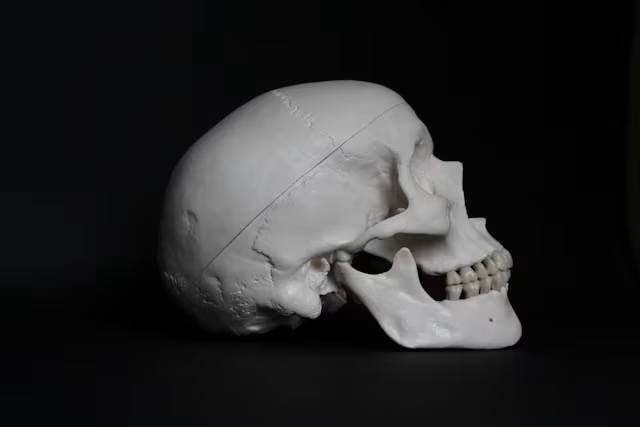
Temporomandibular Joint Disorder (TMJD) affects millions worldwide, causing pain and disruption to daily activities.
General shopping ideas, independent of this article’s advice.
Swipe to compare products → Biofinest Effervescent Vitamin C 1000mg D3 Zinc Collagen Multivitamin Calcium Magnesium Zinc Tablets Drink Sugar FreeFrom S$5.35Biofinest Probiotic 50 Billion CFU Enzyme Supplement 12 + 3 Prebiotics – Diet Slimming Eczema Detox Men Women (60 caps)From S$22.40Estalife Magnesium Glycinate 1000MG | Heart, Bone, Muscle, Sleep, Mood Health | 60 Veg CapsFrom S$13.99
Prices may vary by option. Check the final price and delivery on Shopee.
For residents in Singapore seeking treatment options, this guide explores everything you need to know about TMJD, from causes and symptoms to comprehensive treatment approaches available locally.
What is Temporomandibular Joint Disorder?
Temporomandibular Joint Disorder (TMJD) refers to a group of conditions that cause pain and loss of normal function to the temporomandibular joint (TMJ) or jaw joint.
The temporomandibular joint is located in front of the ear on both sides of the head, connecting the lower jawbone (mandible) to the skull.
This joint is made up of the lower jawbone and the skull, with a cartilage disk functioning as a shock absorber and joint lubricant that separates these two bones.
The TMJ and the muscles of chewing enable you to open your mouth, talk, and chew.
TMJD can originate from the chewing muscles, cartilage disk, or the joint bone itself.
This might be helpful: Which Dental Clinic in Singapore Should You Consider? (Sort by Reviews)
Understanding the Temporomandibular Joint Function
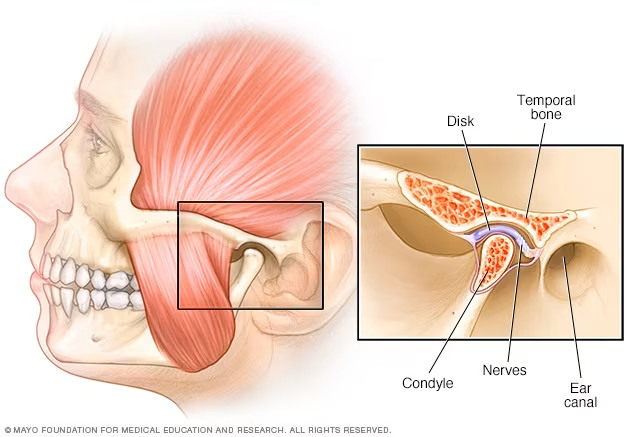
To better understand TMJD, it’s important to know how the temporomandibular joint normally functions:
Normal Joint Position
In a normal closed position, the lower jawbone is separated from the skull by a cartilage disk that acts as a cushion when the joint functions during activities like chewing, speaking, and yawning.
When opening your mouth, the disk follows the lower jaw bone, and they move together when you move your jaw up and down or side to side.
Abnormal Joint Position
In an abnormal joint, the disk can be displaced or torn. This displaced or torn disk can cause obstruction in joint movement.
A torn disk can result in excessive wear of the bone of the joint, causing inflammation and pain.
Read more: The Complete Guide to Orthodontists in Singapore
Common Signs and Symptoms of TMJD
TMJD manifests through various symptoms that can significantly impact quality of life:
- Difficulty Eating: You may experience difficulty in eating and a sudden inability to close your mouth, which may or may not resolve spontaneously.
- Joint Noises: You may hear clicking or grating noises when opening or closing your mouth. If not accompanied by pain and limitation in mouth opening, treatment may not be required.
- Pain: Dull pain when opening and closing your mouth can be experienced over the jaw joint area (just in front of the ear), cheek, or temple region. A clicking or grating sound may accompany the pain. The pain is usually due to inflammation of the joint and/or muscles and may cause difficulty in chewing and biting food. Sometimes headaches may occur.
- Restricted Jaw Movement: Trauma, excessive pressure, or degenerative changes to the joint can displace the cartilage disk, causing obstruction to its normal movement and leading to difficulties in opening and closing your mouth.
- Dental Problems: Teeth may become worn down, cracked, or fractured as a result of nocturnal grinding and clenching, leading to tooth sensitivity, pain, and difficulties in chewing.
Other symptoms may include:
- Ear pain, blocked feeling, ringing sounds, or dizziness
- Neck and shoulder pain
- Headaches
- Bite problems
- Feeling of a foreign object in the throat
Read more: Which Orthodontist in Singapore Should You Consider? (Sort by Reviews)
Causes and Risk Factors of TMJD
TMJD can be caused by various factors, often resulting from multiple contributing elements rather than a single cause. The main causes include:
- Prolonged Stress to the Jaw Joint: Habitual clenching or grinding of teeth (bruxism) overloads the joint, causing pain in the joint and muscles. Many people are unaware of these habits, especially if they occur during sleep.
- Trauma: A recent trauma or history of injury, such as a blow to the lower jaw or face, directly or indirectly, can injure the TMJ.
- Arthritis: The jaw joint may be damaged by arthritis (inflammation of the joint). Arthritis may be a degenerative process due to aging or associated with medical conditions such as Rheumatoid Arthritis or Psoriatic Arthritis.
Other contributing factors include:
- Poor bite and jaw relationships
- Poorly aligned teeth and skeletal problems
- Medical conditions including systemic arthritis and certain neurological conditions
- Stress and anxiety
- Psychological conditions like depression
- Excessive gum chewing or eating only on one side
- Poor posture, especially in the neck and upper back areas
You might be interested: Orthognathic (Jaw) Surgery in Singapore: Costs, Risks, Recovery
Who is Affected by TMJD?
While TMJ disorders can affect anyone regardless of age or sex, it’s more common in adults between 20-40 years of age.
More cases are seen in women compared to men. It’s estimated that more than 30% of adults will suffer from it at some point in their lives.
People with autoimmune disorders affecting the joints or those who suffer from arthritis should be especially vigilant about potential TMJD symptoms, as early intervention is crucial to prevent further damage.
You might like: Common Dental Problems in the Elderly: Symptoms, Prevention, and Treatment
Diagnosis of TMJ Disorders
If you suspect you have TMJD, seek consultation with a dentist or TMJ specialist. Most common issues are related to the masticatory muscles, with jaw disk displacements also frequently encountered.
A routine X-ray scan of the upper and lower jaw helps rule out obvious bony lesions. In some cases, more complex imaging may be necessary. This might include:
- MRI scans to assess soft tissues and disk position
- CT scans to evaluate bony structures
- T-scan to analyze bite patterns
To give a proper diagnosis, TMJ specialists in Singapore typically start with a comprehensive clinical examination.
The consultation may include questions about your medical history, medications, recent injuries, and other health conditions.
They will examine your jaw, its range of motion, and check for any abnormalities within the orofacial region.
If needed, additional imaging such as x-ray, MRI, CT scan, or oral biopsy may be taken.
Beyond the jaw, the specialist will also examine your face, neck, ears, mouth, and throat to ensure a comprehensive assessment.
Related article: Periodontist vs Orthodontist: Who You Should See
Treatment Options for TMJ Disorders in Singapore
TMJD may be treated surgically or non-surgically, depending on the diagnosis and cause.
Treatment goals include decreasing pain, reducing adverse loading to jaw joints and muscles, restoring function, normalizing daily activities, and improving quality of life.
Non-Surgical Treatments
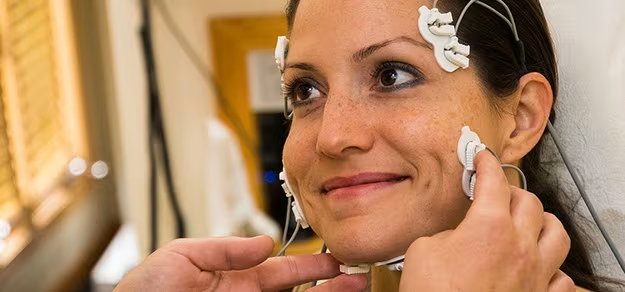
- Medications: Anti-inflammatory drugs can help reduce pain associated with TMJD.
- Therapies: Some TMJD symptoms can be relieved with the use of a bite guard (splint). A bite guard is especially useful for patients who grind their teeth during sleep.
- Physical Therapies:
- Low Level Laser Therapy (LLLT)
- Transcutaneous Electrical Nerve Stimulation (TENS)
- Ultrasound
- Physical therapy exercises
- Physiotherapy regimens
- Behavioral Approaches:
- Education and self-care
- Behavior modification for harmful habits
- Stress management and relaxation techniques
- Counseling
- Dental Interventions:
- Restoring worn down teeth
- Addressing bite problems
Might be helpful: Choosing The Right Dental Surgeon in Singapore
Surgical Treatments
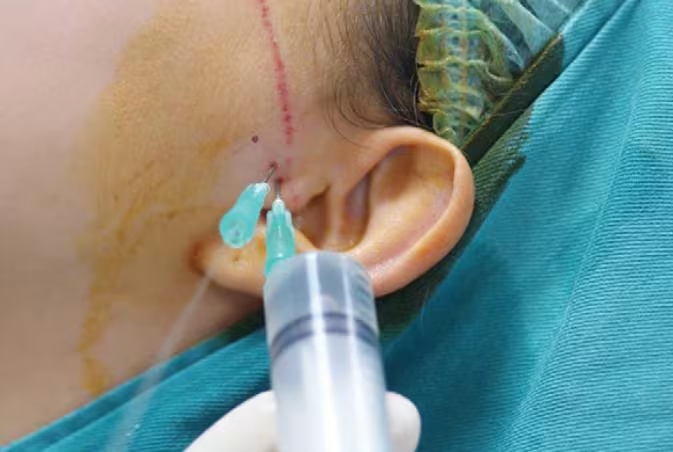
Surgery may be the best option for patients who don’t respond well to non-surgical treatment.
Surgical options range from simple washing of the joint with fluids (arthrocentesis) to inserting a small scope into the joint to examine and treat it (arthroscopy).
Oral surgeons in Singapore perform TMJ surgery of varying complexity, including:
- Simple washing of the joint (arthrocentesis)
- Inserting a scope (arthroscopy) through an incision to examine and treat the joint
- Open joint surgery
You may be a candidate for joint surgery if:
- There is disease in your joint
- There are degenerative changes in your joint
- You do not respond to non-surgical management
The TMJ Treatment Process in Singapore
A typical treatment journey at a TMJ specialist clinic in Singapore follows these steps:
1. Clinical Examination & Consultation
The first consultation typically lasts 1-1.5 hours. During this time, the specialist conducts a thorough assessment to understand your condition.
2. Diagnosis, Management & Treatment Plan
After the clinical examination, the specialist will propose a TMJ disorder treatment plan suitable for your specific needs, considering the cause, severity, and your lifestyle requirements.
3. Implementation of Treatment
Depending on your specific case, treatment may involve a combination of approaches:
For non-invasive treatment, options include laser and TENS therapy. TENS (Transcutaneous Electrical Nerve Stimulation) works by blocking pain signals to the brain, helping to relax facial muscles around the TMJ for improved comfort.
For patients with unresolved pain after initial treatments, more invasive options may be considered.
4. Multi-disciplinary Approach
Many TMJ specialists in Singapore work with physiotherapists for recommended exercise regimens.
Having a counselor as part of the treatment team can help with stress management to prevent relapse.
Preventing TMJ Disorders
Preventing TMJD involves several lifestyle approaches:
- Strive for a balanced lifestyle. Stressful episodes can predispose one to more grinding and clenching of teeth.
- Avoid excessive chewing on hard foods.
- Seek help promptly when you encounter signs and symptoms of TMJD.
Additionally, maintaining good posture and being mindful of jaw tension throughout the day can help reduce the risk of developing TMJD.
When to Seek Help from a TMJ Specialist in Singapore
You should seek help from a trained orofacial pain specialist or TMJ doctor if your quality of life has been affected.
There’s no need to live with unnecessary pain or worry.
It’s especially important to seek professional help if you experience:
- Persistent jaw pain lasting more than a few days
- Inability to fully open or close your mouth
- Clicking or popping sounds in the jaw accompanied by pain
- Jaw pain that interferes with eating or speaking
- Headaches or ear pain that may be related to jaw function
Those with autoimmune disorders affecting the joints or arthritis should be particularly vigilant about potential TMJD symptoms and seek early intervention.
FAQ Section
What causes jaw pain and TMJ disorders?
Jaw pain and TMJ disorders can be caused by various factors, including dental issues like misaligned teeth or bite problems, stress and tension, teeth grinding (bruxism), and problems with the temporomandibular joint connecting the jaw to the skull.
Seeking professional evaluation is important to identify the specific cause of your jaw pain or TMJ disorder.
Can lack of sleep cause jaw pain?
Yes, lack of sleep can contribute to jaw pain. When we don’t get enough restful sleep, our bodies can become tense, including the muscles in our jaw.
This tension can lead to jaw pain and discomfort.
Can misaligned teeth cause jaw pain?
Yes, misaligned teeth can be a potential cause of jaw pain. When your teeth are not properly aligned, it can create an imbalance in your bite, putting strain on the jaw joints and muscles.
Over time, this strain can lead to jaw pain and stiffness.
Do braces cause TMJ disorder?
While braces themselves don’t directly cause TMJ disorder, they can potentially contribute to its development in some cases. The adjustments made during orthodontic treatment can temporarily affect the alignment and function of the jaw joint, leading to jaw pain or discomfort. However, it’s essential to note that these effects are typically temporary and can be managed with the guidance of your orthodontist or dentist.
Does stress cause jaw pain?
Yes, stress can contribute to jaw pain. When we are under stress, we tend to clench our jaw or grind our teeth, putting extra pressure on the jaw joints and muscles.
This repetitive strain can result in jaw pain and discomfort.
Does teeth grinding cause jaw pain?
Yes, teeth grinding, medically known as bruxism, can cause jaw pain. The grinding action puts excessive pressure on the jaw joints and surrounding muscles, leading to pain and discomfort.
If you suspect you grind your teeth, it is advisable to consult with a healthcare professional for further evaluation.
Does sinus cause jaw pain?
In some cases, sinus infections can cause referred pain in the jaw area. The proximity of the sinuses to the jaw can result in discomfort that feels like jaw pain.
However, it is essential to consult a healthcare professional to accurately diagnose the source of your jaw pain.
Can TMJ disorder cause neck and shoulder pain?
Certainly! TMJ disorder, which affects the temporomandibular joint connecting your jaw to your skull, can indeed cause neck and shoulder pain.
The intricate network of muscles and connective tissues in your head, neck, and shoulders are interconnected, meaning that issues with the jaw joint can radiate discomfort to these areas.
Can TMJ disorder cause head tingling?
Yes, TMJ disorder can sometimes cause head tingling. The intricate network of nerves in the face, head, and neck region can be affected by the dysfunction of the temporomandibular joint.
This can result in tingling sensations that may be felt in the head. However, it’s important to consider that head tingling can also be caused by various other factors, so consulting a healthcare professional is advisable for an accurate diagnosis.
Can TMJ disorder affect hearing?
TMJ disorder can occasionally have an impact on hearing. The temporomandibular joint is located near the ear, and when it experiences dysfunction, it can affect the delicate structures responsible for hearing.
Some individuals with TMJ disorder may experience symptoms such as ear pain, tinnitus (ringing in the ears), or even temporary hearing changes.
If you suspect that your TMJ disorder is affecting your hearing, it’s best to consult with a healthcare professional for a comprehensive evaluation.
How long does jaw pain last?
The duration of jaw pain can vary depending on the underlying cause and individual circumstances. In many cases, jaw pain can improve with self-care measures such as rest, stress reduction techniques, and avoiding activities that exacerbate the pain.
However, if your jaw pain persists or worsens over time, it is advisable to seek help from healthcare professionals who can provide proper evaluation, identify the root cause, and recommend appropriate techniques and exercises to help alleviate the pain and promote recovery.
How to relieve TMJ disorder pain?
One of the highly effective approaches to relieving TMJ disorder pain includes osteopathy, a holistic approach that focuses on restoring balance and function to the body through gentle manipulation techniques.
Alongside this, incorporating relaxation techniques like deep breathing and meditation, using moist heat or cold packs, maintaining a jaw-friendly diet, practicing gentle jaw exercises, and adopting good posture can help alleviate discomfort.
If your TMJ pain persists or worsens, consulting with a specialist who focuses on TMJ disorders can provide personalized guidance and additional recovery options.
Should I see a doctor or dentist for jaw pain?
Determining whether to see a dentist or doctor for jaw pain depends on the suspected cause and individual circumstances.
If you suspect that dental issues, misaligned teeth, or teeth grinding are contributing to your jaw pain, consulting a dentist is recommended.
Dentists specialize in oral health and can evaluate your bite, teeth alignment, and provide appropriate guidance.
However, if you suspect a TMJ disorder, stress-related jaw pain, or persistent pain, seeking help from specialists like osteopaths and physiotherapists can be beneficial.
These healthcare professionals focus on the musculoskeletal system and can assess the alignment, mobility, and function of your jaw and related structures.
They can use manual techniques to alleviate muscle tension, improve joint mobility, and address imbalances that contribute to jaw pain.
A multi-disciplinary approach often provides the most comprehensive treatment.
Physiotherapists can provide exercises and therapies to improve the strength, flexibility, and function of your jaw and surrounding muscles.
Collaborating with various specialists as part of your healthcare team ensures a comprehensive approach to your recovery, addressing underlying causes, providing targeted therapies, and offering guidance on self-care techniques.
Conclusion
TMJ disorders can significantly impact quality of life, but with proper diagnosis and treatment, most patients can find relief.
Singapore offers comprehensive treatment options, from conservative therapies to advanced surgical interventions when necessary.
If you’re experiencing symptoms of TMJD, don’t hesitate to seek professional help from qualified TMJ specialists.
Early intervention can prevent further complications and help you return to a pain-free, functional lifestyle.
Remember that each individual’s experience with TMJD is unique, and treatment plans should be tailored to your specific condition, lifestyle, and needs.
With the right approach and professional guidance, TMJD can be effectively managed, allowing you to enjoy life without the limitations of jaw pain and dysfunction.
General shopping ideas, independent of this article’s advice.
Swipe to compare products →Biofinest Gummy Vitamin Supplement – Beauty Energy Sleep Metabolism Men Women Kids Probiotics Multivitamin (60 Gummies)From S$17.95Tradishot Immunity Boost Drink | Turmeric Shot (Extra Strength) | Boost Immunity Energy & Well-being [7x35mL]S$37.42Optimum Nutrition, Gold Standard, 100% Whey Protein Powder, 2lbs (907g ) / 5 lbs (2.27 kg) / 10 lbs (4.54 kg)From S$82.89Prices may vary by option. Check the final price and delivery on Shopee.