
Glaucoma has earned the concerning nickname “the silent thief of sight” for good reason.
This progressive eye condition often develops without noticeable symptoms until significant, irreversible damage has occurred. For Singaporeans, understanding this condition is particularly important, as its prevalence increases with age in our rapidly aging population.
General shopping ideas, independent of this article’s advice.
Swipe to compare products →![[🇸🇬 TOP SELLER] Upgraded Steam Spa Eye Mask | Heat pack | Heat Pad | Warmer | Sleep Mask | Eye Pack](data:image/gif;base64,R0lGODdhAQABAPAAAMPDwwAAACwAAAAAAQABAAACAkQBADs=) [🇸🇬 TOP SELLER] Upgraded Steam Spa Eye Mask | Heat pack | Heat Pad | Warmer | Sleep Mask | Eye PackFrom S$0.10Moffie【SG OFFICIAL】Glue-Free False Eyelash, Self Adhesive Eyelash Lash, Magnetic Eyelash, NO Glue LashFrom S$0.55[🇸🇬 READY STOCK]🔥Superior Upgraded Heat Pack | Heat Pad | Body Warmer | Feet Hand Warmer | Eye Warmer | AdhesiveFrom S$0.10
[🇸🇬 TOP SELLER] Upgraded Steam Spa Eye Mask | Heat pack | Heat Pad | Warmer | Sleep Mask | Eye PackFrom S$0.10Moffie【SG OFFICIAL】Glue-Free False Eyelash, Self Adhesive Eyelash Lash, Magnetic Eyelash, NO Glue LashFrom S$0.55[🇸🇬 READY STOCK]🔥Superior Upgraded Heat Pack | Heat Pad | Body Warmer | Feet Hand Warmer | Eye Warmer | AdhesiveFrom S$0.10Prices may vary by option. Check the final price and delivery on Shopee.
What Is Glaucoma?
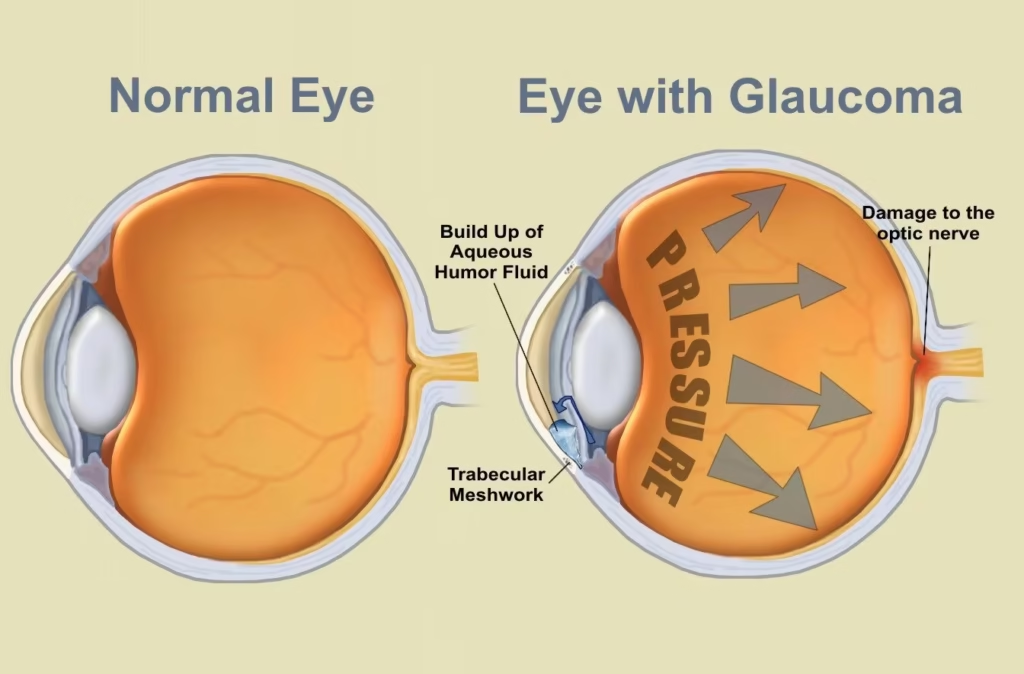
Glaucoma refers to a group of eye conditions characterized by damage to the optic nerve, which plays a critical role in transmitting visual information from the eye to the brain. This damage typically occurs due to elevated pressure within the eye (intraocular pressure), though not all cases follow this pattern.
What makes glaucoma particularly concerning is how it progresses. The initial vision loss occurs mainly in the peripheral visual field and often goes undetected.
Central vision and reading ability usually remain intact until later stages of the disease. By the time many patients notice visual changes, substantial and permanent damage may have already occurred.
The condition develops when there’s an imbalance between the production and drainage of fluid within the eyeball. This fluid, called aqueous humor, normally flows continuously through the eye, but when this drainage system becomes compromised, pressure builds up and damages the delicate optic nerve fibers.
Glaucoma in Singapore: Statistics and Impact
In Singapore, glaucoma affects approximately:
- 3% of individuals over the age of 40
- 10% of people over the age of 70
These numbers are particularly significant for our population, given Singapore’s aging demographic.
The condition ranks among the leading causes of irreversible blindness in the country, and across Asia, glaucoma cases are projected to increase dramatically—from 59 million in 2020 to approximately 80 million by 2040.
For Singapore’s healthcare system, this represents a substantial challenge, but with proper awareness, early detection, and comprehensive treatment approaches, many cases of vision loss can be prevented or minimized.
Types of Glaucoma
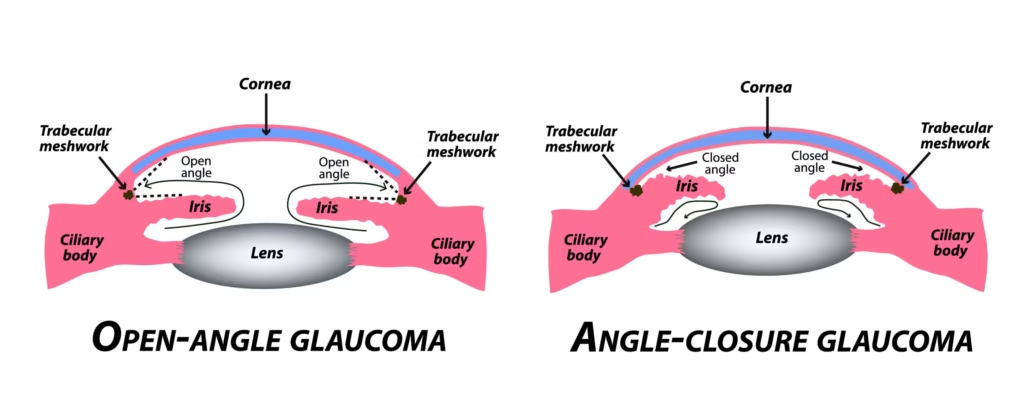
Understanding the different types of glaucoma is essential for recognizing symptoms and seeking appropriate treatment. Each type has distinct characteristics and progression patterns.
Open-Angle Glaucoma
Open-angle glaucoma represents the most common form of the condition in most countries, including Singapore. Its key characteristics include:
- Progression: Slow and gradual development, often over many years
- Symptoms: Typically asymptomatic in early stages
- Pressure increase: Gradual and painless elevation of intraocular pressure
- Drainage angle: The angle between the iris and cornea remains open, but the drainage channels (trabecular meshwork) function inadequately
This form of glaucoma can be particularly dangerous because patients may not experience any symptoms until significant vision loss has already occurred.
Angle-Closure Glaucoma
Angle-closure glaucoma occurs when the drainage angle between the iris and cornea becomes narrowed or blocked. This type is particularly prevalent among Asian populations, making it especially relevant for Singaporeans. It presents in two distinct forms:
Acute Angle-Closure Glaucoma
This form constitutes a medical emergency requiring immediate treatment:
- Onset: Sudden and dramatic increase in intraocular pressure
- Symptoms: Severe eye pain, redness, blurred vision, halos around lights, headaches, nausea, and vomiting
- Progression: Rapid—can cause permanent vision loss within hours or days if untreated
- Emergency status: Requires immediate medical intervention
Chronic Angle-Closure Glaucoma
- Progression: Slower, more gradual narrowing of the drainage angle
- Symptoms: Often asymptomatic, similar to open-angle glaucoma
- Detection: Frequently discovered during routine eye examinations
Normal Tension Glaucoma
This less understood variant challenges the typical understanding of glaucoma:
- Defining feature: Optic nerve damage occurs despite normal intraocular pressure (typically between 10-21 mmHg)
- Possible factors: May relate to blood flow problems to the optic nerve or increased sensitivity to normal pressure levels
- Treatment approach: Still focuses on lowering intraocular pressure, which has shown to slow progression
Secondary Glaucoma
Secondary glaucoma develops as a consequence of other conditions or factors:
- Causes: May result from poorly controlled diabetes, eye inflammation, tumors, previous eye surgery, advanced cataracts, or steroid medication use
- Presentation: Can be open-angle or closed-angle in nature
- Treatment: Addresses both the underlying cause and the glaucoma
Congenital/Childhood Glaucoma
This rare form affects infants and young children:
- Characteristics: Present at birth or developing in early childhood
- Symptoms: Enlarged eyes, corneal haziness, excessive tearing, and unusual sensitivity to light
- Urgency: Requires prompt evaluation and treatment to prevent long-term vision impairment
Symptoms of Glaucoma
The symptoms of glaucoma vary significantly depending on the type and stage of the condition.
Early-Stage Symptoms
For most forms of glaucoma, particularly open-angle and chronic angle-closure types, early symptoms are minimal or non-existent. This lack of warning signs is precisely why glaucoma is often detected only after significant damage has occurred.
When symptoms do appear, they may include:
- Gradual loss of peripheral (side) vision
- Difficulty adjusting to low light conditions
- Frequent changes in eyeglass prescriptions
Advanced-Stage Symptoms
As the condition progresses, patients may experience:
- Increasingly narrowed field of vision (tunnel vision)
- Blurred or hazy vision
- Difficulty with contrast sensitivity
- Problems with glare management
- Eventual central vision impairment
Acute Angle-Closure Glaucoma Symptoms
Unlike other forms, acute angle-closure glaucoma presents with sudden, severe symptoms that constitute a medical emergency:
- Intense eye pain
- Severe headache, often on the same side as the affected eye
- Redness in the affected eye
- Blurred or decreased vision
- Halos or rainbow-colored rings around lights
- Nausea and vomiting
- Sudden visual disturbance
Anyone experiencing these symptoms should seek immediate medical attention, as prompt treatment is essential to prevent permanent vision loss.
You might want to read: Cataract Surgery in Singapore: A Complete Guide to Symptoms, Costs, and Recovery
Risk Factors for Glaucoma
Understanding your risk factors can help determine how frequently you should undergo eye examinations and how vigilant you should be about potential symptoms.
Age
- Risk increases significantly after age 40
- Particularly elevated for those over 60-80 years old
Family History
- Having immediate family members with glaucoma substantially increases risk
- Certain genetic factors have been identified that contribute to glaucoma development
Ethnicity
- Asians, including Singaporeans, have higher susceptibility to angle-closure glaucoma compared to other ethnic groups
- This makes awareness particularly important within Singapore’s population
Medical Conditions
- Diabetes
- Hypertension (high blood pressure)
- Heart disease
- Migraines
- Raynaud’s phenomenon (circulation disorder affecting blood flow to extremities)
Eye-Related Factors
- Refractive errors:
- Myopia (short-sightedness) increases risk for open-angle glaucoma
- Hyperopia (long-sightedness) increases risk for angle-closure glaucoma
- Previous eye injuries or surgeries
- Thin corneas
- Inherently high intraocular pressure
Medication Use
- Extended use of corticosteroids (eye drops, oral medications, or inhaled forms)
- Certain medications that dilate pupils can trigger acute angle-closure in predisposed individuals
Diagnosis of Glaucoma
Early detection through comprehensive eye examinations is crucial for preventing vision loss from glaucoma. These evaluations typically include several specialized tests.
Tonometry
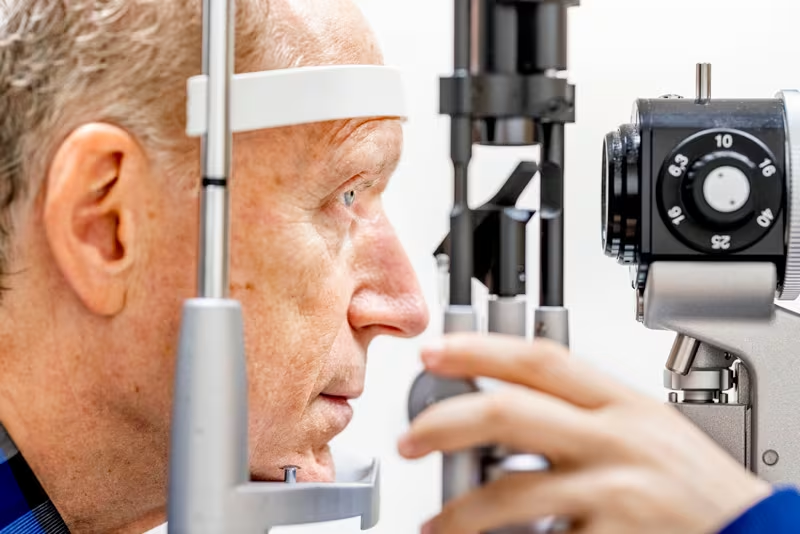
This fundamental test measures the pressure inside your eye:
- A small puff of air or a gentle touch with a specialized instrument determines intraocular pressure
- Normal range is typically 10-21 mmHg, though “normal” pressure varies among individuals
- Readings are just one factor in diagnosis, as normal-tension glaucoma occurs without elevated pressure
Ophthalmoscopy (Dilated Eye Examination)
This examination allows the ophthalmologist to evaluate the optic nerve:
- Eye drops dilate the pupil for better visualization of internal structures
- The physician examines the shape, color, and general health of the optic nerve
- Signs of damage may include changes in the optic disc’s appearance or thinning of the neural rim
Visual Field Testing (Perimetry)
This crucial test assesses peripheral vision function:
- Patient focuses on a central point while responding to light stimuli appearing in different areas of the visual field
- Maps blind spots and areas of diminished vision
- Helps track progression over time by comparing successive tests
- For accurate results:
- Maintain focus on the central marker
- Press the button only when seeing a light
- Hold the button down if needing to rest
- Inform technicians if you’re feeling tired or unwell
Gonioscopy
This examination evaluates the drainage angle between the iris and cornea:
- Uses a specialized contact lens with mirrors to visualize the drainage angle
- Helps determine if glaucoma is open-angle or angle-closure
- Influences treatment approach
Pachymetry
This test measures corneal thickness:
- Thinner corneas may be associated with increased glaucoma risk
- Affects interpretation of pressure readings
Advanced Imaging
Modern diagnostic techniques include:
- Optical Coherence Tomography (OCT): Provides detailed images of the optic nerve and retinal nerve fiber layer
- Heidelberg Retinal Tomography (HRT): Creates three-dimensional images of the optic nerve
- Scanning Laser Polarimetry: Measures the thickness of the nerve fiber layer
Treatment Options for Glaucoma
While glaucoma cannot be cured, proper treatment can control the condition and prevent or slow vision loss.
Treatment approaches depend on the type and severity of glaucoma, but all aim to reduce intraocular pressure to a level that’s safe for the optic nerve.
Read more: A comprehensive guide on LASIK in Singapore: Costs, suitability, risks
Medical Treatment
Eye Drops
The most common first-line treatment for most types of glaucoma:
- Prostaglandin analogs: Increase fluid outflow from the eye
- Beta-blockers: Reduce fluid production
- Alpha-adrenergic agonists: Both decrease fluid production and increase drainage
- Carbonic anhydrase inhibitors: Reduce fluid production
- Rho kinase inhibitors: Improve drainage through the trabecular meshwork
Proper administration is crucial:
- Wait at least five minutes between different drops
- Press gently on the inner corner of the eye after instilling drops to minimize systemic absorption
- Report any side effects to your ophthalmologist
Oral Medications
When eye drops alone are insufficient or in emergency situations:
- Carbonic anhydrase inhibitors may be prescribed as tablets
- Used temporarily in acute cases to rapidly lower pressure
Laser Treatment
For Open-Angle Glaucoma
- Laser Trabeculoplasty: Improves drainage through the trabecular meshwork
- Relatively quick, outpatient procedure
- Effects may wear off over time, requiring repeat treatment
For Angle-Closure Glaucoma
- Laser Peripheral Iridotomy (LPI): Creates a tiny hole in the iris to improve fluid flow
- Essential treatment for acute angle-closure and prevention in the fellow eye
- May be recommended prophylactically for those with narrow angles
Surgical Treatment
When medications and laser therapy aren’t sufficient, surgical intervention may be necessary:
Conventional Surgery
- Trabeculectomy: Creates a new drainage pathway for fluid to exit the eye
- Drainage Implant Surgery: Places a small tube to help drain fluid
- Both procedures require post-operative care and monitoring
Minimally Invasive Glaucoma Surgery (MIGS)
- Newer, less invasive procedures with faster recovery
- Often combined with cataract surgery
- Examples include iStent, Hydrus Microstent, and Xen Gel Stent
Treatment Considerations
- Glaucoma treatment is lifelong
- Regular monitoring is essential even after successful pressure control
- The goal is to preserve remaining vision, as damage cannot be reversed
- Treatment plans are individualized based on type of glaucoma, severity, rate of progression, and other health factors
Read more: Singapore’s Best Cataract Surgery Clinics (Sort by Reviews, Price & More)
Living with Glaucoma in Singapore
Managing glaucoma extends beyond medical treatment to encompass lifestyle adaptations and practical considerations.
Medication Management
For many patients, particularly elderly individuals, correctly administering eye drops can be challenging:
- Consider using drop administration aids if you have difficulty
- Set reminders to maintain regular dosing schedules
- Keep a log of medications and administration times
- Always bring your eye drops to appointments
You might be interested: TransPRK Surgery in Singapore
Visual Challenges and Adaptations
As glaucoma progresses, certain adaptations can help maintain independence:
- Improve home lighting, particularly in stairways and hallways
- Reduce glare by using window coverings and anti-glare screens
- Remove or secure tripping hazards like loose rugs
- Consider contrasting colors to make edges of steps and surfaces more visible
Driving Considerations
Glaucoma can affect driving ability, particularly through:
- Reduced peripheral vision
- Increased light sensitivity
- Difficulty adjusting to changing light conditions
Singapore’s driving regulations require adequate visual fields for licensing. If your glaucoma is advanced, discuss driving safety with your ophthalmologist.
Low Vision Services
For those with significant vision loss, Singapore offers specialized services:
- Low vision specialists can provide adaptive devices and strategies
- Occupational therapy can help with adjusting daily activities
- Organizations like the Singapore Association of the Visually Handicapped offer support and resources
Emotional and Psychological Support
Living with a chronic condition that threatens vision can be emotionally challenging:
- Consider joining support groups to connect with others facing similar challenges
- Discuss mental health concerns with healthcare providers
- Focus on what can be controlled—medication adherence, keeping appointments, and following recommendations
Prevention and Early Detection
While glaucoma cannot be entirely prevented, early detection and treatment can prevent blindness in most cases.
Regular Eye Examinations
Recommended screening frequency:
- Ages 40-54: Every 1-3 years
- Ages 55-64: Every 1-2 years
- Ages 65+: Every 6-12 months
- High-risk individuals: More frequent examinations as recommended by your eye doctor
Health Management
Controlling other health conditions may help reduce glaucoma risk or progression:
- Maintain good blood pressure control
- Manage diabetes effectively
- Avoid smoking
- Exercise moderately (though very strenuous exercise may temporarily increase eye pressure)
Medication Awareness
- Inform all healthcare providers about your glaucoma
- Be cautious with medications that may raise eye pressure, particularly steroid-containing products
- Always mention glaucoma when starting new medications
Read more: ReLEx SMILE vs LASIK: Which is right for me?
Eye Protection
- Wear protective eyewear during activities that risk eye injury
- Shield eyes from excessive sun exposure with quality sunglasses
- Take care of overall eye health
Healthcare Access in Singapore
Singapore offers various options for glaucoma care through its tiered healthcare system.
Public Healthcare
- Polyclinics provide primary care and referrals to specialists
- Restructured hospitals offer specialized ophthalmology services with subsidized rates
- Medisave can help cover some surgical costs, though not typically medications
Private Healthcare
- Private ophthalmologists and eye centers offer more appointment flexibility
- May provide access to newer treatments and technologies
- Generally involves higher out-of-pocket costs
Community Resources
- Regular vision screening campaigns
- Public education initiatives about eye health
- Support from organizations like the Singapore National Eye Centre (SNEC) and Singapore Association of the Visually Handicapped
Frequently Asked Questions (FAQ)
What makes glaucoma so dangerous?
Glaucoma is dangerous primarily because it causes irreversible damage to the optic nerve, and early stages typically produce no noticeable symptoms.
Many patients only realize they have the condition after significant vision loss has already occurred.
This silent progression means that by the time symptoms become apparent, the damage cannot be reversed—only prevented from worsening.
Can glaucoma be cured?
No, glaucoma cannot be cured. However, with proper treatment and management, further vision loss can be prevented or significantly slowed in most cases. Treatment is lifelong and focuses on lowering intraocular pressure to a level that’s safe for the optic nerve.
How quickly does glaucoma progress?
The progression rate varies significantly depending on the type of glaucoma, individual factors, and how well the condition is controlled.
Chronic forms like open-angle glaucoma typically progress slowly over years, while acute angle-closure glaucoma can cause rapid vision loss within hours or days if untreated.
Regular monitoring by an ophthalmologist helps track any changes and adjust treatment accordingly.
Is glaucoma hereditary?
Yes, glaucoma has a significant genetic component. Having a close family member (parent or sibling) with glaucoma increases your risk by 4-9 times compared to the general population.
Several glaucoma genes have been identified, though environmental and other factors also play important roles in determining who develops the condition.
Will I go blind if I have glaucoma?
With proper treatment and regular monitoring, most glaucoma patients today do not go blind. However, without treatment, glaucoma can eventually lead to blindness.
The key factors determining outcomes include early detection, adherence to treatment, regular follow-up with eye specialists, and individual response to therapy.
How do eye drops for glaucoma work?
Glaucoma eye drops work through different mechanisms to lower intraocular pressure. Some reduce the production of aqueous humor (the fluid inside the eye), while others improve its drainage.
Different classes of eye drops function through various biochemical pathways, which is why multiple types may sometimes be prescribed together for better pressure control.
Can I still drive if I have glaucoma?
Many people with glaucoma can continue driving, particularly in early stages when peripheral vision remains largely intact. However, as the condition advances and peripheral vision deteriorates, driving safety may be compromised.
In Singapore, driving licenses require adequate visual fields. Your ophthalmologist can assess your visual function and advise on driving safety.
Some patients may need to restrict their driving to daytime or familiar routes.
Does glaucoma affect both eyes?
While glaucoma often affects both eyes, it frequently progresses at different rates in each eye. Open-angle glaucoma typically involves both eyes, though one may be more severely affected.
Acute angle-closure glaucoma can initially present in just one eye, but the fellow eye is at high risk and may require preventive treatment.
Regular comprehensive examinations of both eyes are essential for proper management.
Are there any lifestyle changes that can help manage glaucoma?
While lifestyle changes cannot cure glaucoma, certain modifications may support overall eye health and treatment effectiveness:
- Maintaining a healthy blood pressure (both very high and very low pressure can impact optic nerve health)
- Regular moderate exercise (though very strenuous exercise may temporarily increase eye pressure)
- Avoiding smoking
- Limiting caffeine intake, which can temporarily elevate eye pressure in some individuals
- Staying well-hydrated
- Sleeping with the head slightly elevated to potentially reduce nighttime pressure spikes
Always discuss lifestyle modifications with your ophthalmologist, as recommendations vary based on individual circumstances and glaucoma type.
How often should I get my eyes checked for glaucoma?
Screening recommendations depend on age and risk factors:
- For those without risk factors: Every 2-4 years before age 40, every 1-3 years from 40-54, every 1-2 years from 55-64, and annually after age 65
- For those with risk factors (family history, elevated eye pressure, certain ethnicities): More frequent examinations starting at an earlier age
- For diagnosed glaucoma patients: Follow-up frequency depends on severity and stability, ranging from every 1-2 months for unstable cases to every 6-12 months for well-controlled glaucoma
Your ophthalmologist will recommend an appropriate examination schedule based on your specific situation.
You maybe interested in: The Ultimate Guide to Treating Dry Eyes in Singapore
What’s the difference between a visual field test and regular vision testing?
A standard vision test primarily measures central vision acuity—essentially how clearly you can see objects directly in front of you, typically using an eye chart.
A visual field test, by contrast, evaluates your peripheral (side) vision and maps areas where vision may be diminished or absent.
Since glaucoma typically affects peripheral vision first, visual field testing is crucial for diagnosis and monitoring progression, even when central vision (measured in standard eye tests) remains normal.
Is laser treatment better than eye drops for glaucoma?
Neither option is universally “better”—the appropriate treatment depends on the type of glaucoma, severity, patient factors, and sometimes personal preference.
Laser treatments like SLT (Selective Laser Trabeculoplasty) for open-angle glaucoma may reduce or eliminate the need for drops temporarily, offering benefits for those who struggle with daily drop administration or experience side effects.
However, laser effects often diminish over time, and many patients eventually require drops again. For angle-closure glaucoma, laser peripheral iridotomy is often essential regardless of whether drops are also used.
Can children get glaucoma?
Yes, although pediatric glaucoma is relatively rare. Congenital glaucoma is present at birth or develops in infancy, while juvenile glaucoma appears during childhood or adolescence.
Signs may include enlarged eyes, excessive tearing, light sensitivity, and cloudy corneas. Pediatric glaucoma often requires surgical treatment and specialized care.
Children with family histories of early-onset glaucoma should undergo regular eye examinations.
What should I do if I miss a dose of my glaucoma eye drops?
If you miss a dose, apply the drops as soon as you remember. However, if it’s almost time for your next scheduled dose, skip the missed dose and continue with your regular schedule.
Never double-dose to make up for a missed application.
If you frequently forget doses, consider setting alarms, using smartphone apps designed for medication reminders, or asking family members to help remind you.
Discuss persistent difficulties with medication adherence with your doctor, as alternative treatment options might be considered.
Conclusion
Glaucoma represents a significant health challenge in Singapore, particularly with our aging population.
While the condition cannot be cured, understanding its nature, recognizing risk factors, seeking early detection, and adhering to treatment can prevent blindness in most cases.
If you’re over 40, have risk factors for glaucoma, or experience any unusual vision changes, schedule a comprehensive eye examination with an ophthalmologist. Don’t wait for symptoms to appear—by then, irreversible damage may have already occurred.
Remember that glaucoma management is a lifelong commitment, but with proper care, most people with glaucoma maintain good vision throughout their lives.
Stay vigilant, keep your regular eye appointments, and take control of your eye health.
General shopping ideas, independent of this article’s advice.
Swipe to compare products →mixshop Travel Vacuum Dispenser, Refillable Liquid, Spray, Pump, Eye-cream Bottle, Perfume AtomizerFrom S$0.62SG🔥WOSADO No.1-55 Magnetic Eyelashes ALL Designs Reusable Glue-Free Lashes Extension Frost Ice Pear Cuddly Bunny LashFrom S$39.805 Pairs 3D Soft Mink Hair False Eyelashes Fluffy Lashes Full Strips Handmade Eye Extesnion MakeupFrom S$2.85Prices may vary by option. Check the final price and delivery on Shopee.