
Understanding Vision Correction Needs in Singapore
Singapore has one of the highest rates of myopia (short-sightedness) in the world, particularly among children aged seven to nine years. This concerning trend can be attributed to multiple factors, including excessive near vision use, early exposure to interactive devices, poor visual lifestyle habits, and genetic predisposition.
With such high prevalence rates, it’s crucial for Singaporeans to understand all available options for vision correction beyond traditional glasses and contact lenses.
General shopping ideas, independent of this article’s advice.
Swipe to compare products →![[🇸🇬 TOP SELLER] Upgraded Steam Spa Eye Mask | Heat pack | Heat Pad | Warmer | Sleep Mask | Eye Pack](data:image/gif;base64,R0lGODdhAQABAPAAAMPDwwAAACwAAAAAAQABAAACAkQBADs=) [🇸🇬 TOP SELLER] Upgraded Steam Spa Eye Mask | Heat pack | Heat Pad | Warmer | Sleep Mask | Eye PackFrom S$0.10Moffie【SG OFFICIAL】Glue-Free False Eyelash, Self Adhesive Eyelash Lash, Magnetic Eyelash, NO Glue LashFrom S$0.55[🇸🇬 READY STOCK]🔥Superior Upgraded Heat Pack | Heat Pad | Body Warmer | Feet Hand Warmer | Eye Warmer | AdhesiveFrom S$0.10
[🇸🇬 TOP SELLER] Upgraded Steam Spa Eye Mask | Heat pack | Heat Pad | Warmer | Sleep Mask | Eye PackFrom S$0.10Moffie【SG OFFICIAL】Glue-Free False Eyelash, Self Adhesive Eyelash Lash, Magnetic Eyelash, NO Glue LashFrom S$0.55[🇸🇬 READY STOCK]🔥Superior Upgraded Heat Pack | Heat Pad | Body Warmer | Feet Hand Warmer | Eye Warmer | AdhesiveFrom S$0.10Prices may vary by option. Check the final price and delivery on Shopee.
Related: A comprehensive guide on LASIK in Singapore: Costs, suitability, risks
Among these options, vision correction surgery stands out as a one-time, long-lasting solution that can significantly improve quality of life by reducing or eliminating dependence on corrective eyewear.
What is TransPRK Surgery?
TransPRK (Transepithelial Photorefractive Keratectomy) represents one of the latest innovations in laser vision correction technology. Sometimes referred to as TransEpiLASIK or No-touch EpiLASIK, this procedure has revolutionized the approach to correcting refractive errors.
Unlike traditional PRK procedures that use alcohol or mechanical means to remove the outer layer of the cornea, TransPRK employs a single excimer laser to both remove the epithelium and reshape the cornea to correct vision problems.
This transformation makes it a one-step, no-touch procedure that offers several advantages over conventional methods.
Read more: Cataract Surgery in Singapore: A Complete Guide to Symptoms, Costs, and Recovery
The key feature of TransPRK is that it completely eliminates the need to create a corneal flap (which is required in LASIK) or use alcohol to loosen the epithelium (as in traditional PRK).
Instead, the entire procedure is performed using a single laser system—typically the advanced Schwind Amaris laser in Singapore facilities.
How TransPRK Works: The Procedure Explained

The TransPRK procedure is remarkably streamlined compared to other vision correction surgeries. Here’s a detailed breakdown of what happens during the treatment:
Step 1: Epithelial Removal
The Schwind Amaris laser precisely and gently ablates the surface epithelium cells of the cornea. Unlike mechanical methods, this laser-based approach ensures uniform removal with minimal trauma to the surrounding tissue.
You might be interested in: ReLEx SMILE in Singapore: Side effects, Costs, Suitability, Risks
Step 2: Corneal Reshaping
Using the same excimer laser, the surgeon then reshapes the cornea’s curvature to correct the patient’s specific refractive error, whether it’s myopia (short-sightedness), hyperopia (far-sightedness), or astigmatism.
Step 3: Recovery Support
Following the procedure, a bandage contact lens is placed on the eye. This lens acts as an artificial protective layer while the corneal epithelium regenerates itself, typically over a period of 3-5 days. The lens enhances comfort during the initial healing phase and is removed once the epithelium has sufficiently regrown.
Related: Implantable contact lens in Singapore: Benefits, side effects, costs
The entire surgical procedure typically takes only 15-20 minutes, though patients should plan to spend about two hours at the clinic on the day of surgery for preparation and initial recovery.
Who Is Suitable for TransPRK Surgery in Singapore?
Not everyone is an ideal candidate for TransPRK surgery. Comprehensive pre-operative assessment is essential to determine suitability. Here are the key factors that determine candidacy:
Ideal Candidates Include:
- Individuals aged 18 years or older
- Those with stable vision prescription for at least one year
- People with corneas that may be too thin for LASIK
- Individuals whose jobs or sports activities put them at higher risk of eye trauma
- Those with mild to moderate dry eye conditions
- Patients with refractive errors within the treatable range (myopia, hyperopia, astigmatism)
Not Suitable For:
- Pregnant or breastfeeding women due to hormonal fluctuations affecting vision
- People with progressive or unstable refractive errors
- Individuals with certain eye diseases such as keratoconus, glaucoma, corneal scars, or retinal issues
- Those with certain autoimmune or connective tissue disorders
- Patients taking medications that might interfere with corneal healing
During a comprehensive pre-procedure assessment, experienced optometrists and ophthalmologists in Singapore will thoroughly evaluate your eyes to determine if TransPRK is the right choice for your specific situation.
TransPRK vs. Other Vision Correction Procedures
Understanding how TransPRK compares to other popular vision correction procedures can help potential patients make informed decisions about their treatment options.
TransPRK vs. LASIK
| Factor | TransPRK | LASIK |
|---|---|---|
| Procedure Method | No corneal flap; epithelium removed and regrows naturally | Creates a corneal flap that needs to heal |
| Corneal Tissue Required | Less tissue needed | More tissue needed |
| Recovery Time | Longer (several days to weeks) | Faster (hours to days) |
| Initial Discomfort | Moderate to high for first few days | Minimal |
| Flap Complications | None (no flap created) | Possible (flap dislocation, etc.) |
| Suitability for Thin Corneas | Excellent | Limited |
| Suitability for Contact Sports | Excellent | Good (after complete healing) |
| Long-term Visual Outcomes | Comparable to LASIK | Excellent |
TransPRK vs. Traditional PRK/Epi-LASIK
Traditional PRK and Epi-LASIK are predecessors to TransPRK, and they differ in how the epithelium is removed:
- Traditional PRK: Uses alcohol or mechanical methods to remove the epithelium
- Epi-LASIK: Uses a microkeratome blade to separate the epithelium
- TransPRK: Uses the excimer laser to remove the epithelium
The all-laser approach of TransPRK offers several advantages:
- More precise epithelial removal
- Less trauma to the cornea
- Faster healing and recovery
- Reduced risk of complications
- More consistent results
TransPRK vs. SMILE
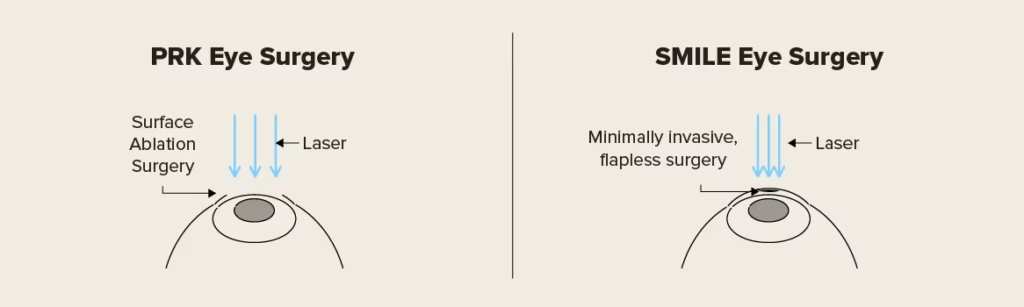
SMILE (Small Incision Lenticule Extraction) is another advanced vision correction procedure:
- SMILE creates a small lenticule inside the cornea which is then removed through a tiny incision
- TransPRK ablates tissue directly from the surface
- Both procedures are flapless and have excellent safety profiles
- SMILE generally offers faster recovery than TransPRK but may not be suitable for all refractive errors
- TransPRK can often treat a wider range of vision problems
The TransPRK Journey in Singapore
If you’re considering TransPRK surgery in Singapore, here’s what you can expect throughout the process:
Pre-Assessment Consultation
Before undergoing TransPRK, patients must complete a comprehensive pre-assessment. In Singapore, these assessments are typically available Monday through Saturday at specialized eye centers.
Important preparation guidelines include:
- Stop wearing soft contact lenses 7 days before assessment
- Stop wearing hard contact lenses (RGPs) 14 days before assessment
- Come prepared for multiple eye tests to determine your suitability
During this consultation, the ophthalmologist will:
- Check your corneal shape and thickness
- Measure your refractive error
- Assess tear production and quality
- Evaluate your overall eye health
- Discuss your visual goals and expectations
Day of Surgery
On the day of your TransPRK procedure in Singapore:
- Preparation: A nurse will clean your eyes, apply numbing eye drops, and provide a surgical gown
- Procedure: The 15-20 minute laser procedure will be performed
- Initial Recovery: You’ll rest in a recovery room for 20-30 minutes
- Post-Op Guidance: You’ll receive instructions for medication and follow-up care
Important notes for surgery day:
- Do not apply any eye makeup, perfume, or facial products
- Bring sunglasses to wear afterward as your eyes may be sensitive to light
- Arrange for someone to accompany you home
- Do not plan to drive on the day of surgery
Recovery Timeline
The recovery process after TransPRK in Singapore typically follows this pattern:
First 6 Hours:
- Eyes may feel “sandy” or irritated
- Vision will be blurry
- Discomfort can be managed with prescribed medication
Days 1-3:
- Bandage contact lens remains in place
- Moderate discomfort that gradually improves
- Blurry vision that begins to clear
- Regular use of prescribed eye drops is crucial
Days 4-7:
- Bandage contact lens is removed when epithelium has healed
- Vision continues to improve but may still be variable
- Most patients can resume basic daily activities
- Must continue to avoid getting water or soap in eyes
Weeks 1-4:
- Vision continues to stabilize
- Reading vision may improve more slowly than distance vision
- Some patients may need temporary reading glasses
- Follow instructions regarding eye drops and medications
1-3 Months:
- Vision typically reaches its stable state
- Night vision issues (halos, glare) gradually diminish
- Most patients achieve their final visual outcome
- Swimming can usually be resumed after 3 months
During recovery, patients must adhere to these guidelines:
- No exercise that causes sweat to enter the eyes for at least one week
- No water or soap contact with eyes for one week
- No eye makeup for one week
- No rubbing or scratching eyes
- Wear protective eye shields during sleep
- Use UV eye protection for one year
Follow-Up Care
Singapore eye centers typically recommend follow-up visits at:
- 1 day post-surgery
- 1 week post-surgery
- 1 month post-surgery
These appointments are crucial for monitoring healing and addressing any concerns promptly.
Success Rates and Outcomes of TransPRK in Singapore
Research and clinical studies have demonstrated impressive success rates for TransPRK procedures.
Meta-analyses have shown success rates of approximately 93-96% in helping patients achieve excellent vision correction.
In Singapore specifically, studies have reported postoperative uncorrected visual acuity of around 94.3%, indicating the procedure’s high effectiveness in the local population.
Factors contributing to these positive outcomes include:
- Advanced laser technology available in Singapore
- Highly trained ophthalmologists with specialized experience
- Comprehensive pre-operative assessment protocols
- Careful patient selection
- Thorough post-operative care
Most patients achieve 20/20 vision or better after TransPRK, making it comparable in effectiveness to other vision correction procedures despite its different approach and recovery profile.
Potential Risks and Side Effects
While TransPRK has an excellent safety profile, patients should be aware of potential side effects and complications:
Common and Temporary Side Effects
Dry Eyes: Almost all patients experience some degree of dryness and grittiness during the recovery period. This typically improves within weeks to months and can be managed with lubricating eye drops.
Night Vision Issues: Halos, glare, and starbursts, particularly at night, are common in the first few months. These visual aberrations typically improve gradually without requiring intervention.
Visual Fluctuations: Vision may fluctuate during the healing process, with clearer vision in the morning that might become slightly blurry by evening. This stabilizes over time.
Less Common Complications
Under-correction or Over-correction: In some cases, the procedure may not fully correct the refractive error or may slightly overcorrect it. Enhancement procedures can address this if necessary.
Corneal Haze: Diffuse scarring of the lasered cornea can cause blurring of vision in a small percentage of patients. This risk can be minimized with medication and good UV eye protection after surgery.
Delayed Healing: Some patients may experience slower epithelial healing than expected, which might prolong the recovery period.
It’s important to note that serious complications from TransPRK are rare, especially with proper screening, modern laser technology, and experienced surgeons—all of which are readily available in Singapore’s advanced eye care facilities.
Cost of TransPRK in Singapore
The cost of TransPRK surgery in Singapore varies depending on the clinic, surgeon experience, and technology used. While the procedure may be slightly more expensive than traditional PRK, many patients find the benefits justify the investment.
Patients should consider:
- Surgeon’s expertise and reputation
- Clinic facilities and technology
- Pre and post-operative care package
- Medication costs
- Any potential enhancement procedures if needed
Many Singapore eye centers offer financing options and packages that include all follow-up care to make the procedure more accessible.
Technological Advancements in TransPRK in Singapore
Singapore stays at the forefront of vision correction technology, with continuous improvements in TransPRK techniques:
Wavefront-Guided TransPRK
This personalized approach uses detailed mapping of the eye’s unique optical imperfections to guide the laser treatment.
Wavefront-guided TransPRK offers tailored correction for patients with complex vision issues, potentially resulting in better night vision and reduced glare.
Topography-Guided Treatments
By customizing the laser reshaping process to the specific shape of each patient’s cornea, topography-guided TransPRK can achieve more precise corrections, especially beneficial for patients with irregular astigmatism.
Advanced Eye-Tracking Systems
Modern laser platforms in Singapore feature sophisticated eye-tracking devices that compensate for any minor eye movements during the procedure. These systems can track eye position at speeds of up to 4,000 times per second, ensuring precise laser placement.
Why Choose Singapore for TransPRK Surgery
Singapore has established itself as a leading destination for advanced eye care, including TransPRK surgery, for several compelling reasons:
World-Class Medical Facilities
Singapore’s ophthalmology centers are equipped with state-of-the-art diagnostic and surgical equipment, including the latest generation of excimer lasers like the Schwind Amaris system.
Highly Qualified Surgeons
Eye surgeons in Singapore typically have extensive training, often internationally, and substantial experience with vision correction procedures. Many are actively involved in research and teaching, keeping them at the cutting edge of ophthalmological advances.
Comprehensive Care Approach
Singapore’s eye centers typically offer end-to-end care, from detailed initial assessment through surgery to thorough follow-up care. This integrated approach ensures optimal outcomes and patient satisfaction.
Regulatory Excellence
Singapore maintains strict regulatory standards for medical practices and devices, ensuring that all approved procedures meet international safety and efficacy benchmarks.
Frequently Asked Questions about TransPRK in Singapore
What makes TransPRK different from other laser eye surgeries?
TransPRK is unique because it uses a single excimer laser to both remove the epithelium (outer layer of the cornea) and reshape the cornea to correct vision problems.
Unlike LASIK, it doesn’t create a corneal flap, and unlike traditional PRK or Epi-LASIK, it doesn’t use alcohol or mechanical methods to remove the epithelium. This “no-touch” approach reduces trauma to the eye and potentially speeds up healing.
How long does the TransPRK procedure take?
The actual TransPRK procedure typically takes only 15-20 minutes to complete. However, patients should plan to spend about 2 hours at the clinic on surgery day for preparation, the procedure itself, and initial recovery time.
Is TransPRK painful?
During the procedure, patients feel little to no discomfort as numbing eye drops are applied beforehand. After surgery, most patients experience moderate discomfort for the first 24-72 hours, often described as a “sandy” or “gritty” feeling in the eyes.
This discomfort can be managed with prescribed medications and typically subsides as the epithelium heals.
How long is the recovery period after TransPRK?
The initial recovery takes about 3-5 days while the epithelium regenerates, during which time a bandage contact lens protects the eye. Most patients can resume basic daily activities within a week, though vision continues to stabilize over the following weeks.
Complete visual stabilization typically occurs within 1-3 months.
Can TransPRK correct astigmatism?
Yes, TransPRK can effectively correct astigmatism along with myopia (short-sightedness) and hyperopia (far-sightedness). The procedure reshapes the cornea to address these refractive errors, providing comprehensive vision correction.
Is TransPRK suitable for people with thin corneas?
Yes, TransPRK is particularly well-suited for people with thin corneas who might not be good candidates for LASIK.
Since TransPRK doesn’t require creating a corneal flap, it preserves more corneal tissue and can be a safer option for those with naturally thin corneas.
Can I play sports after TransPRK surgery?
Non-contact sports can usually be resumed within a week, provided you avoid getting sweat in your eyes (wearing a sweatband can help). For contact sports, it’s generally recommended to wait at least a month.
Swimming should be avoided for about three months to prevent infection and irritation.
Will I need to wear glasses after TransPRK?
Most patients achieve excellent vision after TransPRK and no longer need glasses or contact lenses for daily activities. However, some patients might still need reading glasses as they age due to presbyopia (age-related loss of near vision), which is a natural aging process unrelated to the surgery. In rare cases, if there’s under-correction or over-correction, patients might need glasses for specific activities.
How long should I take off work after TransPRK?
Most patients can return to office-based work within 3-7 days after surgery. However, if your job involves extensive computer use or work in dusty/dirty environments, you might need to take additional time off or take extra precautions when returning to work.
Can both eyes be treated at the same time?
Yes, in most cases, both eyes can be treated during the same TransPRK procedure. This is standard practice in Singapore and most eye centers worldwide. Having both eyes treated simultaneously means a single recovery period rather than two separate procedures and recovery periods.
How do I prepare for TransPRK surgery?
Preparation includes stopping contact lens wear (7 days for soft lenses, 14 days for hard lenses) before your assessment and surgery, avoiding eye makeup for 2 days before surgery, not using facial products on the day of surgery, and arranging for someone to accompany you home after the procedure.
Will I need enhancement (touch-up) procedures after TransPRK?
The majority of patients achieve their desired vision correction with a single TransPRK procedure. However, in some cases (approximately 5-10%), an enhancement procedure might be recommended if there’s residual refractive error after the initial healing is complete.
Your surgeon will determine if this is necessary during your follow-up appointments.
Is TransPRK safer than LASIK?
Both procedures have excellent safety profiles when performed by experienced surgeons. TransPRK eliminates flap-related complications that can occur with LASIK, making it potentially safer for certain patients, particularly those with thin corneas or those at risk of eye trauma due to their profession or activities.
However, TransPRK does have a longer recovery period compared to LASIK.
How long do the results of TransPRK last?
The vision correction achieved with TransPRK is generally permanent. However, natural aging of the eye can lead to changes in vision over time, particularly the development of presbyopia (difficulty with near vision) which typically begins in the 40s.
Additionally, in rare cases, there might be some regression of the correction over many years, but this is generally minimal.
How do I find the right surgeon for TransPRK in Singapore?
When selecting a surgeon for TransPRK in Singapore, consider their experience specifically with TransPRK procedures, their overall reputation, patient testimonials, the technology available at their clinic, and their approach to pre and post-operative care.
Most established eye centers in Singapore offer complimentary initial consultations where you can meet the surgeon and determine if they’re the right fit for your needs.
Conclusion
TransPRK represents an innovative advancement in vision correction technology, offering a safe and effective option for many Singaporeans seeking freedom from glasses and contact lenses.
While the recovery period is longer than some alternative procedures, the advantages—particularly for those with thin corneas or active lifestyles—make it an attractive choice.
Singapore’s world-class medical facilities, experienced ophthalmologists, and commitment to technological excellence ensure that patients have access to the highest quality TransPRK procedures.
With proper patient selection, comprehensive pre-operative assessment, and diligent post-operative care, TransPRK can provide lasting vision improvement and significantly enhance quality of life.
If you’re considering TransPRK surgery in Singapore, consult with a qualified ophthalmologist who can assess your unique situation and determine if this innovative procedure is right for you.
General shopping ideas, independent of this article’s advice.
Swipe to compare products →mixshop Travel Vacuum Dispenser, Refillable Liquid, Spray, Pump, Eye-cream Bottle, Perfume AtomizerFrom S$0.62SG🔥WOSADO No.1-55 Magnetic Eyelashes ALL Designs Reusable Glue-Free Lashes Extension Frost Ice Pear Cuddly Bunny LashFrom S$39.805 Pairs 3D Soft Mink Hair False Eyelashes Fluffy Lashes Full Strips Handmade Eye Extesnion MakeupFrom S$2.85Prices may vary by option. Check the final price and delivery on Shopee.