

Cellulite affects nearly 90% of women after puberty, creating the characteristic dimpled appearance on thighs, buttocks, and other areas.
While not medically concerning, this cosmetic issue impacts self-confidence for many.
Singapore offers numerous advanced treatment options ranging from non-invasive therapies to minimally invasive procedures.
This comprehensive guide explores everything you need to know about cellulite treatments available in Singapore, helping you make informed decisions about addressing this common concern.
Understanding Cellulite: What Causes Those Dimples?
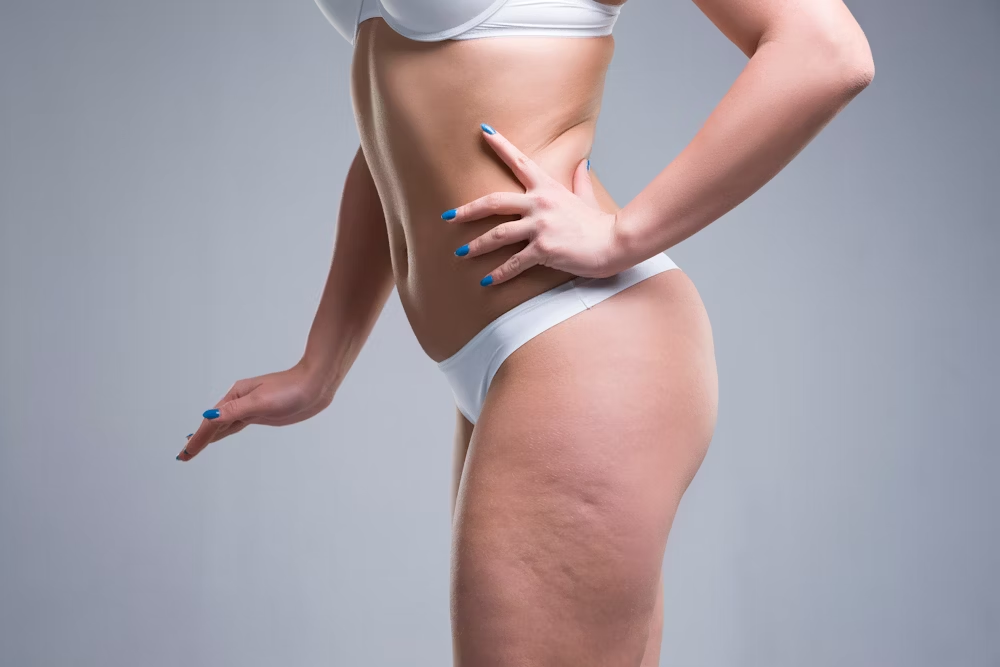
Cellulite occurs due to the herniation of subcutaneous fat through the fibrous tissue of the skin. This creates the unsightly dimpling that resembles an “orange peel” or “cottage cheese” texture.
The condition develops when fat cells push upward against the skin while fibrous connective bands (septa) pull downward, creating an uneven surface.
Despite common misconceptions, cellulite isn’t simply an issue of excess weight.
Even individuals with low body fat percentages can develop cellulite due to their unique connective tissue structure and skin characteristics.
The Science Behind Cellulite Formation
At its core, cellulite forms due to a complex interplay of factors:
- Fibrous Connective Tissue: The arrangement and tension of fibrous septa that anchor skin to deeper structures create the characteristic dimpling
- Fat Cell Distribution: As fat cells accumulate in compartments between these bands, they push outward against the skin
- Skin Structure: Thinner skin with decreased elasticity makes underlying fat deposits more visible
- Circulation Issues: Poor blood flow and lymphatic drainage contribute to fluid retention and worsen appearance
You might be interested: Non-Invasive Body Contouring Treatments in Singapore
Cellulite Grading System
Medical professionals classify cellulite severity using a standardized grading system:
Grade 0: No visible cellulite
Grade 1: The skin appears smooth when standing but shows 1-4 superficial depressions when pinched or when sitting. The skin may have a slightly “draped” appearance.
Grade 2: The skin displays 5-9 medium-depth depressions with a “cottage cheese” appearance when standing or sitting. The skin appears moderately draped.
Grade 3: The skin exhibits a “mattress” appearance with 10 or more deep depressions. The dimpling is visible regardless of position, and the skin is severely draped.
Understanding your cellulite grade helps determine the most appropriate treatment approach for your specific condition.
Why Women Experience Cellulite More Than Men
The significantly higher prevalence of cellulite in women (80-90% compared to approximately 10% in men) stems from fundamental anatomical and physiological differences:
- Connective Tissue Structure: Women’s fibrous septa are arranged in a parallel, vertical pattern that allows fat to protrude more easily, while men have a crisscrossed lattice structure that provides better structural support.
- Fat Distribution Patterns: Female hormones encourage fat storage in the lower body—particularly thighs, hips, and buttocks—precisely where cellulite most commonly appears.
- Skin Thickness: Women typically have thinner skin in cellulite-prone areas, making the underlying structural changes more visible.
- Hormonal Influences: Estrogen not only affects fat distribution but also impacts collagen production and connective tissue integrity, influencing how cellulite develops and appears.
These biological differences explain why cellulite remains primarily a female concern, though men can develop it under certain conditions.
Related article: List of Aesthetic Treatments and Costs in Singapore
Key Factors Contributing to Cellulite Development
Multiple factors influence the development and severity of cellulite:
- Genetics: Family history significantly impacts predisposition to cellulite through inherited skin structure, fat distribution patterns, and metabolism.
- Hormonal Changes: Estrogen, insulin, thyroid hormones, and prolactin all play roles in cellulite formation by influencing fat storage and connective tissue integrity.
- Lifestyle Factors:
- Sedentary behavior reduces muscle tone and circulation
- Poor dietary habits (particularly high intake of processed foods, sugars, and unhealthy fats)
- Inadequate hydration affects skin health and tissue function
- Smoking damages skin structure and impairs circulation
- Aging Process: As skin loses elasticity and thins with age, existing cellulite often becomes more pronounced, explaining why many notice increased visibility in their 30s and beyond.
- Circulatory Issues: Poor blood flow and lymphatic drainage contribute to fluid retention and metabolic waste accumulation in tissues.
Comprehensive Cellulite Treatment Options in Singapore
Singapore offers a wide range of advanced cellulite treatments, from non-invasive approaches to minimally invasive procedures.
Each targets different aspects of cellulite formation and varies in effectiveness, downtime, and cost.
Non-Invasive Treatment Options
Radiofrequency (RF) Therapy
RF treatments use controlled heat energy to address multiple cellulite contributors simultaneously:
- Stimulates collagen and elastin production to improve skin firmness
- Reduces fat cell volume in treated areas
- Enhances circulation and lymphatic drainage
- Improves overall skin texture and appearance
In Singapore, RF body toning treatments typically cost between $190-$600 per session, with results developing gradually over multiple sessions.
You might be interested: Non-Surgical Fat Reduction: Treatments, Benefits, and Risks
Acoustic Wave Therapy/STORZ Shockwave
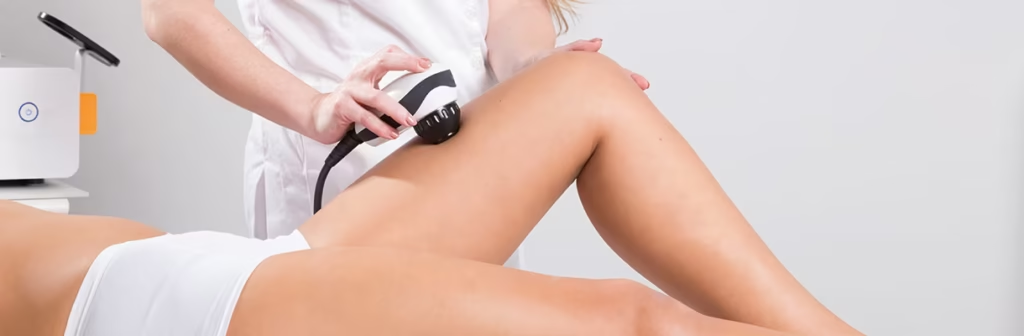
This advanced technology employs high-energy sound waves to treat cellulite through several mechanisms:
- Breaks down stubborn fat cells (adipose tissue)
- Stimulates collagen renewal for improved skin elasticity
- Enhances blood circulation in treated areas
- Reduces edema and fluid retention
- Disrupts the fibrous bands that create dimpling
STORZ shockwave is completely non-invasive with no downtime, allowing immediate return to daily activities.
Optimal results typically require approximately 10 sessions, with treatments starting from $150 per session in Singapore.
RF Vacuum Anti-Cellulite Treatment
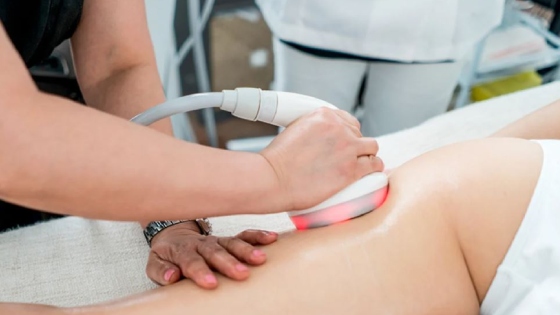
This innovative dual-technology approach combines radiofrequency with vacuum suction for enhanced results:
- Radiofrequency smooths and tightens skin from within by targeting fat cells and stimulating collagen
- Mechanical vacuum suction massages tissues to improve circulation and flush out deeper fat layers
- The combined approach creates more visible improvements than either technology alone
This treatment effectively targets the abdomen, thighs, flanks (saddlebags), hips (love handles), and buttocks, with prices starting from $150 per session in Singapore.
Cryolipolysis (Fat Freezing)
While primarily designed for fat reduction, cryolipolysis can also improve cellulite appearance:
- Freezes and destroys fat cells beneath the skin
- Treated cells are naturally eliminated by the body over time
- Reduces the fat protrusions that contribute to cellulite appearance
- Non-invasive with minimal discomfort
This technology works best for individuals with specific fat bulges contributing to their cellulite appearance rather than as a primary cellulite treatment.
Read more: Fat Freezing Singapore: Cryolipolysis Treatment Guide
Minimally Invasive Treatments
Subcision
Subcision effectively targets the root cause of cellulite dimpling—the fibrous bands that create the characteristic depressions:
- A specialized needle is placed into the skin to manually break these restrictive bands
- Once released, underlying fat distributes more evenly, creating a smoother surface
- 2-3 sessions over 2-4 months typically produce optimal results
- While effective, this treatment may cause temporary bruising and swelling
Subcision costs between $500-$1,000 per session in Singapore, with results lasting significantly longer than most non-invasive approaches.
You might be interested: A Complete Guide To Laser And Skin Treatments In Singapore
PDLLA Filler/Radiesse Treatment
Long-term collagen stimulators like PDLLA or Radiesse can enhance subcision results:
- Added to the skin after subcision to provide immediate filling of depressions
- Calcium particles in Radiesse stimulate collagen and elastin production
- Creates both immediate improvement and progressive enhancement
- Synergistically improves healing rate and overall skin appearance
This combination approach addresses both structural causes and surface appearance for more comprehensive improvement.
Laser Energy Treatments
Advanced laser technologies target cellulite through various mechanisms:
- Break up tough fibrous bands beneath the skin
- Stimulate collagen production to thicken and firm skin
- Reduce underlying fat deposits
- Improve overall skin texture and tone
Some laser treatments insert a small fiber beneath the skin to precisely target bands, while others work non-invasively through the skin surface.
Costs typically range from $500-$2,000 per session depending on the specific technology and treatment area.
You might be interested: Q-Switched Laser Treatment in Singapore
Vacuum-Assisted Precise Tissue Release
This specialized treatment uses a device with small blades to release the fibrous bands that cause dimpling:
- Precisely cuts connective tissue bands that pull down the skin
- Allows tissue to move upward and fill in the dimpled areas
- Creates more dramatic and immediate improvements than non-invasive options
- Requires minimal downtime
This option costs between $2,000-$4,000 per session in Singapore, reflecting its more invasive nature and pronounced results.
This might help: Guide to Finding a Good Aesthetic Doctor in Singapore
Topical Treatments and At-Home Solutions
While professional treatments yield the most significant improvements, several topical options can provide modest benefits:
Retinol-Based Products:
- Help thicken the skin through collagen stimulation
- Improve overall skin texture and tone
- Require consistent long-term application
- Results are subtle compared to professional treatments
Caffeine-Containing Formulations:
- Temporarily dehydrate fat cells by narrowing blood vessels
- Create a short-term smoothing effect
- Must be applied regularly to maintain results
- Most effective when combined with massage to improve circulation
Specialized Massage Techniques:
- Enhance lymphatic drainage and circulation
- Temporarily reduce fluid retention that can exacerbate cellulite
- May cost between $100-$400 per session in Singapore
- Requires regular sessions for maintained improvement
Combination Approaches for Optimal Results
For most individuals, the most effective cellulite reduction involves a multi-faceted approach that addresses all contributing factors:
- Professional Treatments: Selecting appropriate in-office procedures based on cellulite severity and type
- Supportive Home Care: Consistent use of prescribed topical products and self-massage techniques
- Lifestyle Modifications:
- Regular physical activity focusing on muscle toning in affected areas
- Balanced nutrition with adequate protein and reduced processed foods
- Proper hydration (minimum 8 glasses of water daily)
- Avoiding tight undergarments that restrict circulation
- Maintenance Protocols: Following recommended follow-up treatments to sustain improvements
A qualified provider can develop a customized treatment plan combining complementary approaches tailored to your specific needs and cellulite characteristics.
Comparing Treatment Options: Finding Your Ideal Solution
| Treatment Type | Sessions & Recovery | Cost Range (SGD) | Result Duration |
|---|---|---|---|
| RF Therapy | 8-10 sessions, No downtime | $190-$600/session | 6-12 months |
| Acoustic Wave | 8-10 sessions, No downtime | $150-$300/session | 6-12 months |
| RF Vacuum | 6-8 sessions, No downtime | $150-$400/session | 6-12 months |
| Subcision | 2-3 sessions, 1-2 weeks recovery | $500-$1,000/session | 1-2 years |
| PDLLA/Radiesse | 1-2 sessions, 3-7 days recovery | Varies by area | 1-2 years |
| Laser Treatment | 3-6 sessions, Minimal recovery | $500-$2,000/session | 1-2 years |
| Vacuum-Assisted Release | 1-2 sessions, 1-2 weeks recovery | $2,000-$4,000/session | 2+ years |
The ideal treatment depends on your cellulite grade, budget, downtime tolerance, and desired results timeline.
A thorough consultation with a qualified provider is essential for determining the most appropriate approach for your specific situation.
Setting Realistic Expectations
When pursuing cellulite treatment in Singapore, maintaining realistic expectations is crucial:
- Complete elimination is rare: Most treatments significantly improve rather than completely eliminate cellulite.
- Individual results vary: Factors like genetics, age, skin quality, and cellulite severity influence outcomes.
- Multiple sessions are typically necessary: Even the most advanced treatments usually require a series of sessions for optimal results.
- Maintenance is often required: Many improvements require periodic touch-up treatments to sustain results.
- Complementary approaches enhance outcomes: Combining professional treatments with lifestyle modifications yields the best long-term results.
Be wary of any provider promising complete, permanent cellulite elimination with a single treatment, as this sets unrealistic expectations that lead to disappointment.
Finding the Right Provider in Singapore
Selecting a qualified provider significantly impacts your treatment experience and results:
- Credentials and Specialization: Look for board-certified doctors or licensed aestheticians who specialize in body treatments.
- Experience With Cellulite Specifically: Ask how many cellulite procedures they perform monthly and request before-and-after photos of previous patients.
- Technology Access: Verify they offer advanced, proven technologies rather than outdated equipment.
- Customized Approach: The provider should conduct a thorough assessment and recommend treatments based on your specific cellulite characteristics rather than offering a one-size-fits-all solution.
- Transparent Pricing: Ensure all costs are clearly explained upfront, including any recommended maintenance treatments.
- Comfortable Communication: Choose a provider who listens to your concerns, answers questions thoroughly, and sets realistic expectations.
Most reputable clinics in Singapore offer complimentary initial consultations, providing an opportunity to evaluate the provider before committing to treatment.
Frequently Asked Questions About Cellulite Treatment
What exactly is cellulite and why does it form?
Cellulite is the dimpled appearance of skin that occurs when subcutaneous fat pushes against connective tissue.
It forms due to fibrous connective tissue bands that tether the skin to deeper structures, creating depressions as fat cells expand between these bands.
While often associated with weight gain, cellulite can affect individuals of all body types due to factors including genetics, hormonal influences, and connective tissue structure.
Can cellulite be completely eliminated?
Complete elimination of cellulite is challenging and somewhat rare. Most treatments significantly improve rather than completely eliminate its appearance. The effectiveness depends on cellulite severity, treatment type, individual skin characteristics, and consistency with maintenance protocols. Realistic expectations involve substantial improvement rather than perfect elimination.
How is cellulite different from regular fat?
Cellulite differs from regular fat in its structural arrangement and appearance. Regular fat accumulates evenly beneath the skin, while cellulite forms when fat pushes through connective tissue bands, creating a dimpled surface.
This structural difference explains why even lean individuals can have cellulite while some people with higher body fat percentages may not.
Treating cellulite requires addressing these structural elements rather than simply reducing overall fat.
Will weight loss improve my cellulite?
Weight loss may improve cellulite appearance in some cases but doesn’t always eliminate it completely.
Since cellulite involves structural factors beyond just fat content—including skin elasticity and connective tissue arrangement—reducing body fat alone may not resolve the issue.
Sometimes, significant weight loss can actually make cellulite more noticeable if skin laxity increases.
A comprehensive approach addressing all contributing factors typically yields better results than weight loss alone.
Are cellulite treatments painful?
Pain levels vary significantly depending on the treatment type. Non-invasive options like radiofrequency, acoustic wave therapy, and vacuum massage are typically painless or cause only mild discomfort, often described as a warm massage sensation.
Minimally invasive procedures like subcision usually involve topical anesthesia to ensure comfort during treatment, with some soreness afterward.
Most patients find the temporary discomfort well worth the improvement in cellulite appearance.
How many treatment sessions will I need?
The number of required sessions varies based on treatment type and cellulite severity.
Non-invasive treatments typically require 8-10 sessions spaced weekly or bi-weekly for optimal results. Subcision usually needs 2-3 sessions spaced 2-4 months apart.
Your provider will create a personalized treatment plan based on your specific condition, typically beginning with a series of initial treatments followed by periodic maintenance sessions to sustain results.
How long do results from cellulite treatments last?
Result longevity varies by treatment type and individual factors. Non-invasive treatments like radiofrequency or acoustic wave therapy typically produce improvements lasting 6-12 months before maintenance is needed.
Minimally invasive treatments like subcision can deliver longer-lasting results of 1-2 years or more.
Maintaining a stable weight, regular exercise, proper hydration, and periodic maintenance treatments all help extend results regardless of the initial treatment type.
Is there any downtime after cellulite treatments?
Downtime varies significantly between treatment options. Non-invasive treatments like radiofrequency, acoustic wave therapy, and vacuum massage typically involve no downtime, allowing immediate return to normal activities.
Minimally invasive procedures like subcision may require 1-2 weeks of limited activity while bruising and swelling subside.
Your provider should clearly explain the expected recovery process for your specific treatment plan during consultation.
Can I combine different cellulite treatments?
Combining different treatments often provides more comprehensive results since different technologies target various aspects of cellulite formation.
Many clinics in Singapore offer combination protocols specifically designed to address multiple cellulite factors simultaneously.
For example, subcision might be performed to release fibrous bands, followed by radiofrequency to improve skin firmness and texture.
Your provider can develop a customized treatment plan that leverages complementary approaches for optimal outcomes.
Are cellulite treatments covered by insurance?
Cellulite treatments are generally considered cosmetic procedures and are not typically covered by insurance in Singapore.
All costs are usually paid out-of-pocket by the patient. Some clinics offer package pricing for multiple sessions or financing options to make treatments more accessible.
During your consultation, ask about all associated costs, including any recommended maintenance treatments, to ensure you understand the full financial commitment.
What’s the difference between cellulite and lipedema?
Cellulite and lipedema are distinct conditions that affect the appearance of the body in different ways.
Cellulite is a cosmetic condition characterized by dimpled skin primarily affecting the thighs, buttocks, and abdomen.
It’s not painful and doesn’t cause health complications. Lipedema is a medical condition involving abnormal fat accumulation, primarily in the lower body, that causes pain, sensitivity, and easy bruising.
It can impair mobility in advanced stages and requires specific medical intervention rather than cosmetic treatments.
How soon will I see results from cellulite treatments?
Result timelines vary by treatment type. Non-invasive treatments like radiofrequency and acoustic wave therapy typically show gradual improvement over 1-3 months as collagen remodeling occurs.
Minimally invasive procedures like subcision may show initial improvement once swelling subsides (about 2-3 weeks), with continued enhancement over 2-3 months.
Your provider should set appropriate timeline expectations during your consultation based on your selected treatment approach and individual factors.
Can men get cellulite treatments too?
Yes, men can definitely receive cellulite treatments, though they represent a smaller percentage of patients since cellulite affects men less frequently (approximately 10% of men versus 80-90% of women). The same treatment options are available regardless of gender, though the approach may be customized based on male-specific fat distribution patterns and skin characteristics. Men typically respond well to treatment, particularly those targeting the abdomen and flanks where male cellulite most commonly appears.
Will my cellulite return after treatment?
Cellulite can recur after treatment, particularly if contributing factors are not addressed. The natural aging process continues, potentially creating new areas of dimpling over time. Significant weight fluctuations, hormonal changes, and decreased physical activity can all contribute to recurrence. Following maintenance recommendations, maintaining stable weight, staying physically active, and addressing any new areas promptly can help sustain long-term improvements in cellulite appearance.
What’s the best age to start cellulite treatment?
There’s no specific “best age” for cellulite treatment, as timing depends more on when cellulite becomes concerning to you personally.
Many people begin treatment in their 30s or 40s when cellulite typically becomes more noticeable due to natural aging processes.
Starting earlier (20s-30s) when cellulite first appears may allow for more preventative approaches and potentially better long-term results, but effective treatments are available at any age.
Consultation with a qualified provider can help determine optimal timing based on your specific situation.
Conclusion: Making an Informed Decision
Cellulite treatment has evolved significantly in recent years, with Singapore offering access to some of the most advanced technologies available globally.
Understanding the underlying causes of cellulite and the various treatment options empowers you to make informed decisions about addressing this common concern.
When pursuing cellulite treatment, remember that the most successful approaches typically combine professional treatments with supportive lifestyle modifications and consistent home care.
Working with a qualified provider who develops a personalized treatment plan based on your specific cellulite characteristics offers the best potential for significant, lasting improvement.
Whether you’re bothered by mild dimpling or more pronounced cellulite, effective solutions are available to help you achieve smoother, firmer skin and renewed confidence in your appearance.
Explore everyday essentials and compare current offers on Shopee.
Browse ShopeeAffiliate link: Urban Living may earn a commission from qualifying purchases, at no extra cost to you.