
Introduction to Visible Veins
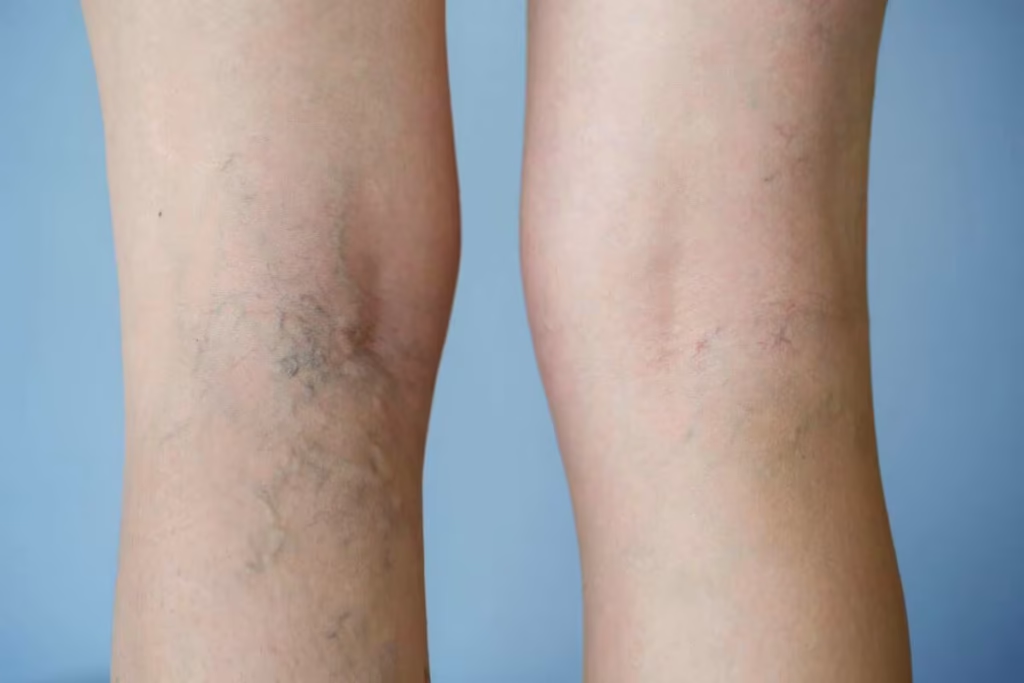
Veins appear blue because they carry deoxygenated blood back to the heart.
For many Asians with lighter skin tones, visible veins on the body—particularly on the face, arms, and legs—are quite common. As people age, they may notice the development of spider veins, which are small, damaged veins appearing blue, red, or purple in color.
These can manifest as webs, branches, or faint lines across the face or legs.
General shopping ideas, independent of this article’s advice.
Swipe to compare products → SKIN1004 Madagascar Centella Hyalu-cica Water-Fit Sun Serum SPF50 PA++++, No White Cast, Long-lasting, Hydrating, Lightweight, for Daily Use | 50mlFrom S$17.90Shieldmonster Magnetic iPhone Case 18 Pro Max/17 Pro Max/16e/15/14/13/12 Camera Control Charging M.S TPU Phone CoverFrom S$7.42Shieldmonster iPhone Case 360° 18 Pro Max/17e/16/15/14 Rotate Magnetic Ring Holder Wireless Charging Phone Cover CasingFrom S$16.00
Prices may vary by option. Check the final price and delivery on Shopee.
While most visible veins are benign and don’t cause discomfort, they can resemble bruises and may be aesthetically concerning for many individuals.
Causes of Visible Veins
Several factors contribute to the prominence of veins:
- Genetics: For some people, prominent veins, especially periorbital veins (around the eyes), run in the family.
- Regular Exercise: During exercise, blood pressure increases as more blood circulates throughout the body. Over time, this can widen veins, making them more visible.
- Hot Weather: Similar to exercise, hot weather increases blood flow in veins, enhancing their visibility.
- Skin Tone: Those with naturally fair or translucent skin allow more light to pass through, making veins more visible. Fair-skinned individuals are more likely to see blue or purple veins through their skin.
- Being Overweight: Excess fatty tissue can exert constant pressure on veins, resulting in enhanced vein definition, particularly in the legs.
- Tight Clothing: Restrictive clothing may limit blood flow and place pressure on veins, increasing their visibility, especially around the waist, thighs, and legs.
- Sun Exposure: Frequent exposure to the sun without proper protection can cause veins, particularly periorbital veins, to become prominent earlier in life.
- Lifestyle Factors: Activities like smoking can damage the skin and vascular system, making veins more apparent.
- Aging: As skin becomes thinner and more translucent with age, underlying veins become more visible.
You might be interested: Which Dermatologist in Singapore Should You Consider? (Sort by Reviews)
Types of Vein Conditions
Spider Veins
Spider veins are formed by the dilation of a small group of blood vessels located close to the surface of the skin. While they can appear anywhere on the body, they’re most commonly found on the face and legs.
They usually pose no health problem but may produce a dull aching in the legs after prolonged standing.
Varicose Veins
Varicose veins are abnormally swollen or enlarged blood vessels caused by a weakening in the vessel wall. Unlike spider veins, they can be harmful to a patient’s health and require treatment. Complications of varicose veins include:
- Phlebitis (inflamed tender vein)
- Thrombosis (a clot in the vein)
- Venous stasis ulcers (open sores from inadequate tissue oxygen and fluid retention)
You might like this: Guide to Seeing a Dermatologist in Singapore
Periorbital Veins
Periorbital veins are small, thin, and delicate veins located around the eyes. They can appear purplish, blue, reddish, or greenish and are visible through the skin due to several factors, including genetics, aging, and skin complexion.
These superficial veins, together with deeper veins, carry blood from parts of the face to the blood vessels in the eyes.
They are functionally not important, and removing them does not cause harm to health or blood flow.
Advanced Vein Removal Treatment Options
Combination Laser Treatment
Modern vein removal treatments use a combination of lasers to effectively target visible veins of different colors and sizes:
- Dual Yellow Laser (578nm wavelength) and Long-pulsed Nd:YAG Laser (1064nm wavelength) can treat veins ranging from 0.1mm on the face to larger 3mm veins on the legs, addressing blue, purple, and red capillaries.
By combining two laser treatments with different wavelengths, the procedure can effectively diminish the appearance of broken capillaries and veins under the skin.
These specific wavelengths penetrate the skin to treat discolorations without injuring the superficial skin layer and surrounding tissue.
Related article: The Ultimate Guide to Fractional Lasers in Singapore
How Laser Vein Removal Works
Vein removal lasers use specific wavelengths of light to target veins and capillaries in the skin.
The laser emits pulses of light that are absorbed by the hemoglobin in the blood, causing the blood vessel to heat up and coagulate through a process called thermocoagulation. The coagulated blood vessel is then gradually reabsorbed by the body, leaving the skin looking smoother and clearer.
The laser treatment is designed to be precise, targeting only the blood vessels that need treatment without damaging surrounding skin or tissue.
The settings are adjustable, allowing the doctor to customize the treatment to suit individual patient needs.
You may like: Fractional Laser Costs in Singapore
Fotona Vein Laser for Periorbital Veins
The Fotona vein laser helps minimize the appearance of periorbital veins using non-ablative, long-pulse Nd:YAG laser energy that penetrates to a depth of 5-6mm into the skin.
This unique and minimally invasive treatment is performed by doctors to ensure safe and suitable heating control while providing optimal comfort for the patient.
During treatment, the blood in the vein absorbs the laser energy and converts it into heat to destroy the vein walls.
This laser treatment requires specialist skill due to the insertion of metal internal eyeshields to protect the eyes.
Treatment of these veins should be undertaken only by practitioners with appropriate expertise to avoid risks of permanent blindness or partial vision loss.
The Fotona laser creates instant temperature increases limited to the targeted structures, operating at an optimal infrared wavelength of 1064 nm to effectively reduce the appearance of periorbital veins.
Related article: Fotona Laser Treatment in Singapore: 6D and 4D Facelifts
Sclerotherapy
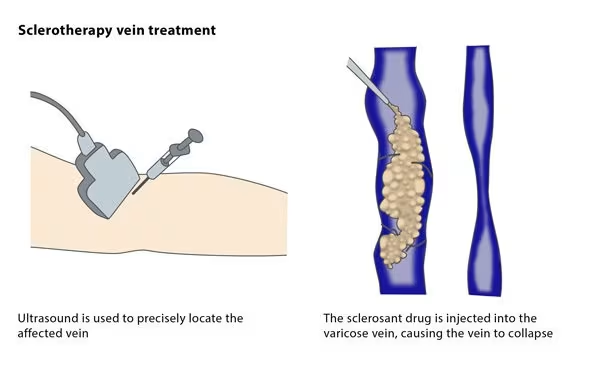
Sclerotherapy is a treatment for removing spider veins and some varicose leg veins. A specially developed chemical solution is injected with a very small needle into the spider or varicose vein.
The solution causes the vein to close up or collapse and become scar tissue that is eventually absorbed by the body.
The work of carrying the blood is shifted to other healthy blood vessels nearby.
Sclerotherapy procedure:
- The skin is cleaned and a tiny needle with the sclerosing agent is injected into the vein
- One to three injections are usually required to effectively treat any vein
- The same area should not be retreated for four to six weeks to allow for complete healing, although other areas may undergo treatment during this time
Post-sclerotherapy care:
- Wearing bandages and support hose for two days to three weeks following treatment
- Walking and moderate exercise may help speed recovery
- Minor side effects may include slight swelling of the leg or foot, minor bruising, itching, redness, and moderate soreness (these are temporary)
Treatment Results and Expectations
Number of Sessions Required
For laser vein removal:
- Some lightening of the veins should be visible after 1 session
- For a visible reduction of veins, typically 3 to 5 sessions are required
- Sessions are usually spaced about 4 weeks apart
For more prominent periorbital veins, treatment usually requires two sessions of laser therapy because an over-aggressive approach can result in heat damage to the skin and potential scarring.
The exact number of treatments will vary depending on the size, number, and location of veins being treated. A treatment plan will be customized based on individual assessment.
You might be interested: Q-Switched Laser Treatment in Singapore
Benefits of Modern Vein Removal Treatments
- Quick, convenient, and comfortable treatment
- Targeted approach that affects only the veins without destroying surrounding healthy skin
- Reduced appearance of unsightly blue, purple veins, and red capillaries
- Minimally invasive with little to no downtime
- Long-lasting results for improved cosmetic appearance
Safety and Side Effects
Laser vein removal is a non-invasive treatment that does not break the skin surface. It is generally well-tolerated by patients with very mild side effects that may include:
- Temporary skin redness
- Slight scabbing
- Minor swelling
- Bruising at the treatment site
These side effects typically disappear within a few hours or days. Most patients are able to resume normal activities immediately after the procedure, though it’s recommended to avoid strenuous exercise and hot baths for at least 3 days after treatment.
Who Should Consider Vein Removal Treatment
Vein removal treatments are ideal for:
- Men and women bothered by unsightly visible veins or red capillaries on the face, arms, or legs
- Those with periorbital veins that create a tired appearance
- Individuals with spider veins on the legs
- Patients who prefer non-surgical aesthetic treatments
Pre-Treatment Assessment
Before any treatment, a thorough medical history review will be conducted to:
- Determine skin type and severity of the condition
- Check for prior surgeries or treatments on the veins
- Exclude any deeper or more serious venous abnormality
If an underlying abnormality is suspected, further investigations may be advised prior to laser therapy.
You might like: What Treatment is Best for Anti-Aging?
Post-Treatment Care
After vein removal treatment, patients may be:
- Prescribed special medical compression stockings to keep treated veins closed (particularly for leg veins)
- Advised to avoid hot baths and strenuous exercise
- Informed about temporary darkening of the treated veins that will usually disappear after the first week
Most treated veins disappear in 2 to 6 weeks as the body resorbs them. Generally, patients are encouraged to resume most normal activities immediately, as there is minimal to no downtime involved.
Comparing Treatment Options
Laser Treatment vs. Sclerotherapy
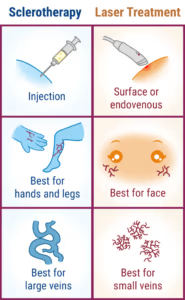
While both treatments can be effective, they have different applications:
- Laser vein removal is better suited for smaller and finer veins, especially on the face and around the eyes
- Sclerotherapy is more appropriate for larger veins, particularly on the legs
- Combining both treatments often yields the best results for comprehensive vein removal
Laser treatments have opened up new options for vein removal, particularly for those who previously had limited choices. The procedure is quicker, easier, and more comfortable than traditional methods.
Frequently Asked Questions
1. How does laser vein removal work?
Laser vein removal uses a focused beam of light that’s absorbed by the hemoglobin in your blood vessels.
This creates heat that damages the vein walls, causing them to collapse and eventually be reabsorbed by your body, making them fade from view.
2. Who is a good candidate for vein removal treatments?
Most people with visible veins can benefit from these treatments. Laser vein removal can be performed on most skin types, though treatment needs to be customized based on the size and color of the veins, skin color, and location on the body.
Modern lasers like those used at specialized aesthetic centers can treat people of all skin colors.
3. What are the benefits of laser vein removal compared to other treatments?
Laser vein removal combines speed and comfort for long-lasting results. It can target small blood vessels that are difficult or impossible to treat with sclerotherapy or vein stripping.
There’s also less likelihood of bruising compared to injection sclerotherapy, which can break the skin and blood vessel walls.
4. How many treatments are typically needed?
The number of treatments depends on the number, size, and location of the veins.
Most patients see some lightening after the first session, but typically 3-5 sessions spaced about 4 weeks apart are needed for optimal results.
A personalized assessment will determine the exact number of sessions needed.
5. Is laser vein removal painful?
Most patients describe the sensation as similar to a rubber band gently snapping against the skin. While generally tolerable, a topical anesthetic cream may be applied for comfort. The laser delivers heat in pulses lasting less than a thousandth of a second, targeting only unwanted veins while leaving surrounding skin untouched. Even sensitive areas like cheeks and nose can be treated with minimal discomfort.
6. Is there downtime after vein removal treatments?
Recovery time is generally minimal. Most patients can resume normal activities immediately after treatment, though it’s recommended to avoid strenuous exercise and hot baths for at least 3 days following the procedure.
7. What are periorbital veins and can they be treated?
Periorbital veins are the small, thin veins around your eyes that can appear blue, purple, or greenish.
They can be safely treated with specialized lasers like the Fotona Vein Laser, though this requires a specialist with appropriate expertise due to the proximity to the eyes.
8. Can sclerotherapy and laser treatments be combined?
Yes, for optimal results, many practitioners recommend combining laser treatments with sclerotherapy, especially for patients with both small and larger veins.
This comprehensive approach often leads to faster and more thorough clearance.
9. What causes spider veins to form?
Spider veins can be caused by several factors including genetics, photo-damaged skin and aging, skin inflammation like rosacea, and pregnancy or hormonal influences.
10. How long do results from vein removal treatments last?
Results from vein removal are generally long-lasting for the treated veins. However, new veins may develop over time, particularly if you have underlying factors that contribute to their formation. Follow-up treatments may be needed to maintain results.
11. Are there any special preparations before vein removal treatment?
Your doctor will provide specific instructions, but generally, you should avoid sun exposure, certain medications that may increase bleeding risk, and alcohol before treatment. Always follow your doctor’s pre-treatment guidelines.
12. Can all types of veins be treated with these methods?
While many veins can be treated, not all are suitable for laser treatment or sclerotherapy. Very large varicose veins may require different medical interventions.
A thorough assessment by a qualified practitioner will determine the best approach for your specific condition.
Conclusion
Modern vein removal treatments offer safe, effective, and non-surgical options for reducing the appearance of unsightly veins.
With advancements in laser technology and combination approaches, patients now have more choices than ever for addressing this common cosmetic concern.
Whether dealing with delicate periorbital veins, spider veins on the face, or more visible veins on the legs, customized treatment plans can help achieve clearer, more even-looking skin with minimal discomfort and downtime.
As with any aesthetic procedure, consultation with a qualified medical professional is essential to determine the most appropriate treatment approach based on individual needs and vein characteristics.
General shopping ideas, independent of this article’s advice.
Swipe to compare products →Shieldmonster Premium iPhone Case for 18 Pro Max/18 Pro/Duo/17 Pro Max/17e/16/15 Transparent Clear Hard Soft TPU PhoneFrom S$3.61The Ordinary Glycolic Acid 7% Exfoliating Toner – 100mL/240mL | Smooth Skin, AHA TonerFrom S$18.00Salicylic Acid Daily Gentle Cleanser 150ml, Salicylic Acid 0.5%, Tea Tree Leaf Oil 0.2%, Acne Treatment Cleanser for Acne-prone Skin, BHA CleanserS$12.14Prices may vary by option. Check the final price and delivery on Shopee.