
Understanding HIV and the Importance of Testing
Human Immunodeficiency Virus (HIV) is a virus that attacks the body’s immune system by destroying CD4 (T-cell) lymphocytes. If left untreated, HIV can progress to Acquired Immune Deficiency Syndrome (AIDS), a condition characterized by a severely compromised immune system.
Early detection of HIV through blood testing is crucial for effective treatment and management of this infection.
HIV often doesn’t present any symptoms in its early stages, making regular testing essential for those at risk.
Explore everyday essentials and compare current offers on Shopee.
Browse ShopeePrompt HIV testing is necessary to conclusively determine if an infection is present. Modern HIV testing in Singapore is conducted in professional, comfortable, and discreet settings, ensuring privacy and confidentiality for patients.
Read more: Health Screening in Singapore
How HIV Affects the Body
HIV weakens the immune system by damaging it over time. The virus enters the body through certain bodily fluids from an infected person, including blood, semen, vaginal fluids, rectal fluids, and breast milk.
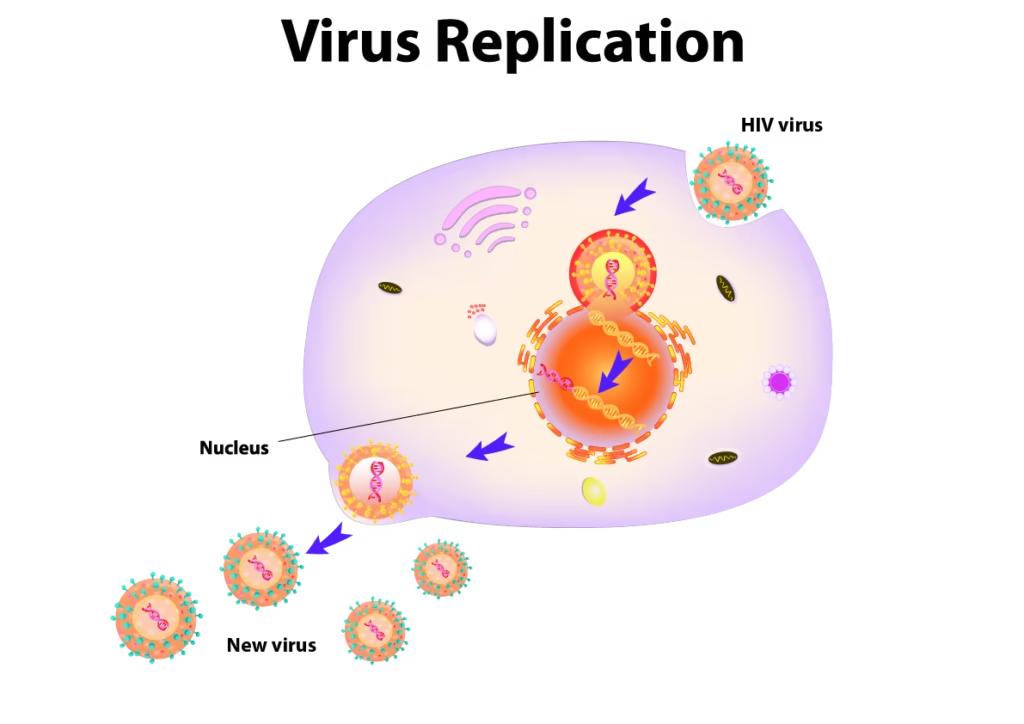
Once inside, HIV targets and destroys CD4 cells, which are vital for fighting infections.
The progression from HIV to AIDS varies from person to person and depends on factors such as age, overall health, and medical intervention.
Without treatment, HIV can severely compromise the immune system, making the person vulnerable to opportunistic infections and diseases that a healthy immune system would typically fight off.
You might be interested: Which Gynaecologist in Singapore Should You Consider?
HIV Transmission and Risk Factors
HIV is primarily transmitted through:
HIV is primarily transmitted through unprotected vaginal or anal sex with an infected person, sharing contaminated needles or sharps including drug equipment and tattoo needles, mother-to-child transmission during pregnancy, childbirth, or breastfeeding, and contact with infected blood and blood products such as through organ transplants or blood transfusions.
Common risk factors include:
Common risk factors include having unprotected sex with someone who has a detectable HIV viral load, multiple sexual partners, inconsistent condom use, engaging in sexual activities under the influence of alcohol or drugs, sharing needles or syringes, exchange of sex for money or drugs, and history of other sexually transmitted infections.
It’s important to note that HIV does NOT spread through:
It’s important to note that HIV does not spread through casual contact like shaking hands, hugging, or touching, saliva, tears, or sweat, kissing, coughing or sneezing, sharing food and drinks, using the same toilet seats, touching common surfaces, insect bites, or air or water.
You might like: Testosterone Replacement Therapy in Singapore: Symptoms, Causes, Benefits
Stages of HIV Infection
HIV infection progresses through four distinct stages:
1. Seroconversion Illness/Acute Retroviral Syndrome
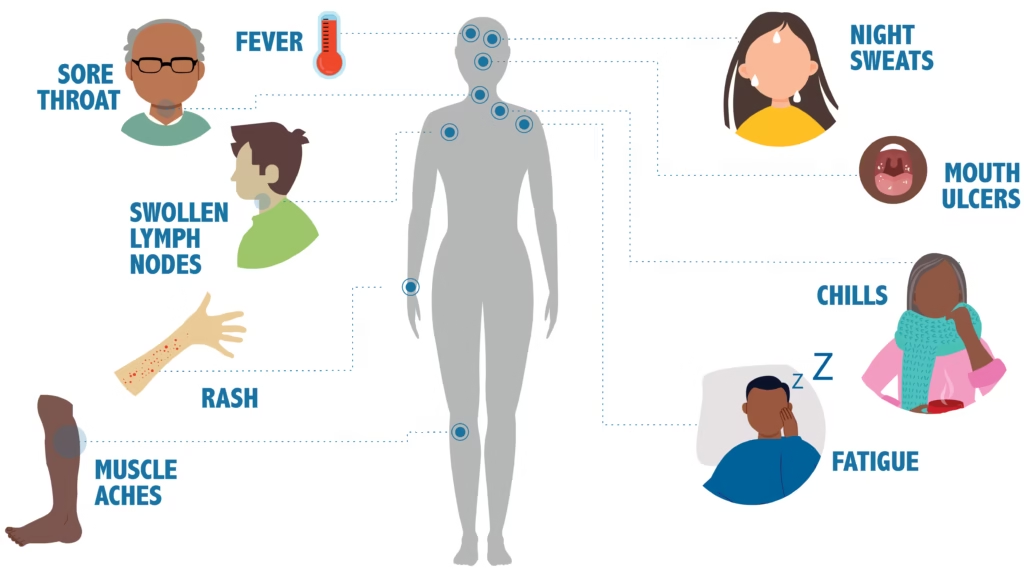
This occurs within 2-4 weeks after exposure when the virus multiplies rapidly and begins attacking the immune system, causing many people to experience flu-like symptoms including fever, night sweats, swollen lymph nodes, skin rash, sore throat, muscle pain, diarrhea, headache, and weight loss. Some individuals may also develop oral and genital ulcerations.
These symptoms typically resolve on their own within 1-3 weeks but can last up to three months.
You might be interested: Male Infertility in Singapore: Causes, Diagnosis, and Treatment Options
2. Asymptomatic (“Latent”) Disease
During the asymptomatic or “latent” disease phase, which can last several years, people with HIV generally don’t experience specific symptoms.
However, the virus continues actively replicating and destroying CD4 cells. Swollen lymph nodes may be present but often go unnoticed by the patient.
3. Symptomatic Disease
As the immune system weakens further during symptomatic disease, more obvious symptoms develop including persistent fever, unexplained weight loss, chronic swollen lymph nodes, skin and oral conditions such as oral thrush, hairy leukoplakia, and herpes zoster, and increased vulnerability to infections.
You might like: Understanding Low Libido in Women: Causes, Treatment and Impact
4. AIDS (Acquired Immune Deficiency Syndrome)
This is diagnosed when CD4 cell count falls below 200 cells/mm³ (compared to a healthy count above 500 cells/mm³) or when one or more opportunistic infections develop regardless of CD4 count.
Common opportunistic infections and conditions associated with AIDS include viral infections like persistent herpes simplex virus ulceration and cytomegalovirus retinitis;
bacterial infections such as tuberculosis, atypical mycobacteria infections, and recurrent pneumonia;
fungal infections including esophageal candidiasis, cryptococcal meningitis, and pneumocystis jiroveci pneumonia;
protozoal infections like cerebral toxoplasmosis and cryptosporidial diarrhea; tumors such as non-Hodgkin’s lymphoma, CNS lymphoma, Kaposi’s sarcoma, and cervical cancer;
and other conditions including wasting syndrome and HIV-associated dementia.
Related article: Breast Screening in Singapore: Early Detection and Prevention
HIV Testing Methods in Singapore
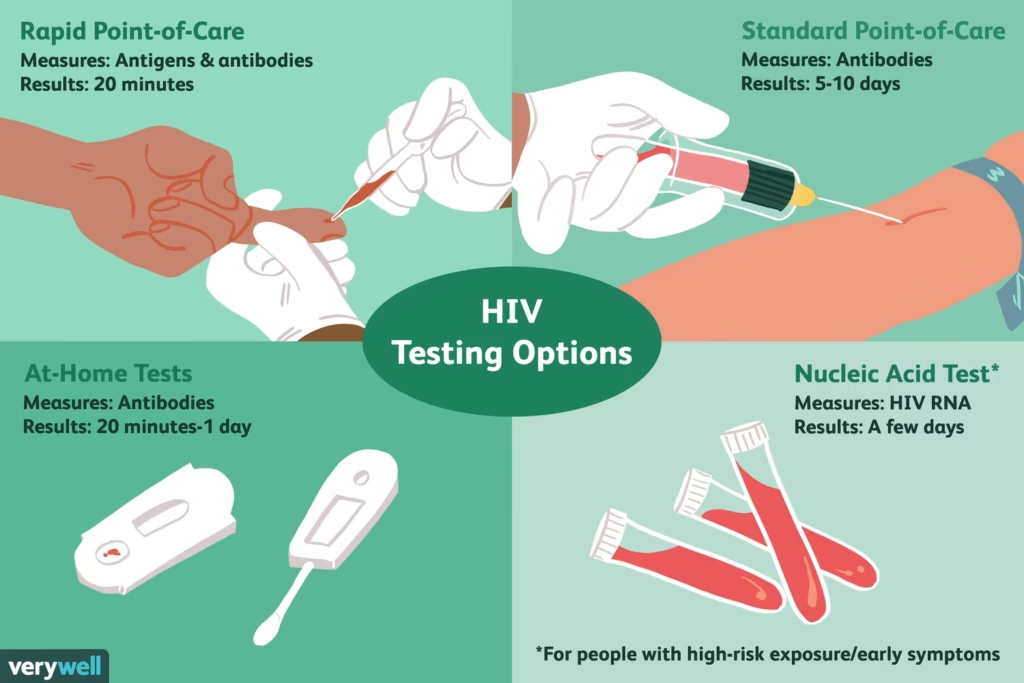
Several HIV testing methods are available in Singapore:
Antibody Tests
The most common HIV screening test is the Enzyme-Linked Immunosorbent Assay (ELISA) or Enzyme Immunoassay (EIA). These detect antibodies produced by the body in response to HIV infection. ELISA tests have a sensitivity greater than 99.5% and a specificity exceeding 99.8%.
Confirmatory Tests
A positive screening test is confirmed using the Western Blot (WB) assay, which detects antibodies reacting with different viral proteins. Using both EIA and WB tests, the sensitivity and specificity exceed 99.9%.
Rapid HIV Tests
Rapid tests provide results within 20 minutes and have similar sensitivity to standard EIAs when performed correctly. A negative rapid test requires no further testing, while a positive result needs confirmation through both EIA and WB testing.
Rapid HIV tests approved by the Health Science Authority Singapore and available at clinics include:
- Determine Alere HIV Combo Antigen/Antibody Test
- Determine Alere HIV-1/HIV-2 Rapid Test kit
Antigen Tests
The p24 antigen test detects the first viral marker appearing after infection. Fourth-generation HIV serology tests incorporate testing for both antibodies and p24 antigen, reducing the window period.
Nucleic Acid Tests
Polymerase Chain Reaction (PCR) for HIV DNA is available for very early testing in high-risk exposures and in special circumstances, such as when Western Blot results are indeterminate in patients with high-risk behavior.
You might be interested: Menopause Treatment Singapore
Understanding the HIV Window Period
The window period involves knowing that this refers to the time between potential exposure to HIV and when the infection can be reliably detected by testing.
During this period, a person may be infected but still test negative because their body hasn’t produced enough antibodies or antigens for the test to detect.
Different HIV tests have different window periods: antibody tests generally detect infection 3-12 weeks after exposure, fourth-generation antibody/antigen tests can detect infection as early as 2-6 weeks after exposure, and nucleic acid tests may detect HIV as early as 1-2 weeks after exposure.
HIV tests performed within the window period may not provide conclusive results, and repeat testing after the window period is recommended.
For most individuals, testing 3 months after potential exposure provides accurate results.
Where to Get Tested in Singapore
HIV testing in Singapore is widely available at general practitioner clinics, polyclinics, the Department of Sexually Transmitted Infections Control clinic, hospitals, anonymous testing sites, and rapid testing services.
Some locations offer anonymous or rapid testing services with results available in as little as 20 minutes, and self-test kits are also available at selected retail pharmacies and through Action for AIDS.
Understanding HIV Test Results
Negative Test Results
A negative result means no HIV antibodies or antigens were detected in your sample. However, if the test was done within the window period, you might still be infected. Consider the following scenarios:
| Time Since Last Possible Exposure | Recommended Action |
|---|---|
| Less than 72 hours | Consider post-exposure prophylaxis (PEP) |
| Less than 90 days | Repeat the HIV test after the window period |
If you receive a negative test result after the window period and have had no possible HIV exposure during that time, you can confidently conclude that you do not have HIV.
Positive Test Results
All positive test results require confirmation:
- If using a self-test kit: Repeat testing at a healthcare facility (including anonymous testing sites)
- If tested at a healthcare facility: Repeat testing will be done automatically
A confirmed positive result indicates HIV infection. Early diagnosis enables prompt initiation of treatment, which can significantly improve health outcomes and quality of life.
HIV Prevention and Treatment Options
Prevention Strategies
- Practice the ABCD approach: Abstinence from casual sex, Be faithful, Correct and consistent condom usage, and early Detection
- Consider pre-exposure prophylaxis (PrEP) if at ongoing risk
- Get tested regularly, especially if engaging in high-risk behaviors
Pre-Exposure Prophylaxis (PrEP)
PrEP is a preventive medication taken by HIV-negative individuals at high risk of contracting HIV. When taken as prescribed, it’s highly effective at preventing HIV infection. However, it doesn’t protect against other STIs, so condom use remains important.
Post-Exposure Prophylaxis (PEP)
PEP is a short-course emergency treatment that must be started within 72 hours of possible high-risk exposure to HIV. Indications for PEP include:
- Unprotected sex with someone who is HIV-positive or belongs to a high-risk group
- Needle-stick injuries or exposure to contaminated needles
- Sexual assault
PEP should not be used regularly as a substitute for other prevention methods.
Antiretroviral Therapy (ART)
ART is recommended for all individuals living with HIV. While not a cure, it can control the virus and help people live longer, healthier lives by:
- Reducing viral load to undetectable levels
- Restoring and preserving immune function
- Preventing progression to AIDS
- Reducing the risk of transmission to others
When people living with HIV take medication as prescribed and maintain an undetectable viral load (less than 50 copies/ml), they effectively cannot transmit the virus to others, a concept known as “Undetectable = Untransmittable” (U=U).
Legal Requirements for HIV Disclosure in Singapore
In Singapore, disclosure is legally required in specific situations:
- A person with HIV must inform their sexual partner before engaging in sexual activities
- A person with HIV must disclose their status to medical personnel before any invasive procedures
However, HIV-positive individuals are NOT required to disclose their status to employers or relatives. Singapore law protects the identity of people with HIV, prohibiting unauthorized disclosure of health information.
FAQ
What is the difference between HIV and AIDS?
HIV is the virus that causes AIDS. AIDS is a syndrome or set of clinical signs and symptoms that develop in the late stage of HIV infection, especially when opportunistic infections are present.
AIDS is diagnosed when a person with HIV has a CD4 count below 200 cells/mm³ or develops one or more opportunistic infections regardless of CD4 count.
How accurate are HIV tests in Singapore?
HIV tests in Singapore are highly accurate. When using both ELISA and Western Blot tests, the sensitivity and specificity exceed 99.9%.
However, accuracy depends on when the test is performed relative to potential exposure, as tests conducted during the window period may yield false-negative results.
How long after potential exposure should I get tested?
Initial testing can be done approximately one month after potential exposure. However, for conclusive results, testing should be repeated three months after exposure (after the window period).
If you’re concerned about very recent exposure (within 72 hours), consult a healthcare provider about post-exposure prophylaxis (PEP).
Can I get anonymous HIV testing in Singapore?
Yes, anonymous HIV testing is available in Singapore at certain facilities, including the Department of Sexually Transmitted Infections Control (DSC) clinic and other designated anonymous testing sites. These services ensure your identity remains confidential.
How much does HIV testing cost in Singapore?
The cost of HIV testing in Singapore varies depending on the facility and type of test. Rapid tests are generally more affordable than laboratory-based tests.
Many clinics and organizations offer subsidized or free testing, especially during awareness campaigns.
What should I do if I test positive for HIV?
If you receive a positive HIV test result:
- Stay calm and remember that HIV is a manageable chronic condition with proper treatment
- Seek confirmation of the result if it was from a rapid test or self-test kit
- Consult a healthcare provider specializing in HIV care for a comprehensive evaluation
- Begin antiretroviral therapy (ART) as recommended by your doctor
- Inform any sexual partners who may have been exposed
- Consider joining support groups for emotional and psychological support
Can HIV be cured?
Currently, there is no cure for HIV. However, with early detection and appropriate antiretroviral therapy (ART), HIV can be effectively managed as a chronic condition. People with HIV who adhere to their treatment regimen can maintain an undetectable viral load and live long, healthy lives.
What is PrEP and who should consider it?
Pre-Exposure Prophylaxis (PrEP) is a preventive medication taken by HIV-negative individuals at high risk of HIV infection. It’s recommended for people who:
- Have sexual partners who are HIV-positive
- Have multiple sexual partners
- Don’t consistently use condoms
- Have a history of other STIs
- Share injection equipment
PrEP must be taken as prescribed to be effective and requires regular medical follow-up.
Can I use home HIV test kits in Singapore?
Yes, HIV self-test kits are available for purchase at selected retail pharmacies in Singapore and through organizations like Action for AIDS (AfA). These kits allow for private testing at home, but positive results should always be confirmed at a healthcare facility.
How often should I get tested for HIV?
Testing frequency depends on individual risk factors:
- For those with ongoing risk (multiple partners, inconsistent condom use): Every 3-6 months
- For those in monogamous relationships with HIV-negative partners: Annually
- After any potential exposure: 1 month and 3 months after the incident
Regular testing is an important part of responsible sexual health management, especially for individuals with multiple partners or other risk factors.
Explore everyday essentials and compare current offers on Shopee.
Browse Shopee