

Understanding Abortion
Abortion refers to the termination and expulsion of a pregnancy before birth. This can happen either spontaneously (commonly known as a miscarriage) or through medical intervention (induced abortion).
In Singapore, abortion is legally regulated under the Termination of Pregnancy Act, which provides a framework for safe and legal access to abortion services.
Legal Framework for Abortion in Singapore
Singapore’s abortion laws are relatively liberal compared to many countries in Asia.
Explore everyday essentials and compare current offers on Shopee.
Browse ShopeeThe Termination of Pregnancy Act, established in 1970 and expanded in 1985, legalized abortion on request in Singapore. The key legal parameters include:
Gestational Limits
Abortion is legally permitted in Singapore up to 24 weeks of pregnancy, which is approximately 6 months from conception.
This gestational limit represents the legal boundary for elective abortion procedures under normal circumstances.
After 24 weeks of pregnancy, abortion is only allowed in cases where the mother’s life is in immediate danger, reflecting the increased complexity and risks associated with later-term procedures.
The calculation of pregnancy duration follows standard medical practice, being measured from the first day of the woman’s last normal menstruation rather than from the date of conception.
This dating method aligns with international medical standards and ensures consistency in determining gestational age for legal and medical purposes.
Related article: Egg Freezing in Singapore
Age Requirements
Singapore’s abortion laws do not establish a defined minimum or maximum age for obtaining an abortion, making the procedure legally accessible to women of all ages who meet other requirements.
However, special provisions exist for younger patients to ensure appropriate support and counseling.
Minors under 16 years of age do not legally require parental consent to obtain an abortion, preserving their autonomy in making this medical decision.
However, these young patients must undergo specialized counseling at the Health Promotion Board Counseling Centre, with the exception of rape victims who may have different counseling arrangements due to the traumatic nature of their circumstances.
Following this mandatory counseling, those under 16 must obtain a Certificate of Attendance (COA) that documents their completion of the required counseling session before they can proceed with the abortion procedure.
You might like: A Comprehensive Guide to In-Vitro Fertilisation (IVF) in Singapore
Restrictions for Foreign Nationals
Foreign nationals face specific eligibility requirements for obtaining abortion services in Singapore, designed to ensure that the healthcare system serves primarily those with established connections to the country.
Foreign nationals can only obtain an abortion in Singapore if they meet one of several specific conditions.
They must have been residing in Singapore for at least 4 months, demonstrating a meaningful connection to the country.
Alternatively, they may be eligible if they are married to a Singapore citizen or permanent resident, reflecting the recognition of family ties to Singaporeans.
Foreign nationals who hold a work permit pass (not temporary) or employment pass are eligible for abortion services, as are those who are married to holders of such passes, recognizing the contribution of workers to Singapore’s economy.
Finally, an abortion may be provided to any foreign national if it is immediately necessary to save their life, regardless of other eligibility criteria, reflecting humanitarian medical principles.
You might be interested: Breast Screening in Singapore: Early Detection and Prevention
Legal Protections
Singapore’s abortion laws include important protections for patient privacy and confidentiality.
Full confidentiality is guaranteed by law for all patients seeking abortion services, ensuring that medical information remains private and protected from unauthorized disclosure.
However, there is one important exception to this confidentiality protection. If a patient is under 16 years of age, a police report may be required, as sexual intercourse with a minor is considered a criminal offense under Singapore law.
This requirement reflects the need to investigate potential criminal activity while still providing necessary medical care to young patients.
The Abortion Process in Singapore
The abortion process in Singapore follows a structured approach designed to ensure patient safety, informed decision-making, and compliance with legal requirements.
This systematic process involves several mandatory steps that all patients must complete before the procedure can be performed.
This might help: HPV Vaccination in Singapore: A Comprehensive Guide
Initial Consultation

The first step in the abortion process requires consulting with a qualified medical doctor, either a general practitioner or a gynecologist who is licensed to provide abortion services.
During this crucial initial consultation, the doctor performs several important functions to ensure appropriate care and legal compliance.
The physician will confirm the pregnancy through appropriate testing and determine its duration using standard medical dating methods.
They will discuss all available options with the patient and provide detailed explanations of the abortion procedure, including potential risks, benefits, and alternatives.
The doctor will also provide a referral for mandatory counseling as required by Singapore law.
Additionally, the physician will assess the patient’s medical history to identify any contraindications or factors that might affect the safety or appropriateness of the abortion procedure.
If a doctor refuses to perform an abortion based on personal or religious grounds, patients retain the right to seek a second opinion from another qualified physician.
You might like: Endometriosis Treatment in Singapore
Mandatory Counseling
Since 2015, all women seeking abortions in Singapore must undergo pre-abortion counseling as a legal requirement before the procedure can be performed.
This counseling session aims to provide objective, comprehensive information about the abortion procedure, available alternatives, and potential physical and emotional effects that may result from the decision.
The counseling session is designed to be informative and non-judgmental, with healthcare providers respecting the woman’s final decision regardless of what she chooses.
The goal is to ensure that patients have access to complete information needed to make an informed decision about their pregnancy.
Special requirements exist for girls under 16 years of age, who must receive their counseling specifically at the Health Promotion Board Counseling Centre rather than at other facilities.
For mentally disabled patients, additional protections require certification from a qualified psychiatrist confirming that continuing the pregnancy would be harmful to the mother’s mental or physical health.
Related article: Menopause Treatment Singapore
Waiting Period
After completing the mandatory counseling session, there is a required waiting period of 48 hours before the abortion procedure can be performed.
This mandatory waiting period is designed to allow patients time for reflection and ensure that their decision-making process is thoughtful and informed rather than impulsive.
During this waiting period, patients can use the time to consider the information provided during counseling, discuss their decision with trusted friends or family members if they choose, and ensure that they feel confident about their decision before proceeding with the procedure.
Documentation
Patients seeking abortion services are required to complete specific documentation as part of the legal and medical record-keeping process.
They must sign a declaration of their marital status, providing accurate information about whether they are single, married, divorced, or widowed at the time of the procedure.
Patients must also provide information about their educational level, which is collected for statistical and public health monitoring purposes.
Additionally, they must state the number of living children they currently have, as this information helps healthcare providers understand the patient’s reproductive history and family circumstances.
The Ministry of Health maintains a confidential register of all abortion procedures performed in Singapore, recording essential information including the patient’s name, date of procedure, and other relevant medical and demographic data for public health monitoring and statistical purposes.
Read more: Which Gynaecologist in Singapore Should You Consider?
Types of Abortion Procedures
The method of abortion depends primarily on the duration of pregnancy and the patient’s health status.
Medical Abortion (Up to 9 Weeks)
Medical abortion involves using medication to terminate the pregnancy without surgical intervention. In Singapore, this typically includes:
- Mifepristone: This medication blocks progesterone, a hormone essential for maintaining pregnancy. Taking this alone can cause miscarriage in approximately 1% of cases.
- Misoprostol: Taken 24-48 hours after mifepristone, this medication causes the uterus to contract and expel the pregnancy tissue.
Supplementary medications may include:
- Antibiotics to prevent infection
- Pain relievers for abdominal cramps
- Anti-D immunoglobulin (for women with Rhesus negative blood)
Medical abortion has a higher failure rate (about 5 times higher) than surgical termination, sometimes requiring surgical intervention if incomplete.
Related article: Hysterectomy in Singapore: Costs, Risks, Treatment
First Trimester Surgical Abortion (8-12 Weeks)
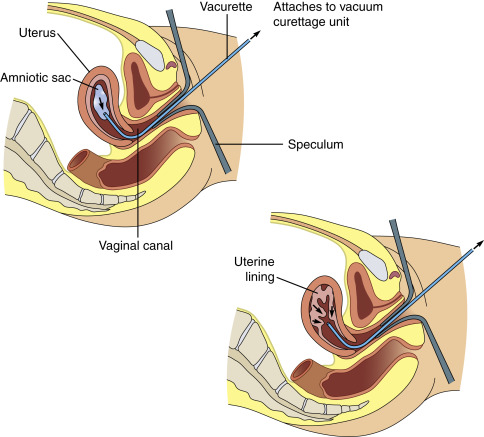
For pregnancies beyond 8 weeks, vacuum aspiration is typically recommended:
- The patient receives local anesthesia in the cervix
- The cervix is carefully dilated
- A thin tube is inserted through the cervix and into the uterus
- Suction is applied to remove the pregnancy tissue
- A curette may be used to ensure complete removal
The entire process usually takes 20-30 minutes, with the actual procedure lasting only about 15-20 minutes. Recovery time is relatively quick.
Second Trimester Surgical Abortion (12-24 Weeks)
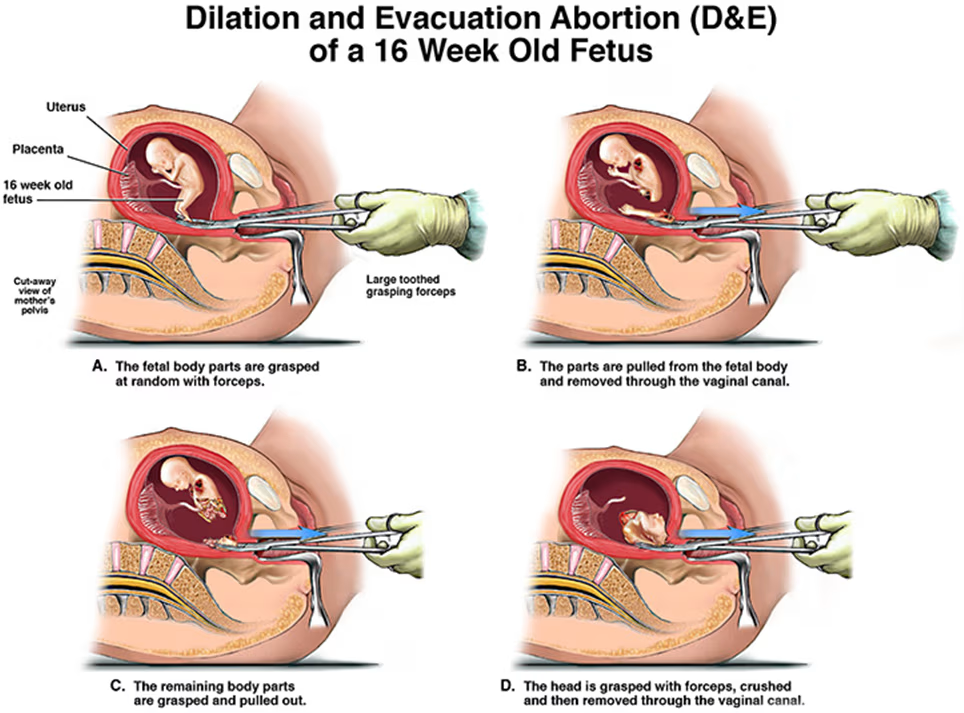
This is a more complex procedure:
- Preparatory Phase: Medication is inserted vaginally to prepare the cervix for the expulsion of the fetus
- Induction: Medication is administered to soften the uterus and dilate the cervix, inducing labor
- Delivery: The fetus and placenta are expelled
- Completion: Remaining tissue is removed through vacuum aspiration or dilation and curettage (D&C)
This procedure typically requires hospitalization for 1-2 days and carries more risks than first-trimester abortions.
Cost of Abortion in Singapore
The cost varies significantly depending on the facility and procedure type:
| Facility Type | First Trimester | Second Trimester |
|---|---|---|
| Public Hospital (KKH, SGH, NUH) | $750-$2,000 | $1,500-$3,000 |
| Private Hospital | $1,000-$4,000 | $3,000-$5,000 |
| Private Clinic | $800-$1,500 | Varies |
For Singaporean citizens and permanent residents, MediSave can be used to subsidize the procedure, with a deductible of approximately S$900 available for surgical abortion.
Safety and Risks
Abortion is considered one of the safest surgical procedures for women, particularly when performed in the first trimester by trained medical professionals. The risk of major complications is less than 1%, and statistically, giving birth carries higher risks than having an abortion.
However, as with any medical procedure, there are potential risks:
- Hemorrhage (excessive bleeding): Occurs in about 1 in 1,000 abortions
- Damage to the cervix: Occurs in no more than 10 in 1,000 abortions
- Damage to the womb: Occurs in up to 4 in 1,000 surgical abortions, and less than 1 in 1,000 medical abortions performed at 12-24 weeks
- Infection: Can be effectively managed with antibiotics
- Incomplete abortion: May require follow-up procedure to remove remaining tissue
The risk of complications increases with the duration of pregnancy, which is why earlier decisions regarding abortion are recommended.
Post-Abortion Care
Physical Recovery
After an abortion, patients should:
- Avoid sexual intercourse for 1-2 weeks to reduce infection risk
- Use sanitary pads rather than tampons for bleeding
- Avoid heavy lifting, strenuous exercise, and swimming for about 2 weeks
- Take prescribed antibiotics and pain medication as directed
- Watch for signs of infection (severe pain, heavy bleeding, fever, unusual discharge)
- Expect menstrual cycles to resume within 3-6 weeks
Follow-up Care
A follow-up appointment is typically scheduled 2-3 weeks after the procedure to:
- Ensure complete healing
- Check for any complications
- Discuss contraception options
- Address any emotional concerns
Emotional Support
While studies show that the predominant feeling following abortion is relief, some women may experience a range of emotions. Post-abortion counseling services are available to provide support if needed.
Common Myths and Facts About Abortion
Myth 1: “Abortion is very dangerous.”
Fact: Abortion is one of the safest surgical procedures when performed by trained professionals, especially in the first trimester.
The risk of death or major complications is less than 1%. Statistically, childbirth carries higher risks than abortion.
Myth 2: “Women who have abortions are traumatized.”
Fact: Research shows no scientific evidence that abortion is more dangerous to a woman’s long-term mental health than delivering and parenting an unplanned child or placing a baby for adoption.
Studies demonstrate that the predominant feeling following abortion is relief and reduction of stress, though some individuals may experience complex emotions for which support is available.
Myth 3: “Abortion causes breast cancer.”
Fact: Early studies suggesting a link have been found to be flawed and discredited. Better-designed studies consistently show no association between induced or spontaneous abortions and breast cancer risk.
Myth 4: “Abortion causes infertility.”
Fact: Having an abortion does not typically affect a woman’s chances of becoming pregnant and having normal pregnancies in the future.
The risk of complications affecting fertility is very low when abortion is performed by qualified medical professionals.
Statistics on Abortion in Singapore
The trend in Singapore shows a declining number of abortions over recent decades:
- In 2012: 10,960 abortions (compared to 12,208 in 2011)
- During the same period in 2012, there were 33,205 babies delivered, indicating that roughly 1 in 4 pregnancies were terminated
- By 2017: 6,815 reported abortions, the lowest yearly figure since 1973
- As of 2020: 4,029 recorded abortions (approximately 336 abortions per month)
This downward trend demonstrates a significant drop in abortion rates, with numbers halving in just a decade.
Frequently Asked Questions
What exactly is abortion?
Abortion is the termination of pregnancy before the fetus can survive outside the womb. It can happen naturally (called a miscarriage) or be intentionally induced through medical or surgical means.
In Singapore, legal abortion refers to the intentional termination of pregnancy performed by licensed medical practitioners.
Who can legally have an abortion in Singapore?
In Singapore, abortion services are available to Singapore citizens, permanent residents, holders of work or employment passes, and women who have lived in Singapore for at least four months.
Women married to Singaporeans, PRs, or work permit holders also qualify. There is no age restriction, though those under 16 require specialized counseling.
How late in pregnancy can I have an abortion?
Abortion is legal in Singapore up to 24 weeks of pregnancy. After 24 weeks, abortion is only permitted if the mother’s life is in danger.
Most doctors would typically not initiate abortion beyond 23 weeks, with the exception of severe or lethal fetal abnormalities, which requires special approval from authorities.
Do I need parental consent if I’m under 18?
There is no legal requirement for parental consent in Singapore, even for minors under 16. However, those under 16 must undergo specialized counseling at the Health Promotion Board Counseling Centre and obtain a Certificate of Attendance before proceeding with an abortion.
What is the process for getting an abortion in Singapore?
The process involves consulting a doctor (GP or gynecologist), undergoing mandatory pre-abortion counseling, waiting for 48 hours after counseling, and then having the procedure.
You’ll need to sign documentation about your marital status, education level, and number of living children.
What are the different types of abortion procedures available?
The procedures vary based on pregnancy duration. Options include medical abortion (using medications up to 9 weeks), first-trimester surgical abortion (vacuum aspiration from 8-12 weeks), and second-trimester surgical abortion (12-24 weeks) which may involve medication to induce labor followed by surgical evacuation.
How much does an abortion cost in Singapore?
The cost ranges from $800 to $5,000 depending on the type of facility (public hospital, private hospital, or private clinic), the gestational age, and the method used.
Singaporean citizens and permanent residents can use MediSave to help cover the costs, with a deductible of approximately $900 available.
Is abortion safe? What are the risks?
Abortion is considered very safe when performed by qualified professionals, with the risk of major complications being less than 1%.
Possible risks include infection, bleeding, damage to the cervix or uterus, and incomplete abortion.
The risks increase with gestational age, which is why earlier abortion is recommended when possible.
How long is the recovery period after an abortion?
Recovery varies by individual and procedure type.
For first-trimester surgical abortions, most women can resume normal activities within 1-2 days, though it’s advised to avoid sexual intercourse for 1-2 weeks to prevent infection.
Second-trimester abortions may require longer recovery periods.
Will having an abortion affect my fertility or ability to have children later?
When performed by qualified medical professionals, abortion does not typically affect future fertility.
The vast majority of women who have had abortions go on to have healthy pregnancies when they choose to do so.
Is pre-abortion counseling mandatory in Singapore?
Yes, pre-abortion counseling has been mandatory for all women seeking abortions in Singapore since 2015.
After counseling, there is a mandatory waiting period of 48 hours before the procedure can be performed.
What support services are available for women considering or having had abortions?
Support services include pre-abortion counseling, post-abortion counseling, and in some cases, support groups.
Healthcare providers who perform abortions can direct patients to appropriate counseling services if needed.
Can foreigners get abortions in Singapore?
Foreigners can obtain an abortion in Singapore if they: have been residing in Singapore for at least 4 months, are married to a Singapore citizen or permanent resident, hold a work permit or employment pass (not temporary), or if an abortion is immediately necessary to save their life.
What happens during pre-abortion counseling?
Pre-abortion counseling is designed to be informative and non-judgmental. It covers the procedure itself, potential risks, alternatives to abortion, and emotional aspects.
The counselor ensures that the woman is making an informed decision without external pressure.
Are there any alternative options to abortion?
Alternatives include continuing the pregnancy and parenting the child or placing the child for adoption.
Counseling services can provide information about these options and available support systems for each path.
Conclusion
Abortion in Singapore is a legal, regulated medical procedure with established guidelines to ensure safety and informed choice.
The comprehensive framework includes counseling, waiting periods, and professional medical care throughout the process.
While the decision to terminate a pregnancy is personal and can be difficult, Singapore’s healthcare system provides safe, confidential services with respect for patient autonomy.
Understanding the legal parameters, procedural options, potential risks, and support systems available allows individuals to make informed decisions about their reproductive health.
The declining rates of abortion in Singapore over recent decades suggest improved access to contraception and family planning education, though abortion remains an important component of reproductive healthcare.
Explore everyday essentials and compare current offers on Shopee.
Browse Shopee