
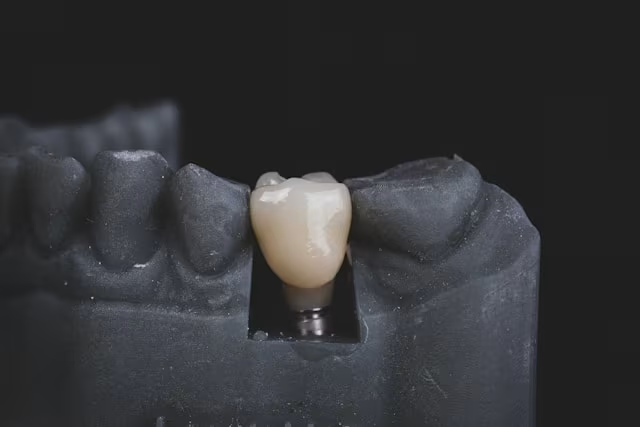
Understanding Bone Grafting and Its Importance
Bone grafting is a vital surgical procedure designed to enhance the structural support of your jaw.
This procedure becomes necessary when there’s a defect in the bone, which commonly occurs after long-term tooth loss or traumatic tooth extraction.
General shopping ideas, independent of this article’s advice.
Swipe to compare products → Biofinest Effervescent Vitamin C 1000mg D3 Zinc Collagen Multivitamin Calcium Magnesium Zinc Tablets Drink Sugar FreeFrom S$5.35Biofinest Probiotic 50 Billion CFU Enzyme Supplement 12 + 3 Prebiotics – Diet Slimming Eczema Detox Men Women (60 caps)From S$22.40Estalife Magnesium Glycinate 1000MG | Heart, Bone, Muscle, Sleep, Mood Health | 60 Veg CapsFrom S$13.99
Prices may vary by option. Check the final price and delivery on Shopee.
Bone grafts prepare the jaw bone to accept dental implants or enhance the support around failing teeth.
The procedure may also be performed after extracting infected teeth to preserve the site for future implant placement or to offer improved support for dentures.
Related article: Common Dental Problems in the Elderly: Symptoms, Prevention, and Treatment
The Foundation of Dental Health
Bone is the fundamental foundation that houses our teeth and dental implants.
Sufficient and stable bone dimension is essential in maintaining both natural teeth and dental implants.
Without adequate bone support, teeth and implants may become loose and eventually be lost.
Read more: Which Dental Clinic in Singapore Should You Consider? (Sort by Reviews)
When Is Bone Grafting Necessary?
Bone grafting becomes necessary in several situations:
- When there is insufficient bone to support dental implants or dentures
- To strengthen support around teeth affected by periodontal disease
- After tooth extraction to preserve the socket site for future implant placement
- To rebuild bone lost due to trauma or infection
- For orthognathic surgical procedures to correct jaw irregularities
- To address facial trauma or injury
- To replace missing teeth with implants in areas with insufficient bone volume
Bone dimension inevitably diminishes over time after tooth extraction.
This natural process, called resorption, can make it challenging to place dental implants or properly fit dentures.
Consequently, certain dental restorations, such as dental implants, may not be possible without bone grafting.
Ideally, bone grafting is carried out during the extraction procedure when the area is already numbed, preventing additional discomfort.
Related article: The Ultimate Guide To Seeing A Dentist In Singapore
Types of Bone Grafting Procedures
Socket Preservation
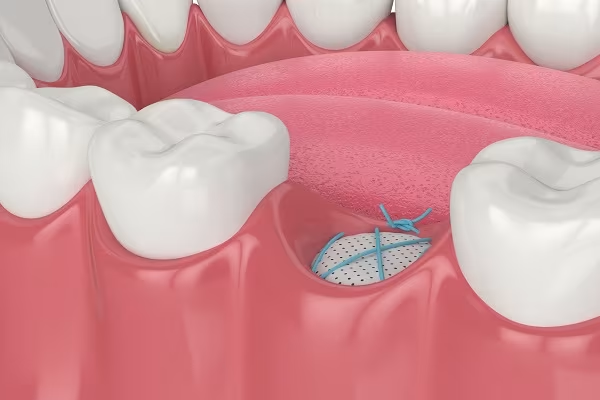
When a tooth is extracted, the bone that previously supported it rapidly begins to deteriorate.
Socket preservation is performed immediately after tooth extraction to reduce bone loss in the socket.
The dentist gently removes the tooth, often using specialized instruments called periotomes to minimize trauma.
Donor bone material is then inserted into the empty socket, and the surrounding gums are stitched over the filled socket.
This procedure helps maintain the height and width of the bone in the area where a dental implant will be placed.
You might be interested: The Ultimate Guide to Dental Implants in Singapore
Block Bone Grafting
This bone grafting technique involves removing a block of bone from one area in the patient and placing it into the area where dental implants will be inserted.
Common donor sites include the wisdom tooth area or the chin. The bone graft is secured in place and allowed to integrate with the jawbone for four to six months before dental implant placement.
This technique is typically used when bone loss is substantial, as is often the case when teeth have been missing for many years.
Particulate Bone Grafting
In cases where bone loss is minimal, dentists may insert implants and achieve initial stability, then graft the exposed areas using particulate bone.
This material may come from purified cow bone, synthetic materials, or even bone from the patient.
This approach can be useful when complete block grafting isn’t necessary but some augmentation is still required.
You might like: A Dentist Explains Dental Implant Costs in Singapore
Sinus Lift
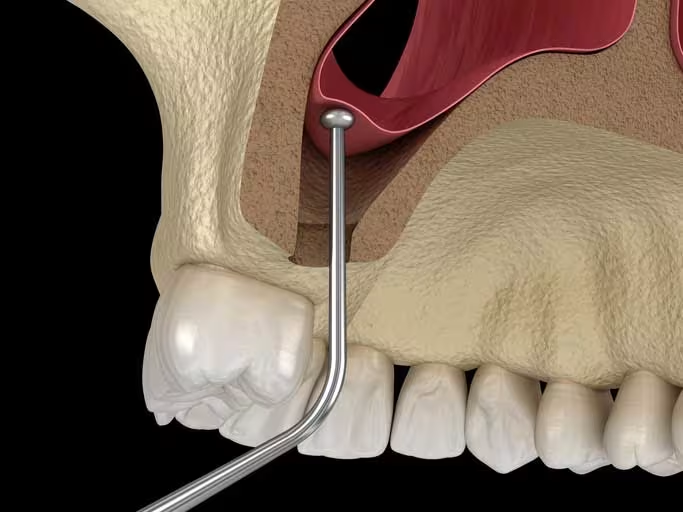
The maxillary sinus is a pair of air-filled structures within the facial bones. As a person ages, these spaces tend to enlarge and lie close to the upper teeth.
The sinus may even expand into spaces previously occupied by extracted teeth, making it difficult to place implants due to inadequate bone volume.
A sinus lift procedure raises the sinus membrane and adds bone graft material underneath to create sufficient space for implant placement.
There are two main approaches to sinus lifts:
- Internal Sinus Lift: Under local anesthesia, the dental surgeon creates a flap in the gums of the upper jaw to access the bone underneath. A small hole is cut into the bone directly below the sinus. Bone grafting material is used to fill the hole and push the sinus membrane upward. Once filled, the surgeon stitches the gums back together over the bone.
- External Sinus Lift: After administering local anesthesia, the surgeon cuts a flap in the gums to reveal the bone underneath. An opening is cut into the side of the bone, and bone grafting material is added to fill the space in the jaw. A collagen membrane is placed over the bone graft to hold it in place, and the gums are stitched back together.
Read more: Sinus Lifts and Augmentation in Singapore
Ridge Augmentation
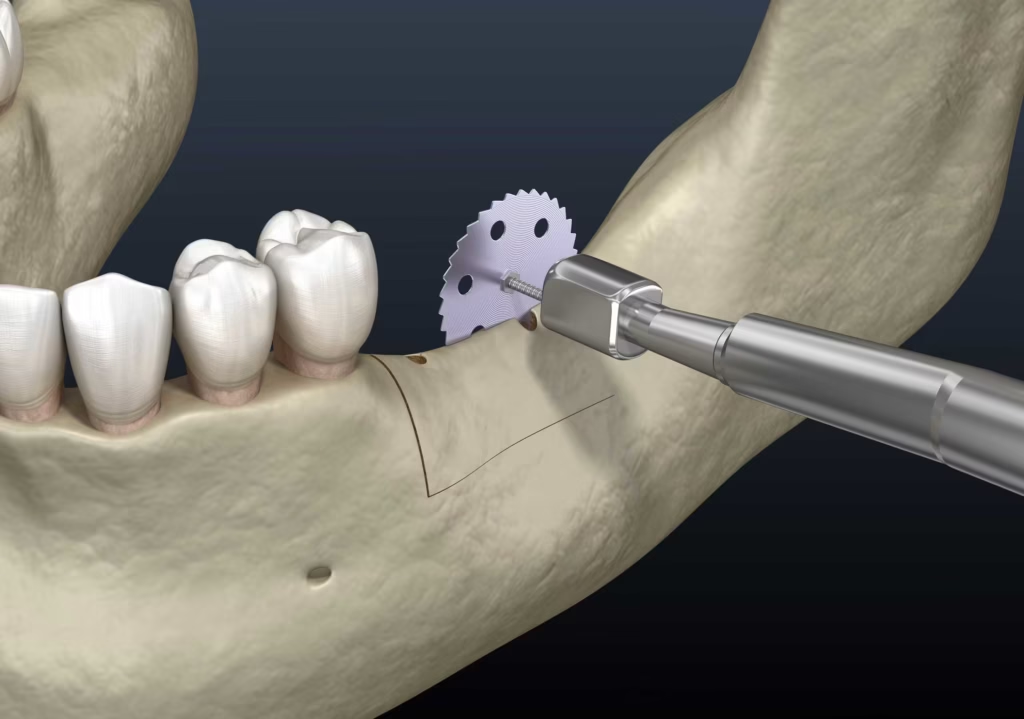
When a tooth is extracted, the bone that previously supported it will shrink, resulting in thinner bone in that area.
Ridge augmentation adds more height or width to the bone to ensure adequate support for a future implant.
After extraction, bone graft material is placed in the empty socket, and the surrounding gums are stitched over it to promote healing and bone regeneration.
You might be interested: Guide to Square Jaw Reduction in Singapore
Bone Graft Materials
Bone grafting requires the use of additional bone material. There are four different types of graft materials that can be used:
Autografts
Bone material is harvested from the patient’s own body, often from another part of the jaw, hip, or tibia. Autografts have a higher success rate in promoting bone growth and successful graft integration due to their biological compatibility with the patient’s body. However, this approach requires an additional surgical site for graft extraction, which may extend recovery time.
Allografts
This type of graft uses bone material sourced from a human donor. The material is thoroughly cleaned and sterilized to remove living cells, leaving a mineral framework that supports natural bone regeneration.
Allografts are rigorously tested to minimize risks such as disease transmission and can be used when using the patient’s own bone is not feasible or preferred.
However, they may integrate more slowly than autografts.
Xenografts
Xenografts use bone material derived from animal sources, usually bovine (cow) bone.
The material is processed under strict medical standards to ensure safety. It is readily available and supports bone growth effectively by providing a scaffold for natural bone growth.
However, xenografts do not fully fuse with the existing bone; they primarily provide structural support.
Alloplastic (Synthetic) Bone Grafts
These grafts are made from biocompatible synthetic materials such as calcium phosphate or hydroxyapatite.
They mimic natural bone structure and can stimulate new bone growth.
The effectiveness of synthetic grafts varies depending on material composition and individual patient factors, but they eliminate concerns about disease transmission or donor site complications.
Your dentist will discuss which type of material best suits your situation based on factors like the extent of bone loss, your overall health, and the intended dental procedure.
The Bone Grafting Procedure
The bone grafting process is typically straightforward and usually takes between 45 minutes to an hour, depending on the graft size and complexity. Here’s what to expect:
Pre-Surgical Assessment
- The dentist will conduct a thorough consultation to determine if bone grafting is required
- X-rays or CBCT (Cone Beam Computed Tomography) scans are taken to assess bone density and structure
- If an autograft is planned, the dentist will identify a suitable donor site
The Surgical Procedure
- Anesthesia: Local anesthesia is administered to numb the area. For more complex cases, sedation or general anesthesia may be used.
- Accessing the Bone: The dentist will make an incision in the gum tissue to expose the jawbone where the graft will be placed.
- Placing the Graft Material: The selected bone graft material (autograft, allograft, xenograft, or alloplast) is carefully positioned in the area where bone support is needed.
- Stabilization: The graft is secured in place, often with a protective membrane to enhance stability and prevent soft tissue from growing into the bone graft site.
- Closure: The gum tissue is repositioned over the graft site and sutured to promote proper healing.
Post-Operative Care
Recovery from bone grafts depends on the size and location of the graft.
After the procedure, your dentist will provide specific instructions on how to care for your mouth.
Some general guidelines include:
- You may experience some pain after the procedure, but pain medications will be prescribed to manage discomfort
- Avoid brushing the surgical site until advised by your dentist
- Clean the area gently with moist gauze and use any prescribed antiseptic mouthwash
- Avoid hard, crunchy, or sticky foods during the initial healing period
- Attend all follow-up appointments to monitor healing progress
The healing process typically takes several weeks, but complete integration of the graft with your natural bone may take several months, depending on the extent of the graft and individual healing factors.
During this time, your body gradually incorporates the graft material into your natural bone structure through a process called osseointegration.
Risks and Complications
While dental bone grafts are commonly performed procedures with high success rates, they do carry some risks of complications:
- Infection: Bacteria can sometimes enter the surgical area, leading to infection if not properly managed
- Incomplete Bone Integration: In some cases, the graft may not integrate optimally with the existing bone
- Graft Material Displacement: The graft material may shift from its original position, especially if aftercare instructions are not followed
- Nerve Injury: Though rare, damage to nearby nerves can occur during the procedure
- Rejection of the Bone Graft: The body may reject the grafting material, particularly with certain types of grafts
- Inflammation: Swelling is normal but excessive inflammation can impede healing
- Blood Clots: As with any surgery, there is a risk of developing blood clots
Regular follow-up appointments are essential to monitor healing, identify potential issues early, and take corrective action if needed.
Bone Grafting Costs in Singapore
The cost of bone grafting procedures in Singapore varies based on several factors, including the complexity of the surgery, the type of graft material used, and whether it’s a minor in-clinic procedure or a major operation requiring theater facilities.
Fee Structure
| Description | Fee (SGD) |
|---|---|
| Consultation & Examination | $100 – 250 |
| Digital X-ray | $170 (OPG), $50 (PA) |
| CT scan | $350 – 650 (depends on whether it is one jaw or two jaw) |
| Bone Grafting | |
| Minor (in-clinic procedure) | $1,500 – 3,000 |
| Major (operating theater) | $5,000 – 10,000 |
*All fees are subject to prevailing Singapore Goods and Services Tax and may change without prior notice.
Additional Costs
Bone grafts are usually placed under local anesthetic. However, if you choose to undergo the procedure under sedation or general anesthesia, additional fees will apply:
- Sedation: Fees for an anesthesiologist to administer sedation range from approximately SGD $800 – SGD $1,000 per hour.
- General Anesthesia: Besides the anesthesiologist fees, operating theater costs and hospital admission expenses may be incurred.
Medisave Coverage
For Singaporeans and permanent residents, Medisave may be utilized to fully or partially cover the applicable fees for certain bone grafting procedures.
The amount covered depends on the complexity of the surgery, and the final amount will be determined by Medisave staff.
Most dental clinics will assist in processing your Medisave claim.
It’s important to note that the information provided regarding costs is of a general nature only.
You would need to be examined by dental specialists or dentists to confirm if additional treatment is required.
A more detailed estimate of the fees involved can be confirmed after the initial consultation.
Frequently Asked Questions
What is bone grafting?
Bone grafting is a surgical procedure used to rebuild or augment bone in the jaw. It involves placing bone graft material in areas where bone density is insufficient, stimulating new bone growth and providing a strong foundation for future dental work.
This helps restore the structure and stability needed for a healthy oral environment, particularly when preparing for dental implants or addressing bone loss due to periodontal disease or trauma.
Do I need a bone graft?
You might need a bone graft if you have insufficient jaw bone to support dental implants, if you’re experiencing bone loss due to gum disease, if you’re preparing for orthognathic surgical procedures, if you’ve suffered facial trauma or injury, or if you’re planning to replace missing teeth with implants in an area with inadequate bone volume.
A thorough dental examination, including X-rays and possibly CT scans, will help your dentist determine if bone grafting is necessary for your situation.
Is bone grafting painful?
Bone grafting is typically performed under local anesthesia, so you shouldn’t feel any pain during the procedure itself.
For more complex cases, sedation or general anesthesia may be administered. After the procedure, some discomfort or pain is normal, but this can be managed with prescribed pain medications.
Most patients report minimal discomfort during recovery when following proper post-operative care instructions.
How long does a bone graft take to heal?
The healing time for a bone graft varies depending on several factors, including the type and size of the graft, the location in the jaw, and your body’s natural healing capacity. Initially, soft tissue healing takes about 1-2 weeks, but the complete integration of the bone graft with your natural bone (osseointegration) typically takes anywhere from 3 to 9 months. During this time, it’s essential to follow your dentist’s instructions to ensure optimal healing and successful outcomes.
What types of bone grafts are used in Singapore?
In Singapore, various types of bone grafts are used, including autografts (bone from your own body), allografts (from human donors), xenografts (typically from bovine sources), and synthetic bone grafts (alloplasts). Each type has its advantages and considerations.
Your dentist will recommend the most appropriate option based on your specific needs, the extent of bone loss, your overall health, and the intended dental procedure.
How do I care for my mouth after bone grafting?
After bone grafting, it’s important to follow these care instructions:
- Do not brush the surgical site until advised by your dentist
- Clean the area gently with moist gauze and use prescribed antiseptic mouthwash
- Avoid using over-the-counter mouthwashes as these may slow healing
- Maintain good oral hygiene for the rest of your mouth, being careful not to disturb the surgical site
- Take all prescribed medications, including antibiotics and pain relievers, as directed
- Avoid hard, crunchy, or sticky foods during the initial healing period
- Do not smoke or use tobacco products, as these can significantly impair healing
- Attend all follow-up appointments to monitor healing progress
Can Medisave be used for bone grafting procedures?
Yes, if you are a Singaporean or a permanent resident of Singapore, Medisave may be utilized to cover the applicable fees for certain bone grafting procedures.
The amount covered depends on the complexity of the surgery, and the final amount will be determined by Medisave staff.
Most dental clinics in Singapore will assist patients in processing their Medisave claims. It’s advisable to check with your dental provider about the specific coverage available for your planned procedure.
How soon after bone grafting can dental implants be placed?
The timing for placing dental implants after a bone graft varies depending on the individual case and the healing progress.
In some cases, implants can be placed simultaneously with the bone graft in a process called immediate implant placement.
However, in most situations, a waiting period of 3-6 months is necessary for proper integration of the graft before implant placement.
For more extensive grafts or sinus lifts, the waiting period might extend to 6-9 months to ensure sufficient bone density and stability for successful implantation.
What is a sinus lift and why might I need one?
A sinus lift is a specialized bone grafting procedure for the upper jaw, where the sinus membrane is lifted and bone graft material is added beneath it to increase bone height for implant placement.
You might need a sinus lift if you’re planning to get dental implants in your upper jaw but lack sufficient bone height due to enlarged sinuses or bone loss.
This commonly occurs in the back of the upper jaw, where the bone is naturally thinner and the sinuses are closest to the oral cavity.
The procedure creates adequate space and bone volume to support dental implants successfully.
Am I a good candidate for bone grafting?
Most people who have lost bone due to periodontal disease, trauma, or tooth loss may be candidates for bone grafting.
However, certain factors can affect your eligibility, including your overall health, smoking habits, and certain medical conditions.
Patients with uncontrolled diabetes, immune system disorders, or those taking medications that affect bone healing might require special consideration.
A thorough dental examination and consultation with your dentist, including a review of your medical history, will determine if bone grafting is suitable for you and which approach would be most beneficial.
What is the success rate of bone grafting procedures?
Bone grafting procedures have a high success rate, typically around 85-95%, depending on various factors such as the patient’s overall health, the graft location, the type of graft material used, and adherence to post-operative care instructions.
Success rates are higher for non-smokers and those without compromising systemic conditions.
Your dentist will evaluate your specific case to provide a more personalized estimate of success.
Regular follow-up appointments are essential to monitor healing and ensure the best possible outcomes.
General shopping ideas, independent of this article’s advice.
Swipe to compare products →Biofinest Gummy Vitamin Supplement – Beauty Energy Sleep Metabolism Men Women Kids Probiotics Multivitamin (60 Gummies)From S$17.95Tradishot Immunity Boost Drink | Turmeric Shot (Extra Strength) | Boost Immunity Energy & Well-being [7x35mL]S$37.42Optimum Nutrition, Gold Standard, 100% Whey Protein Powder, 2lbs (907g ) / 5 lbs (2.27 kg) / 10 lbs (4.54 kg)From S$82.89Prices may vary by option. Check the final price and delivery on Shopee.